


World4 min(s) read
Ancient garden found beneath Jerusalem church may confirm location of Jesus's tomb
.jpg_I4Ebof?tr=cr-0.338.2730.3068,f-webp,q-70,w-100)
Archaeologists digging under one of the most sacred sites in Christianity say they have found evidence of a 2,000-year-old garden that aligns with the Gospel of John's description of where Jesus was buried.
The team, led by Professor Francesca Romana Stasolla from the Sapienza University of Rome, found traces of ancient olive trees and grapevines beneath the Church of the Holy Sepulchre in Jerusalem.
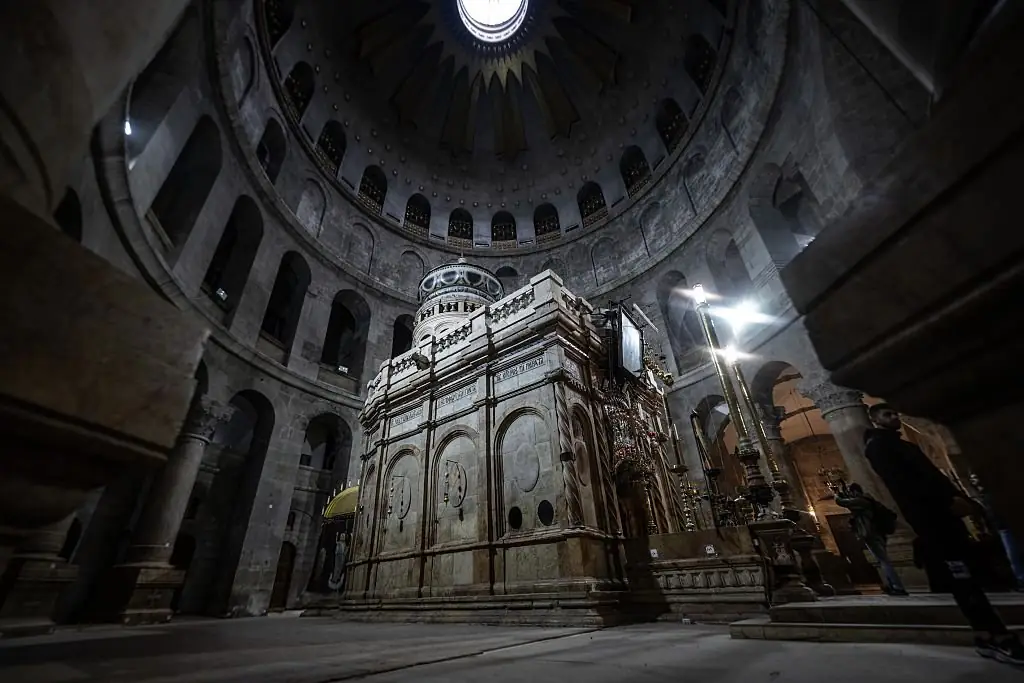
The church has long been believed to sit on the site of both the crucifixion and burial of Jesus, but until now there has been no archaeological evidence of the garden described in scripture.
That has now changed.
What the Gospel of John says
The relevant verse is short and specific.
"Now in the place where he was crucified there was a garden, and in the garden a new tomb in which no one had yet been laid." - John 19:41.
For centuries, scholars have debated whether the Church of the Holy Sepulchre, which sits inside modern Jerusalem's city walls, could really be the site described in the Bible.
Crucifixion sites in the first century were brutal, exposed locations, typically near quarries or rocky hillsides. A garden seemed out of place.
The discovery of cultivated land directly beneath the church changes that picture considerably.
What archaeologists found
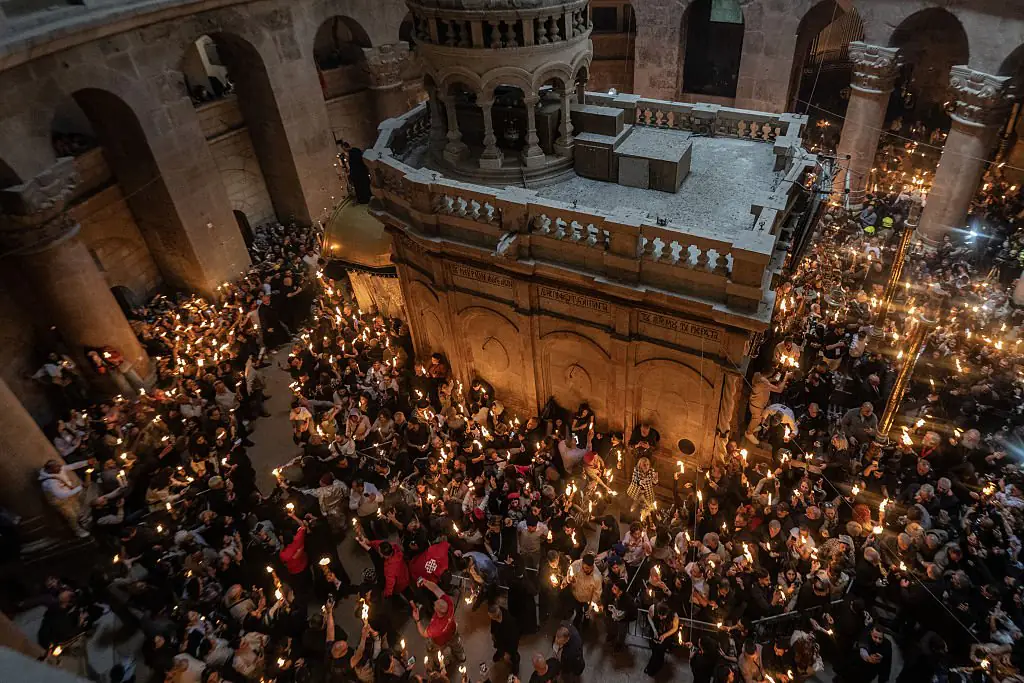
The excavation took place as part of a major restoration project that began in 2022, the first large-scale work at the church since the 19th century.
It required the agreement of all three custodial communities that share the building: the Roman Catholic Church, the Armenian Apostolic Church, and the Greek Orthodox Church. It also needed an Israel Antiquities Authority licence.
Once the floor was opened up, the team found layers of history going back to the Iron Age.
The most significant finding for the tomb question was the archaeobotanical evidence: pollen and organic remains consistent with olive trees and grapevines, both of which are characteristic of a cultivated garden in first-century Judea.
"The archaeobotanical findings have been especially interesting for us, in light of what is mentioned in the Gospel of John, whose information is considered written or collected by someone familiar with Jerusalem at the time," Professor Stasolla told the Times of Israel.
"The Gospel mentions a green area between the Calvary and the tomb, and we identified these cultivated fields."
Why this matters
The Church of the Holy Sepulchre has been venerated as the site of Jesus's death and resurrection since at least the fourth century, when Emperor Constantine's mother Helena identified the location and a church was built on top of it in 326 AD.
But sceptics have questioned the site for almost as long as it has been worshipped.
The most common objection is the one about the city walls. The Bible says Jesus was crucified outside Jerusalem's walls, as was Jewish custom. The church is inside them.
Archaeologists settled that debate decades ago. In the first century, the area where the church now stands was indeed outside the city walls. The walls were later expanded, placing the site within the city.
The garden question was harder to answer.
Until you dig under a building that three separate Christian denominations share custody of, you cannot check what is underneath it. The 2022 restoration gave archaeologists that opportunity for the first time in over a century.
What they found matches what John wrote. A garden. Between the site of the crucifixion and a tomb. Exactly where the Gospel said it would be.
What this does not prove
It does not conclusively prove that Jesus was buried there.
It does not prove the resurrection happened. It does not prove any article of faith.
What it does is add a significant piece of archaeological evidence to a site that has been identified as Jesus's burial place for 1,700 years.
A garden existed there in the first century. The Gospel of John said a garden existed there in the first century; therefore the description matches.
Whether that is proof, confirmation bias, or coincidence depends entirely on what you believed walking in.
For scholars, it strengthens the case that the author of John's Gospel had genuine, local knowledge of Jerusalem and its geography. For believers, it is something else entirely.
For the archaeologists, it is exactly what they were hoping to find under the floor of the most contested building in the Holy Land.