


World Politics2 min(s) read
Shocking footage shows two helicopters crash mid-air near Mount Everest leaving one tourist dead

More than 1,000 meters below Mount Everest Base Camp, two helicopters collided, killing at least one person and injuring two others.
According to officials, the choppers were carrying adventurers who had been hiking up to Everest base camp during Nepal’s most popular trekking season earlier today.
However, the conditions were treacherous as heavy snow had completely covered the route. When the weather improved on Sunday, thousands of trekkers were able to move around, meaning there were more people than usual at the bottom of the world's tallest mountain.
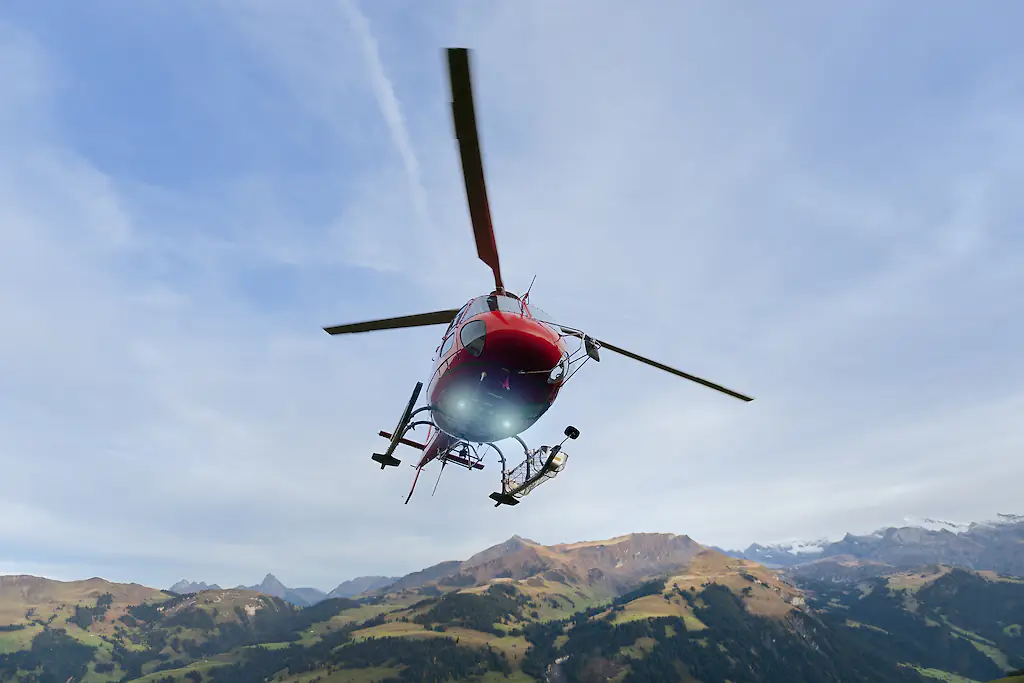
Adverse weather conditions meant there was more air traffic than usual
There are no roads on the mountain, so helicopters are the only way to transport tourists who become unwell, and with more people hiking, there were more aircraft in the sky than usual.
At around 13,780 feet altitude, in Pheriche village, two helicopters crashed. According to Bhupendra Thapa, a Solukhumbu district administration officer, a 47-year-old tourist from India was killed in the crash.
A passenger from New Zealand was also injured and has been transported to the capital, Kathmandu, for hospital treatment.
The pilot, believed to be a Nepali local, sustained injuries but was treated locally.
It is currently unclear how many people were travelling in the two helicopters.
The challenge is most popular at this time of year
The trek to Mount Everest base camp alone takes around two weeks, setting off from the only airstrip in the area at Lukla to base camp located at 17,380 feet. Now is the most popular time to undertake the gruelling challenge as the rainy season has just finished and the harsh winter months have not yet begun.
The Civil Aviation Authority of Nepal (CAAN) identified the aircraft as an Air Dynasty helicopter, registration 9N-AOD, and a Fishtail Air helicopter, registration 9N-AJR.
Both helicopters belong to the Airbus AS350 family, a widely used series of single-engine aircraft designed for passenger transport, aerial work, and operations in demanding environments.
Flying at such a height requires extremely careful flying because the thinner air reduces the lift available from helicopter rotors and affects engine performance.
Harsh mountain weather and confined landing areas can present additional operational challenges. However, investigators have not yet indicated whether any of these factors contributed to the tragic collision.