


Tech & Innovation4 min(s) read
'Cyberpandemic' warning issued as Microsoft responds to worldwide outage affects millions

After millions of people worldwide were caught up in a major Microsoft outage on Friday, it has renewed warnings about the vulnerability of digital infrastructure, and our propensity to be overly reliant on it.
The technology giant’s services were brought to a halt following company-wide outages, with the cause still yet to be confirmed; however, they have announced they don't believe it to be due to hackers or cyberattacks, amid growing speculation.
Microsoft outage leaves millions impacted

The blackout has meant that thousands of businesses who utilize their resources, including Outlook and Microsoft Teams, as well as its cloud-based platforms, have been unable to get online.
According to outage tracking website DownDetector, in the US alone, over 130,000 people reported issues with accessing Outlook, with further reports coming from another 74 countries and territories.
In a statement posted on X, the company said it was “aggressively pursuing all pathways to reduce impact”, adding that it was restarting affected servers in an attempt to bring them back online, albeit one would expect it may take more than simply turning it off and on again.
With the server outage continuing into Friday, the company has since said there is no indication that the outage was caused by a cyberattack, with the problem appearing to stem from its own infrastructure.
But while the incident may not have been the result of malicious activity, it has exposed a much bigger concern about the world's reliance on interconnected technology, and has issued a warning about a potential 'cyberpandemic', suggesting that the consequences of digital disruption could extend far beyond inaccessible emails and calls.
The list of Microsoft services potentially affected by the outage is extensive, and alongside Outlook and Microsoft Teams, issues have been reported involving SharePoint Online, Microsoft Copilot 365, Microsoft Planner, and Exchange Online.
Microsoft Defender, the company's cloud-based cybersecurity service, was also included among the potentially affected products.
The outage points towards wider 'cyberpandemic' issue
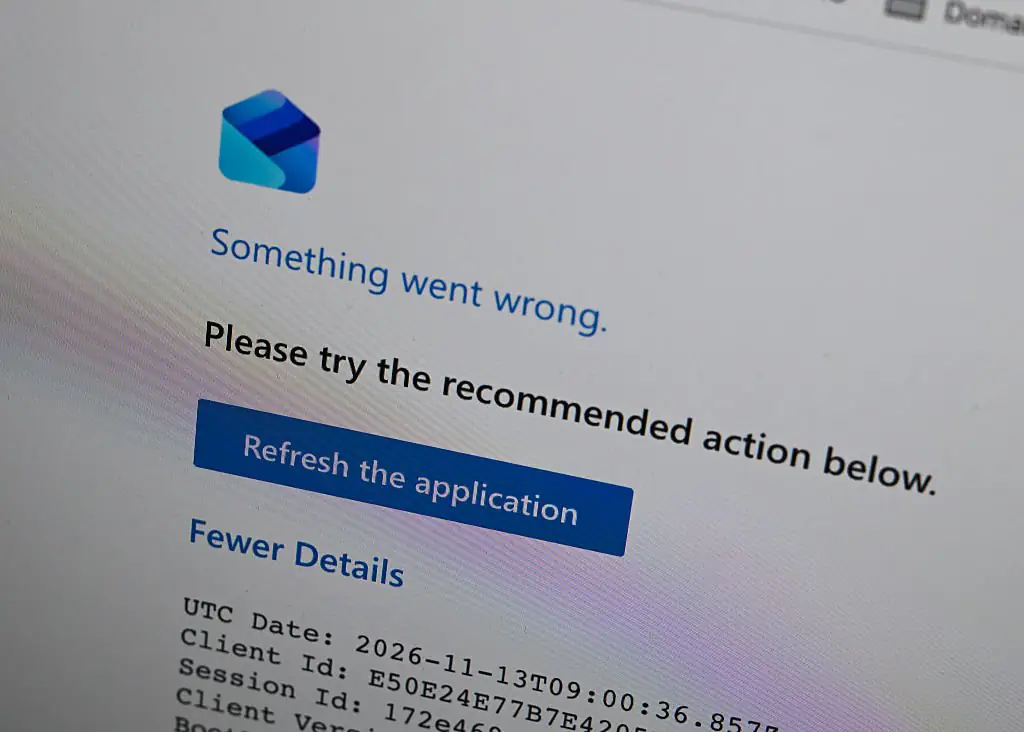
The real-world consequences have reportedly stretched across several industries, but the most concerning have been around healthcare, government departments, and education.
A separate warning about a potential 'cyberpandemic' argues that society is not sufficiently prepared for the scale of devastation that could follow a major cyber incident.
The concern is not necessarily that hackers will need increasingly sophisticated technology or artificial intelligence to bring systems down. Instead, the warning points to a much more ordinary problem: known security weaknesses, outdated equipment, and organizations failing to take responsibility for protecting the systems they operate.
Last month, cyberattacks targeted refrigeration systems in around 300 French supermarkets, with the attackers reportedly manipulating refrigeration controllers, triggering extended defrost cycles, and causing temperatures inside freezers and cold-storage rooms to rise dramatically, costing supermarkets millions of dollars, as well as creating tons of wastage.
Investigators identified software controlling refrigeration systems supplied by Danish company Danfoss as the entry point, though the company claimed many of the affected units were obsolete products that had reached the end of their life and were no longer receiving software or security updates.
Although investigators have not established whether those specific vulnerabilities were used in the attack, the incident raises serious questions about why aging equipment remained exposed.
The common thread running through these incidents is the vulnerability created when organizations fail to properly secure the systems they depend on, with the wider 'cyberpandemic' warning arguing that the problem is not simply a lack of technology capable of preventing attacks.
Instead, it discusses the ‘accountability gap’, where the responsibility for a single company’s cybersecurity can feasibly be spread between multiple providers.
The World Economic Forum's Global Cybersecurity Outlook 2025 identified overlapping responsibilities and limited visibility into supplier security as factors contributing to cyber risk.
When several different organizations are responsible for maintaining parts of the same system, it can become difficult to establish who is ultimately accountable for keeping it secure.
The warning argues: “When responsibility is spread across vendors, regulators, operators, and boards, it belongs to no one in practise.”
And while Microsoft's outage appears to have been caused by an internal technical failure rather than an attack, it highlights the consequences of relying on a single provider for services that businesses and public institutions increasingly consider essential.
The warning argues that the problem is ultimately one of governance rather than technology.