ADVERT
Space1 min(s) read
Published 16:43 30 Sep 2019 GMT
Anyone whose only exposure to outer space has been through watching Brad Pitt prance about in Ad Astra might think that interstellar travel is all about zero gravity shoot ‘em ups and moony pontificating as you drift through a vacuum.
What films like this invariably fail to capture is the fact that surviving in space has loads of boring but incredibly important factors. For instance, what do you do if you’ve had a tough day’s astronauting, and all you want is a big, steaming bowl of something gooey? It’s not as simple as nipping out to the shops for a box of Kraft. Thankfully, scientists may soon have an answer to the comfort-devoid chasm of deep space.
[[twitterwidget||https://twitter.com/crockerasphalt/status/1177221626770984961]]
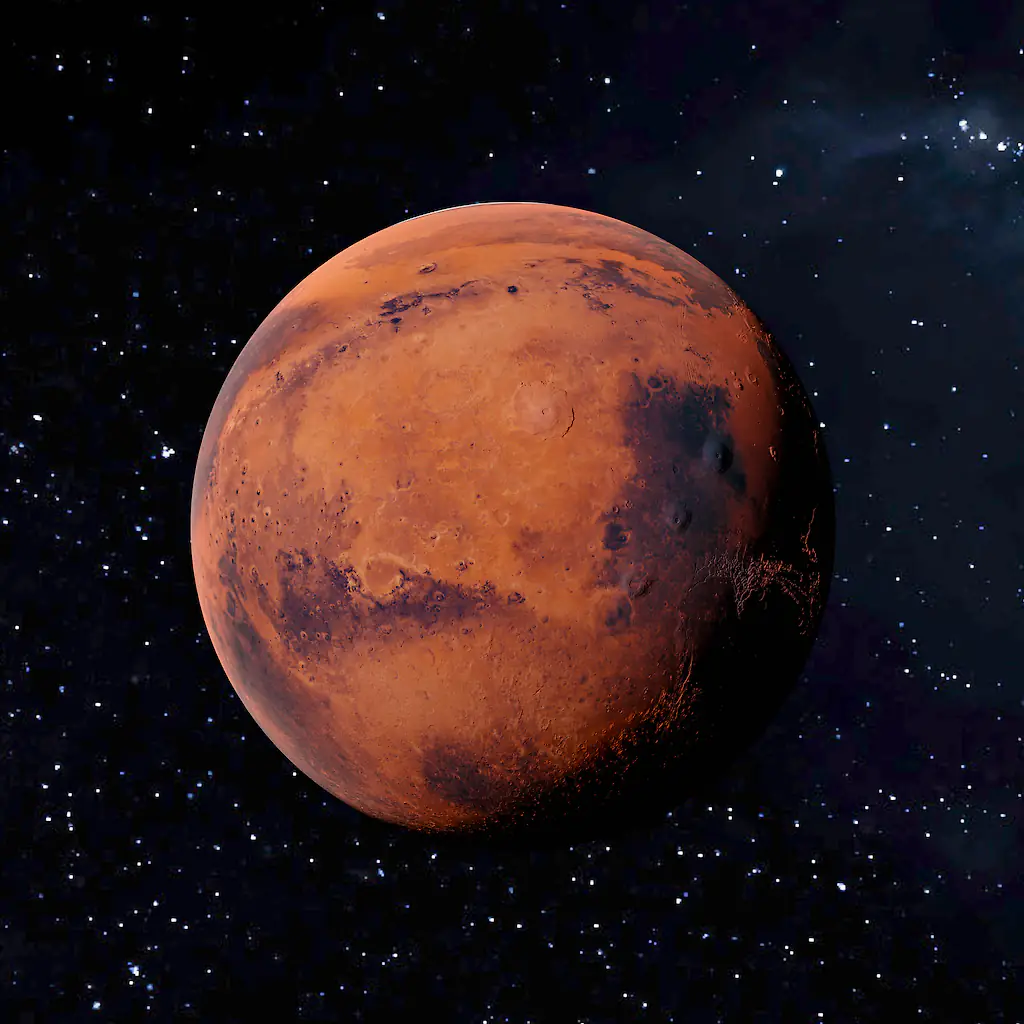
A team of researchers from Washington State University have revealed their ambition to create long-life Mac ‘n’ Cheese capable of making the nine-month voyage to Mars in tact. By looking at how to extend the shelf-life of some store cupboard staples, the team hope that they can create a range of edible items that make a mission to Mars delicious as well as fascinating.
According to Professor Shyam Sablani of WSU's Department of Biological Systems Engineering, the project could have ramifications that go far beyond space travel. As Sablani explained:
“We've always been thinking of developing a product that can go to Mars, but with technology that can also benefit consumers here on Earth. We hope to work out a way to test these products on the International Space Station in the future to show that the food is safe after long-term storage.”
[[twitterwidget||https://twitter.com/AsgardiaSpace/status/1177243933098659841]]
According to the team, the key to improving the endurance of certain foods lies in the packaging. As Shablani explained:
"We need a better barrier to keep oxygen away from the food and provide longer shelf-life similar to aluminum foil and plastic laminate pouches...We are excited that an over-layer of organic coating on metal oxide helped protect against microscopic cracks. Multiple layers of metal oxide coating have also increased the barrier performance. Our research guided development of newer high barrier packaging."
Check out our epic recipe for a Mac 'N' Cheesesteak Sub:
[[jwplayerwidget||https://content.jwplatform.com/videos/dfmdUB2n-dkXnENEs.mp4||dfmdUB2n]]
However, despite the exciting potential of seeing mac ‘n’ cheese on the surface of the Red Planet, scientists are not there yet. According to NASA’s exacting standards, food has to be able to last for five years before being deemed safe for travel, so the three-year shelf life of Washington State University’s current offering can’t quite cut the mustard. However, if they keep moving in the right direction, maybe macaroni on Mars isn’t quite as far-fetched as it sounds.
This article originally appeared on twistedfood.co.uk
lifestyle3 min(s) read
Published 16:31 30 May 2018 GMT
space1 min(s) read
space4 min(s) read
Published 15:37 27 Apr 2018 GMT
health1 min(s) read
us3 min(s) read
When regular people are craving pizza, they’re usually within just a couple minutes of a slice. It is blessedly easy for most of us to get our hands on that cheesy, greasy goodness, for not that bad a price I might add.
For astronauts, this is not the case, as Pizza Hut has yet to open up any storefronts on the Moon. And just because they are orbiting the International Space Station with epic views of our solar system, doesn’t mean they don’t crave this most pedestrian of foods.
In fact, astronauts miss pizza desperately when they’re away from Earth - so much so that one actually ordered a pie on his way back to the surface.
After a screening of the upcoming National Geographic documentary on space travel, One Strange Rock, NASA astronaut, Mike Massimino revealed that he got so tired of waiting for pizza after months spent in space, that he actually ordered a pizza from the space shuttle during his descent back to earth.
To be fair, I've craved pizza that hard. In my last year as a college student, my apartment was exactly 40 minutes away from campus, when I truly couldn't be bothered (once or twice a week) I would order pizza from campus and meet the pizza guy at my front door.
Sitting around twiddling your thumbs waiting for a pizza is for suckers and this way I felt like I earned it when I did this.
As Massimino points out, astronauts love pizza so much, they've even developed a delicacy that they fittingly call 'space pizza', but it's hardly a stand-in for the real thing.
They use gift packages of space station-safe food to make the mini-pies-apparently a welcome break from the freeze-dried space food (which is lighter, meaning that shuttle can use less fuel to escape earth’s gravity) that astronauts usually have to eat. I'm glad to know the taxpayers' money is being put to good use.
In fact, astronaut Randy Bresnik praised space pizza as one of the best treats he got to eat while working on the ISS. “The best food we had was a treat we got sent up as a care package, which was a pizza making kit with the crust and sauce,” he said. “Because the texture and the taste was so different than the regular free-dried food we had, it was the best pizza I ever had.”
In 2017, Bresnik’s crew on the ISS actually filmed the space pizza-making process. They start with pre-packaged, pre-baked pizza crust and build the pizzas using ingredients that can stick to the bottled tomato sauce, like pepperoni and olives. The trick is to make sure that the pizza doesn’t float away as they spread on the sauce.
They then cut the pizzas (which were stored in a suitcase, to again, keep them from floating away) into slices using scissors, and voila! Dinner is served.
If you’ve been starved for real food, space pizza will do, but I’m pretty sure nothing could ever beat that first bite of a real slice of hot and melty pizza Massimino got when he landed safely on solid ground.
Published 14:42 12 Oct 2018 GMT
With the 50th anniversary of the Apollo 11 Moon Landing now less than 12 months away and the imminent threat of climate change leaving our planet on the precipice of uninhabitality, I wouldn't blame you if your thoughts started to wander to the idea of space travel to a planet far away.
Although since Neil Armstrong celebrated "one giant leap for mankind" we've streamlined the process significantly since then, one place in which space travel is sorely lacking is the most important aspect - food. With most meals being of the instant variety and that one episode of the Simpsons suggesting that potato chips are a no-no, there's still a lot of research yet to be done in the culinary department.
[[youtubewidget||https://www.youtube.com/watch?v=P8xP1JioXTM]]
One of the biggest problems when it comes to cooking in space is the howling void all around you - how can you possibly make scrambled eggs in the freezing vacuum of space? Luckily, there's one place on Earth that's colder than the halls of the International Space Station - Antarctica.
Astrobiologist Cyprien Verseux has to understand these freezing temperature as part of his job, and cooking in those freezing conditions in particular has proven to be a bit of a challenge. Sharing pictures from his blog and social media feeds, French scientist Verseux gives us a tiny window into what it's like to cook in hostile, sub-zero temperatures.
[[twitterwidget||https://twitter.com/CyprienVerseux/status/1047439417147883520]]
"There is almost no living being apart from the few humans and microbes that accompany them everywhere," explains Verseux of his Concordia base, adding that although biologists don't often make the trip, it's a perfect place for science practices such as "astronomy, human physiology, glaciology and atmospheric sciences".
"The cold is too intense, can pass -80 °C during the winter. Contrary to my usual practice, I will not study any form of life: I am a glaciologist and work on different research projects that will help, for example, to better understand the climate in the past and better assess its likely future. The environment is hostile and our survival depends on technology."
[[twitterwidget||https://twitter.com/CyprienVerseux/status/1047795574056124416]]
So, how does that whole cooking thing go? Long story short: not well. If you didn't know any better, you'd think they were some kind of bizarre modern art exhibit: spaghetti suspended in mid air, egg white frozen in its shell before it even hits the pan, Nutella not even able to provide a simple snack.
"We run out of fresh food early in the winter (as we have no resupply from early February to early November), so we eat mostly frozen food," explained Verseux, so this is mostly just for show. That being said, I'm sure that they don't have to worry about storing things in a freezer - they can just go outside.
[[twitterwidget||https://twitter.com/CyprienVerseux/status/1046715317341360135]]
Well, folks, there you have it. While summer fades away and we creep slowly toward the winter months, let's take a look at these bizarre cooking photos and be glad we don't live in Antarctica.
For decades, the dream of NASA scientists, and other space agencies around the world, has been to find some trace of life on Mars. The red planet is the Earth's closest neighbour, and the one body in the Solar System most likely to be capable of supporting life, other than our own world. Despite the freezing temperatures and arid dust, NASA hopes that their exploratory vessels might be able to find a trace of liquid water, or a tiny microbe buried in the soil. But unfortunately, the search for extraterrestrial life thus far has been difficult, expensive, and fruitless.
The issue is that the Martian rovers can often be too cumbersome to safely navigate the vast, rugged terrain of the fourth rock from the sun. The slightest chance accident can potentially tip the little machines over, and leave them as helpless as a tortoise on its back. Not only that, but they're also unbelievably slow. Just consider the fact that, even though the Curiosity Rover has been on Mars for more than 2,000 days, it's only managed to travel about 11 and a half miles.
To counteract these issues, NASA is proposing replacing the wheeled contraptions with an altogether newer, slicker solution. The only problem is, the idea seems too mad to ever get off the ground (literally). Instead of building new rovers, NASA is looking to bring out a swarm of "robot bees".
Researchers based at the University of Huntsville, Alabama, are collaborating with a separate research team in Japan to create "Marsbees". Taking inspiration from the ergonomics of real-life insects, these miniature drones would be approximately the same size as a bumblebee, but with far larger wings to help them fly in the thin atmosphere of Mars. The tiny droid would fly around in large clouds, to comprehensively survey the planet's surface and scan it for useful chemicals and other minerals. The Marsbees would also launch themselves from a mobile base, which would act as a communication hub and recharging station.
Commenting on his proposed design in a blog post, aerospace engineer Chang-kwon Kang stated: "Key technical innovation includes the use of insect-like compliant wings to enhance aerodynamics and a low power design. High lift coefficients will be achieved by properly achieving dynamic similarity between the bio-inspired insect flight regime and the Mars environment. Our preliminary numerical results suggest that a bumblebee with a cicada wing can generate sufficient lift to hover in the Martian atmosphere. Moreover, the power required by the Marsbee will be substantially reduced by utilising compliant wing structures and an innovative energy harvesting mechanism."
He added: "From a systems engineering perspective, the Marsbee offers many benefits over traditional aerospace systems. The smaller volume, designed for the interplanetary spacecraft payload configuration, provides much more flexibility. Also, the Marsbee inherently offers more robustness to individual system failures. Because of its relatively small size and the small volume of airspace needed to test the system, it can be validated in a variety of accessible testing facilities."
The team has already constructed what they call a "hummingbird micro-air vehicle", which they intend to test in a vacuum chamber that will simulate Mars' atmosphere. It will be one hundredth to one-thousandth of sea-level atmospheric pressure on Earth. The concept is still only in the prototype stages, but the University of Huntsville team hopes that their robotic bees have the potential to explore areas of Mars which a land-based rover would be wholly incapable of reaching.
The fact that the Marsbees would travel around in large groups is also significant. The presence of a swarm of Marsbees means that, if there was a heavy dust storm and one of the robots was heavily damaged, then the others would be able to fly to safety, and the loss of a single droid would not spell the end of the mission.
The Marsbees would also be able to take air samples in order to detect potential methane emissions, a vital chemical in the search for life. The Martian atmosphere is predominantly made up of carbon dioxide, so the presence of other gases, such as methane or carbon monoxide, could hint at the presence of contemporary or ancient microbes.
The Marsbee concept is one of 25 design proposals submitted to NASA as part of their Innovative Advanced Concepts programme. Other submissions include new meteoroid impact detection hardware, shapeshifting, amphibious robots that can roll up into a ball and roll on the surface (like BB-9 from Star Wars) and balloon-lifted platforms which can navigate extreme terrain.
Each of the proposals is valued at around $125,000 and, after nine months of work on the analysis and definition of the concepts, researchers have the option to apply for the Phase 2 awards: valued at up to $500,000 for two years of study. This is just one of many breakthroughs for NASA lately, as the search for life on Mars goes on. In fact, scientists believe even now that water has already been discovered there.
Featured illustration by Egarcigu
Published 16:05 12 Nov 2018 GMT
Regardless of the various toppings and sauces you can get with your incredible pie, you truly haven't lived until you've had a pizza adorned with five different toppings. Four's fine, I suppose, but five's fantastic. Parmesan, cheddar, mozzarella and gorgonzola, but instead of a tomato sauce, the base was adorned with brie.
It was heaven.
But apart from trying to make you jealous, why on earth would I bring that up? Oh, because if this study's anything to go by, I might have just bought myself a whole lot of credit moving forward when it comes to overall longevity. This amazing study says that eating cheese is the key to living a longer life, and who am I to argue with science?
For more, let's look a bit closer at this study published in the medical journal The Lancet, in which researchers from McMaster University in Canada looked at a whopping 130,000 people from 21 different countries, all of whom were between 35 and 70 years old. What did they look for in these people? Well, their dietary habits were noted, and then separated into two camps - reduced-fat dairy and full-fat dairy.
So here's the thing: eating more than two servings a day of that processed cow milk was conducive to seeing some major decreases in not only your risk of a stroke, but for risk of cardiovascular disease as well. They also found that while cheese did have an impact on those results, you can also see some pretty good benefits by consuming yoghurt or milk.
For test subjects who ate less than 0.5 servings of dairy a day, their mortality rate rose to 44.4 percent overall, with five percent of that being down to cardiovascular disease alone.
Of course, we don't readily associate eating a lot of cheese with lowering our chance of death, but Ian Givens, a professor of food chain nutrition at Reading University in the UK, says that this study is vital to changing the public perception of dairy, hopefully helping to change the way dietary guidelines look at dairy intake.
“It also adds weight to the evidence that saturated fats from dairy [probably apart from butter] are not associated with increased cardiovascular disease risk, unlike some other sources," explained Givens.
Mahshid Dehghan, who is an investigator at the Nutrition Epidemiology program at the Population Health Research Institute of McMaster University as well as the lead author on this study, and she argued that we shouldn't rule out dairy products just because they happen they happen to produce a lot of fatty acids.
"Dairy products contain a range of potentially beneficial compounds including specific amino acids, medium-chain and odd-chain saturated fats, milk fat globule phospholipids, unsaturated and branched-chain fats, natural trans fats, vitamin K1/K2, and calcium, and can further be fermented or contain probiotics, many of which may also affect health outcomes."
Of course, the study needs more research to figure out exactly why dairy leads to so many health benefits, but we can all rest easy tonight knowing that extra cheese pizza is actually really good for your health.
Some might even call it medicine.
Published 14:45 27 Jun 2023 GMT
Four people will spend over a year living sealed inside an isolated habitat in order to simulate what life would be like on Mars.
NASA has sealed the participants into the 1,700-square-foot chamber at Johnson Space Center in Houston, Texas, where they will remain for 378 days.
The Crew Health and Performance Exploration Analog (CHAPEA)’s Mars Dune Alpha is a 3D-printed chamber that simulates what the dwellings would be like on the Martian surface.
It is the first of three missions designed to replicate the Mars experience in order to prepare for humans to explore the red planet.
For over a year, the researchers will live like Martian astronauts and experience the challenges a real mission to Mars would involve, such as simulated space walks, combating equipment failures, delays with communications, and limited resources, according to Forbes.
Their living space will include private quarters for the crew, two bathrooms, as well as spaces dedicated to work, fitness, and recreation activities as they will not be able to leave the compound.
The crew will also be studied to establish the effects on their physical health and behavior, before a second and third analog CHAPEA mission will take place in 2025 and 2026.
Those taking part in the current study include a research scientist, an engineer, a physician, and a U.S. Navy microbiologist, who have all been selected by NASA using the same criteria as they do for astronauts, meaning they must have master's degrees and professional experience in the STEM field or be extremely experienced in piloting aircraft.
The CHAPEA mission was announced in August 2021, with NASA handpicking the lucky few from a series of applicants.
NASA is currently working to get the first woman and first person of color onto the Moon as part of the Artemis missions, and getting humans on Mars is the next phase and "focus" of the project.
The space agency has always been fascinated with the red planet, and has studied Mars using unmanned rovers to look for signs of life.
NASA is looking into a crewed mission to the faraway planet - which is 142 million miles from Earth on average - but due to the vast distance, experts believe it would take well over a year to get a crew to the planet and allow them to be there long enough to conduct research before returning.
Julie Kramer-White, Director of Engineering at NASA, said in a statement: "These long duration mission simulations really bring Mars closer to us.
"They help us realize Mars is within our reach as we try to address the issues and challenges that will face us in these long missions."
The challenges lie in engineering as well as endurance for the crew, who will have to spend a significant amount of time away from Earth in one stretch.
By trialing the mission on Earth and mimicking the conditions in space, researchers are able to take precautions against space hazards they identify,
Other analog missions have taken place in difficult conditions, such as the floor of the Atlantic ocean or in Antarctica, though most have been shorter than CHAPEA overall.