


Space2 min(s) read
A rare 'ring of fire' will be the only solar eclipse for the next three years - here's how to watch it
.jpg_I4Ebof?tr=cr-0.338.2730.3068,f-webp,q-70,w-100)
Skygazers in some parts of the world will be able to witness a rare "ring of fire" solar eclipse next week.
Per MailOnline, the solar eclipse will be the only one for the next three years. Formally known as the annular eclipse, it is different from a total solar eclipse, which completely blocks the sun's light as the moon passes between the Earth and the sun.
During the annular eclipse, on the other hand, the moon appears smaller and does not entirely block the sun as it passes, which ultimately leaves a glowing ring of sunlight visible.
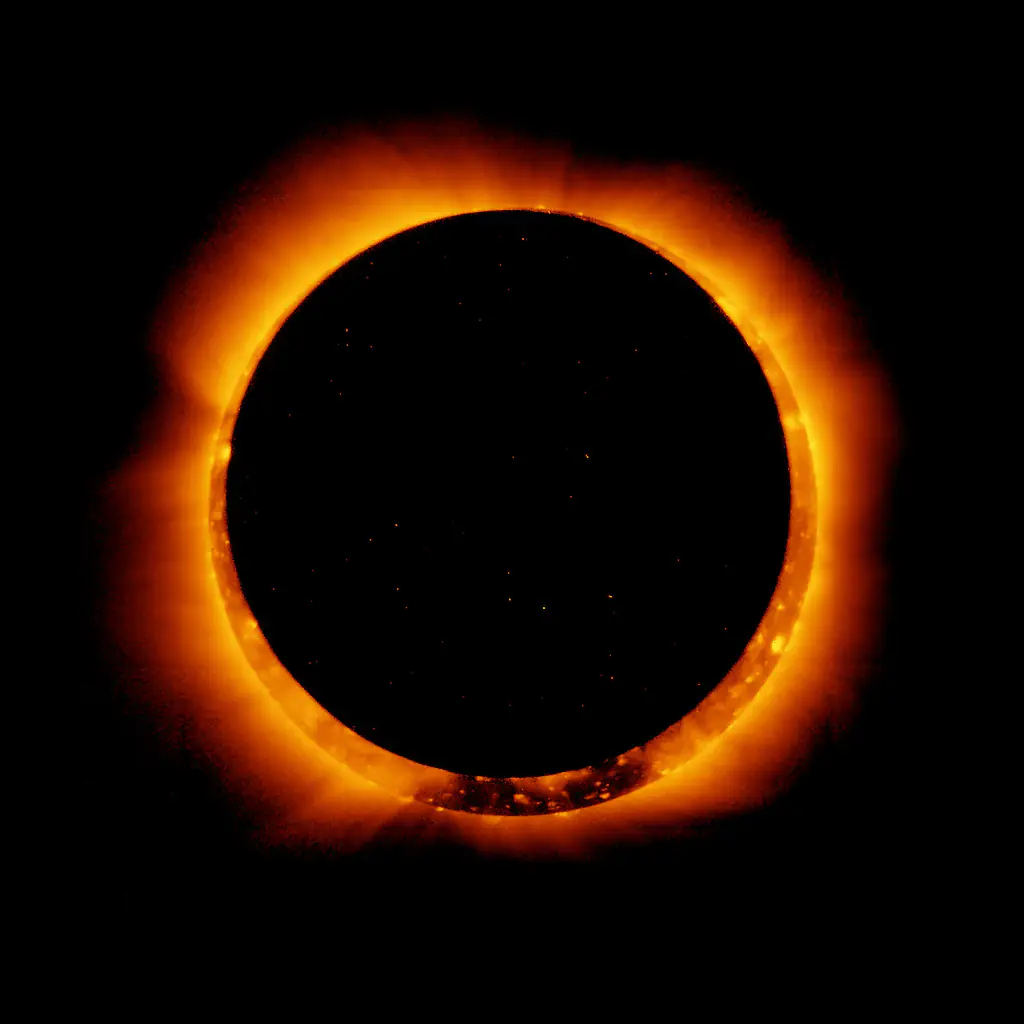
MailOnline reports that the eclipse is set to cast a shadow over Russia and Canada next week as the moon passes between the Earth and the sun, leaving a small slither of light.
For the ring of fire to be visible, it is imperative for the three stellar objects to be in alignment, with the moon as far away as possible from the Earth in its orbit.
The striking display will take place on June 10, with Canada, Greenland, and Russia being treated to the best opportunities to see the solar eclipse, which will be visible for three minutes and 51 seconds at most.
And for the absolute best chance of seeing the ring of fire, you'd have to be observing the skies from Qaanaaq, a town in Northwest Greenland.
Those who live in Northeastern states in the US may not be able to get a glimpse of the annular eclipse, but they might just be able to see a partially eclipsed sun at sunrise. This will be visible around the Atlantic coast.
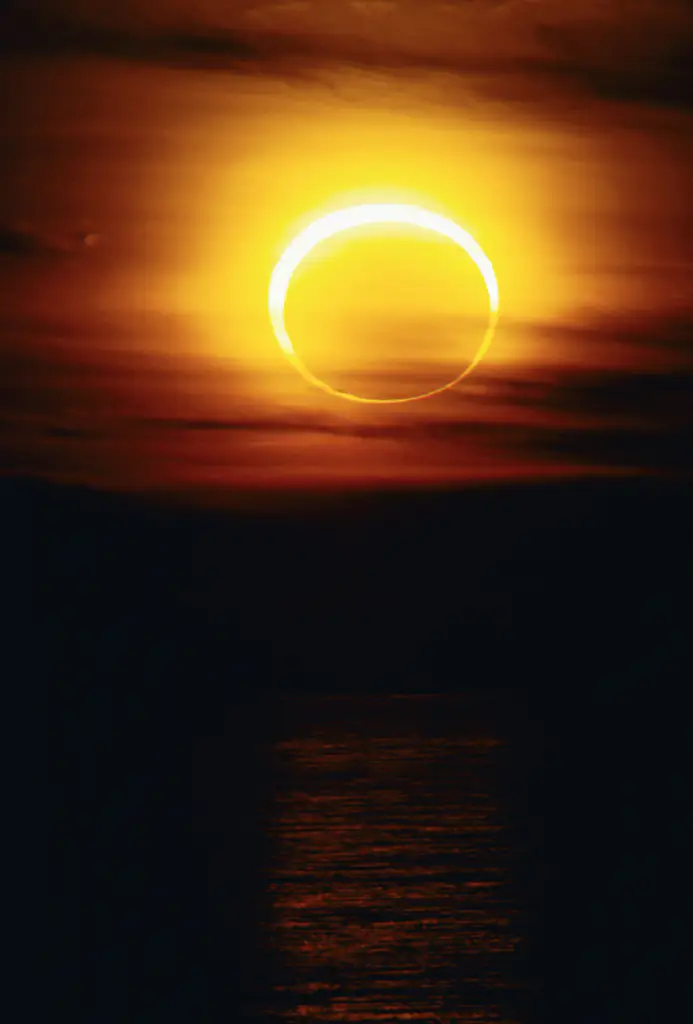
From South Carolina and north of the state, people should look in a northern direction just after sunrise for a chance to see the moon eclipsing the sun as it ascends the horizon.
In Philadelphia, New York, and Boston, 70 percent of the sun will be eclipsed by the moon during sunrise.
The phenomenon comes after the Blood Supermoon, which took place on May 26 and was visible from Australia, the US, and some parts of South America.
It occurs when a total lunar eclipse takes place at the time that a full moon emerges at its closest point to Earth in its orbit. Last month's Blood Supermoon gave the appearance of a large bright red moon.