


Space3 min(s) read
The James Webb Telescope has just discovered a mysterious world that astronomers had never encountered before
.jpg_xKEaT0?tr=cr-0.328.2730.3058,f-webp,q-70,w-100)
There's been a new update from the James Webb Space Telescope (JWST), with the innovative space technology allowing us to see deeper into space than ever before.
Ever since the telescope was launched on Christmas Day 2021, it has made several groundbreaking discoveries, and it doesn't look like it's slowing down.
Because of how light travels, JWST allows us to see further into the past, allowing us to uncover more mysteries of the universe.
It has so far discovered the first-ever exoplanet and surprisingly bright early galaxies, among other findings, but it's now made another huge leap by detecting the least massive brown dwarfs known to date.
In fact, some of these have a mass twice that of Jupiter.
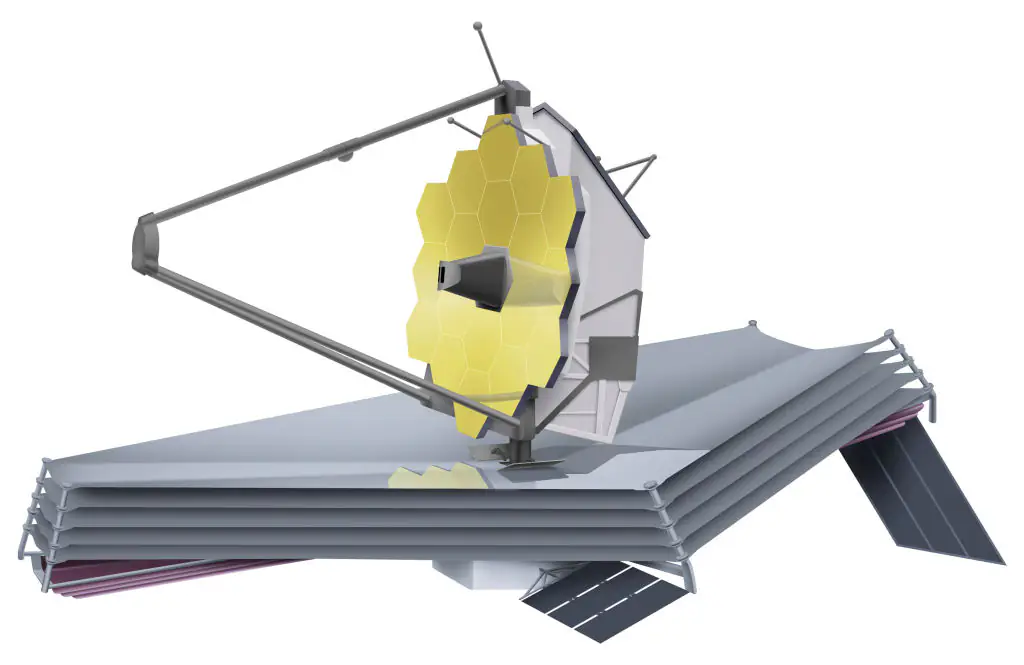
JWST finds smallest brown dwarfs
Humanity's most powerful telescope has an increased sensitivity to light, with NASA describing it as the 'largest, most powerful and most complex telescope ever launched into space'.
The telescope, which can see infrared light from distant galaxies from just 300 million years after the Big Bang, made the discovery of these brown dwarfs while studying the star-forming region IC 348.
This is located around 1,000 light-years from Earth, as per the European Space Agency (ESA), via UNN.
IC 348 is located in the Perseus constellation, which is one of the closest regions of active star formation in relation to our planet.
Astronomers have utilized JWST to see how small objects can be when they are formed during the star-formation process.
Brown dwarfs are formed after gas clouds collapse, like ordinary stars, but their mass isn't sufficient for hydrogen to be stably converted into helium in their cores.
Astronomers left shocked
Rewind the clock to 2022, and JWST had already found brown dwarfs in IC 348, though their masses were around three to four Jupiters each.
But now, these new, in-depth observations have allowed the tech to find objects with masses of around two Jupiters.
This works out to approximately 0.19% of the Sun's mass.
The ESA states that these are the least massive brown dwarfs known to man, with many questions being raised as a result.
Modern models of star formation are under the microscope, as objects this light have been able to form via a 'stellar' process.
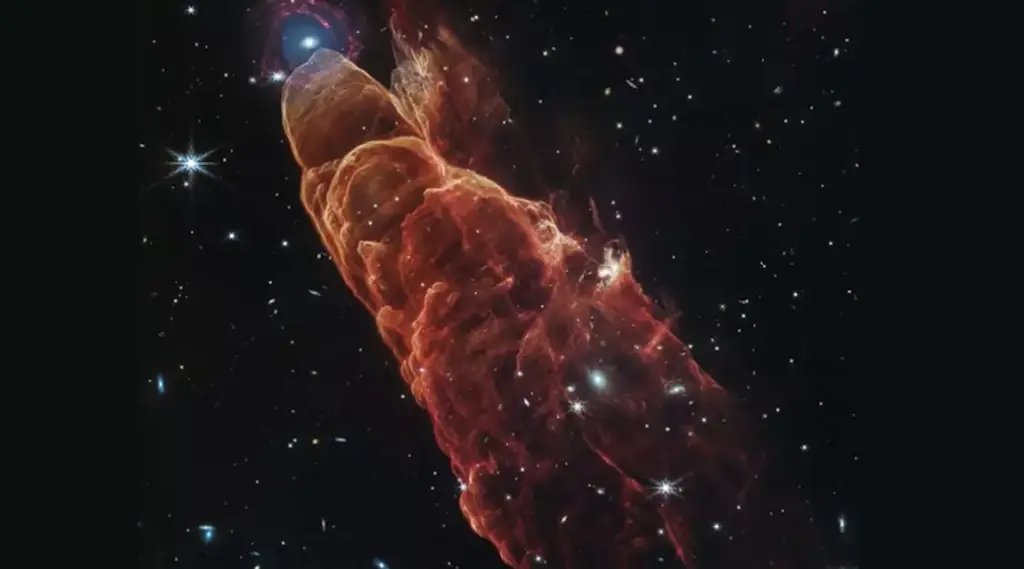
Additional discovery made
Astronomers were also surprised by findings near one of the new brown dwarfs.
Images show that there are signs of a disk of material around said object, meaning that planets could form, though the mass of the brown dwarf is still comparable to the masses of planets.
Scientists also discovered signs of hydrocarbons in the atmospheres of the smallest brown dwarfs, with scientists suggesting that low-mass objects could belong to a separate spectral class.
ESA has also made a large-scale image of IC 348 taken by JWST's NIRCam camera public, which reveals not just brown dwarfs, but young stars, protostars, and jets of material that are expelled by newborn stars into their surroundings.