


Space1 min(s) read
Meteor shower to light up the night sky with hundreds of shooting stars an hour this weekend
.jpg_I4Ebof?tr=cr-0.338.2730.3068,f-webp,q-70,w-100)
Now that 2020 is over and a new year has begun, a lot of people have been left wondering what we have to look forward to.
Although COVID-19 vaccines are beginning to be rolled out, many of us are still languishing under tight restrictions - praying for an end to this ongoing crisis.
Take a look at this incredible footage of a 2014 meteor shower:
[[jwplayerwidget||https://content.jwplatform.com/videos/tlyTgHjw-Q0L14jDU.mp4||tlyTgHjw]]
But if there's one thing that can definitely lighten your spirits, then that's stargazing. Yes, sometimes all it takes is gazing up at the night sky, peering at distant nebulae and faraway planets, to put our troubles in perspective.
So if you find astronomy comforting during these difficult times then I have some good news for you: an incredible meteor shower is due to light up the night sky with hundreds of shooting stars an hour this weekend.
[[twitterwidget||https://twitter.com/sjb_astro/status/1344978146165141506]]
Per CBS News, the Quadrantid meteors are due to shower between the late evening of Saturday, January 2 and Sunday, and the very early morning of January 3.
If the skies are clear, then you'll be able to view between 60 to 200 meteors per hour traveling at 25.5 miles per second. According to the American Meteor Society, Quadrantids are known for being bright fireball meteors, boasting longer tails and brighter and more colorful explosions of light.
[[twitterwidget||https://twitter.com/DrJozefKozar/status/1344222159649058817]]
Commenting on the celestial phenomenon, a NASA spokesperson told CBS:
"An alternative name for the Quadrantids is the Bootids since the meteors appear to radiate from the modern constellation of Bootes.
"Even though the constellation may no longer be recognized, it was considered a constellation long enough to give the meteor shower its name
"The reason the peak is so short is due to the shower's thin stream of particles and the fact that the Earth crosses the stream at a perpendicular angle."
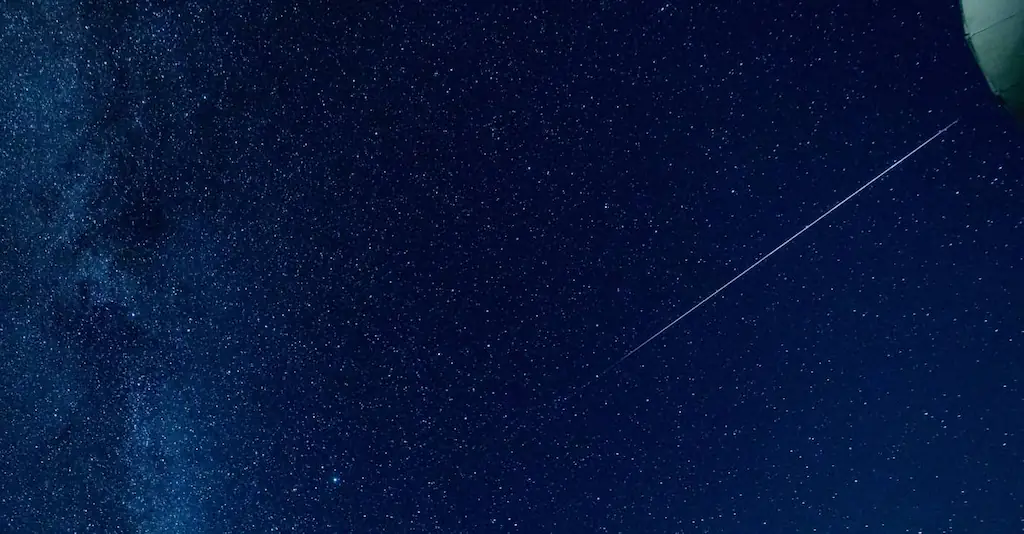
NASA states that the meteor shower in question is best seen from the Northern Hemisphere and that although a telescope is not required to view it, it's best to move away from urban environments and other areas of heavy light pollution to watch them.