


Space3 min(s) read
NASA sent one identical twin into space for a year while his brother stayed on Earth and the results were startling
.webp_lli6Ty?tr=cr-74.9.445.380,f-webp,q-70,w-100)
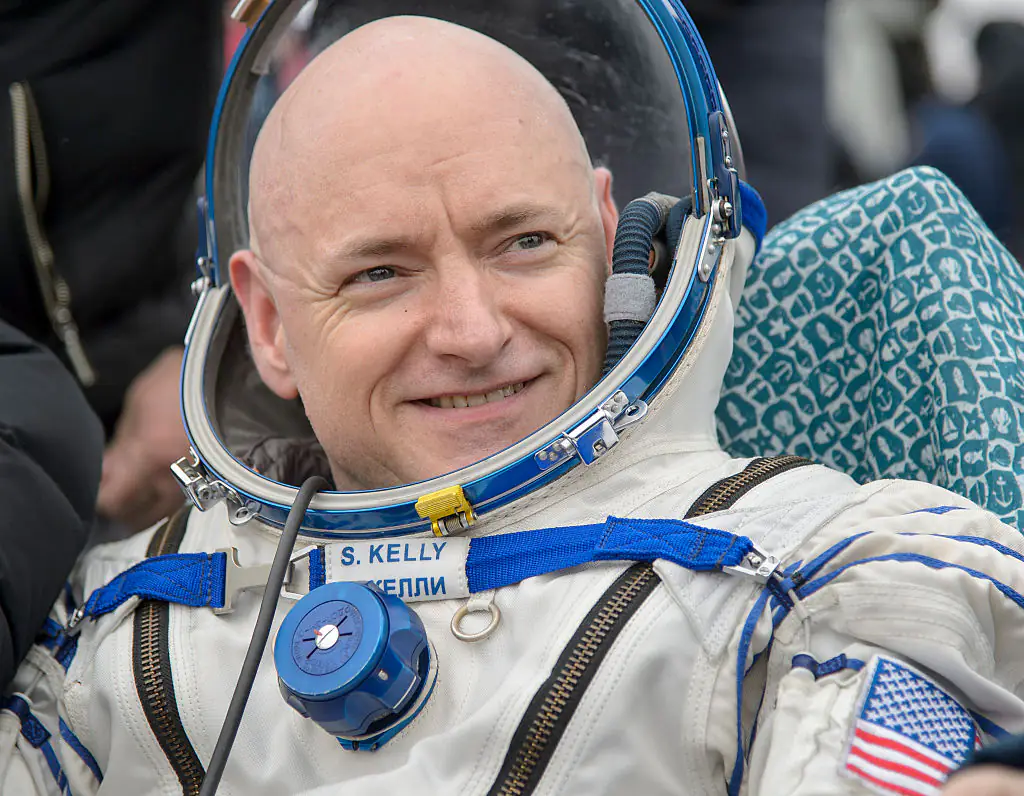
NASA revealed the results of an experiment after sending one identical twin into space for 340 days, while the other remained on Earth.
Scott and Mark Kelly are twin brothers who have both had careers as astronauts with NASA.
While both spent time among the stars, Scott was selected for a historic mission in March 2015 - spending an incredible 340 days in orbit aboard the International Space Station (ISS) alongside Russian cosmonaut Mikhail Kornienko.
Over the course of nearly a year, Scott and the ISS crew conducted almost 400 experiments, helping scientists understand how space affects the human body, a critical step in planning for future deep-space missions, including trips to Mars.

Crucially, sending one half of a set of twins on the mission, while the other stayed on Earth, allowed NASA scientists to compare the differences in their bodies once the mission was over.
Their identical genetic makeup provided NASA with a perfect control subject in Mark Kelly, a former NASA shuttle commander who remained on Earth, allowing scientists to compare the effects of space on the human body after Scott spent almost a year in orbit.
Both twins underwent extensive medical tests before, during, and after Scott’s mission, including blood, urine, stool, and saliva tests, vision and cognitive assessments, and physical performance evaluations.
The results, published in "The Twin Study," revealed some surprising findings:
1. Scott’s body adapted well to space
Despite spending nearly a year in microgravity, Scott did not develop any major long-term health issues linked to prolonged space travel. His immune system remained stable, and stress levels returned to normal shortly after landing.
2. Unexpected telomere changes
One of the biggest surprises involved telomeres - the protective caps at the ends of DNA strands that typically shorten with age.
However, in Scott’s case, his telomeres actually lengthened while in space. Since telomeres are linked to aging and diseases like cancer and heart conditions, this unexpected result left scientists stunned.
Steven Platts, deputy chief scientist with NASA’s Human Research Program, was impressed by the findings.
“The results we’ve seen… show the resilience and robustness of the human body,” Platts explained. “We’ve evolved here on Earth in a one-(gravity) environment, we grow up, we train, we do everything here, and yet, when we go into space… our bodies adapt and continue to function and, by and large, function extremely well.”
Most of Scott’s bodily changes returned to normal shortly after landing, except for a few markers that scientists had already expected to see in astronauts.
“This will guide future biomedical space research and allow us to have a safer journey to and from Mars,” Platts concluded.