ADVERT
Space1 min(s) read
Published 14:02 18 Oct 2019 GMT
NASA astronauts Jessica Meir and Christina Koch have made history today by conducting the first all-female spacewalk outside of the International Space Station in order to make a repair to its solar power network, CNN reports.
The spacewalk officially began at 7:38 am, when the batteries in their spacesuits activated and they exited the airlock. It is set to last approximately 5-6 hours.
According to NASA, the pair have been tasked with replacing a faulty battery charge/discharge unit (BCDU) that was unable to activate earlier this month when new lithium-ion batteries were installed on the station's exterior.
[[twitterwidget||https://twitter.com/Astro_Jessica/status/1184580065130098692]]
While the faulty battery has not seen a significant impact, it needs to be repaired nonetheless.
Koch, who will also be completing the longest single spaceflight by a woman as she remains in orbit until February 2020, said female astronauts being able to achieve such milestones was incredibly important.
"There are a lot of people who derive motivation from inspiring stories from people who look like them, and I think that it's an important aspect of the story to tell," she told a NASA briefing in Houston this month. "What we're doing now shows all the work in the decades prior from all the women that worked to get us where we are today," Meir added.
[[twitterwidget||https://twitter.com/Astro_Jessica/status/1178397987145474051]]
Kathy Sullivan the first American female spacewalker, who carried out her own mission more than 30 years go said she was very happy to hear about today's milestone.
ANASA spokesperson said: "Our achievements provide inspiration to students around the world, proving that hard work can lead you to great heights, and all students should be able to see themselves in those achievements."
An all-female spacewalk was actually supposed to be conducted back in March. Unfortunately, the mission, which would have involved Koch and fellow NASA astronaut Anne McClain was cancelled as there were not enough spacesuits in the correct size.
space1 min(s) read
Published 16:50 26 Mar 2019 GMT
This week, NASA announced that an historic spacewalk involving an all-female astronaut team had to be cancelled... because there weren't enough spacesuits for them. No, this isn't a metaphor for women being held back in the working world, it literally happened.
"With the first in a series of three spacewalks successfully completed at the International Space Station, NASA has updated astronaut assignments for the remaining two spacewalks and will preview the third in an upcoming news conference on NASA Television and the agency’s website," NASA announced yesterday.
One of the astronauts taking part in one of the upcoming spacewalks, Anne McClain, was due to go on a mission along with Christina Koch, but their plans were scuppered thanks to a wardrobe malfunction. Two more women, Mary Lawrence and Jackie Kagey, were also scheduled to take part in the spacewalk from the command centre in Houston.
"Koch had been scheduled to conduct this spacewalk with astronaut McClain, in what would have been the first all-female spacewalk," NASA explained.
"However, after consulting with McClain and [Nick] Hague following the first spacewalk, mission managers decided to adjust the assignments, due in part to spacesuit availability on the station. McClain learned during her first spacewalk that a medium-size hard upper torso – essentially the shirt of the spacesuit – fits her best. Because only one medium-size torso can be made ready by Friday, March 29, Koch will wear it."
Koch will now go on the spacewalk with male astronaut Nick Hague instead, claiming the one spacesuit suitable for the two female astronauts onboard. McClain, meanwhile, will have to wait to go on her next mission - and, again, she'll be accompanied by a male astronaut due to the lack of appropriate kit.
[[twitterwidget||https://twitter.com/AstroAnnimal/status/1110261172891275265]]
The mix-up was not entirely NASA's fault, as it was believed that Koch would wear a large-sized suit up until recent preparation for the mission, at which point she realised that it was better for her to wear a medium. The suit could be altered to be a better fit but, with the time that would take and the potential risks that could cause, the team decided it would be better to send another astronaut in McClain's place so that nobody would have to compromise their safety.
In the meantime, though, a lot of people have something to say about the matter.
[[twitterwidget||https://twitter.com/emmyrossum/status/1110524656463810561]]
[[twitterwidget||https://twitter.com/featherty/status/1110359197907148801]]
[[twitterwidget||https://twitter.com/MarieAnneLeCler/status/1110493671843987457]]
[[twitterwidget||https://twitter.com/RedGia/status/1110404105284005889]]
[[twitterwidget||https://twitter.com/mikamckinnon/status/1110313057463558146]]
The mission, which Koch and Hague will now go on, is to upgrade batteries on the exterior of the space station, and is expected to last seven hours.
space3 min(s) read
Published 16:17 06 Apr 2023 GMT
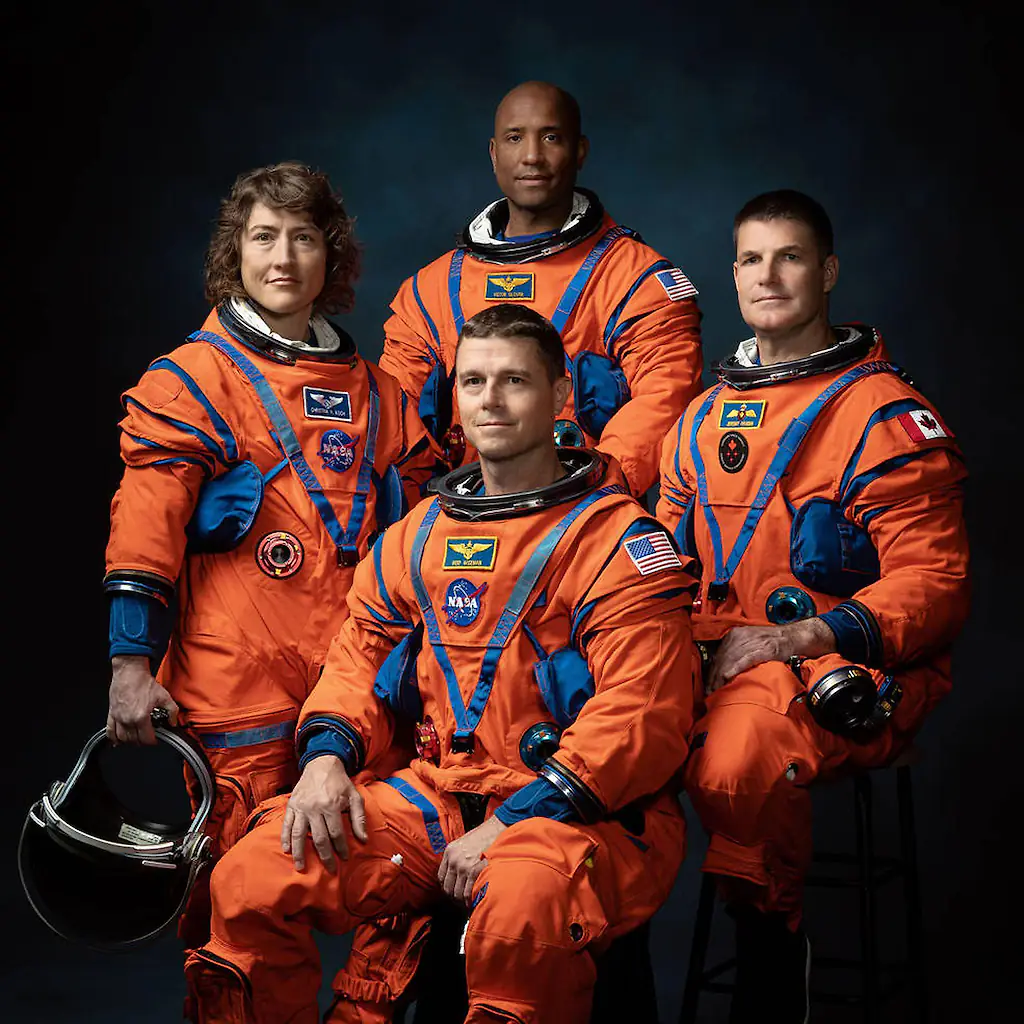
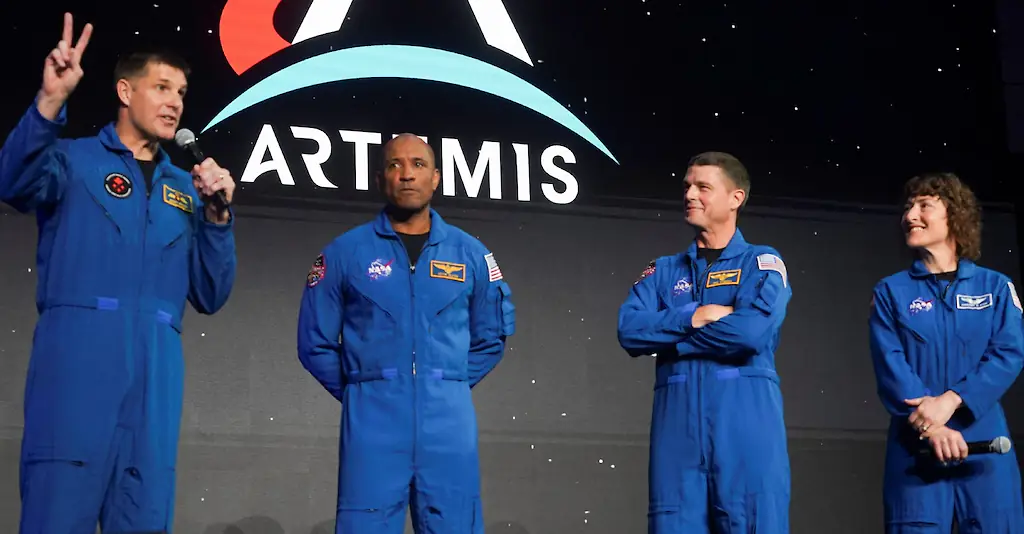
NASA has announced the first woman and the first Black astronaut to be assigned to a four-member team lunar mission.
On Monday (April 3), the National Aeronautics and Space Administration unveiled the crew for its first human mission to the Moon at a media event at the Johnson Space Center's Ellington Field in Houston, Texas.
The joint project between the space organization and the Canadian Space Agency will showcase three Americans and one Canadian taking flight.
One of the astronauts included is Christina Koch - an engineer who holds the record for the longest ongoing spaceflight by a woman - and she was named as a mission specialist.
In addition to this, US Navy aviator Victor Glover - who was part of the second crewed flight of a SpaceX Crew Dragon capsule - was chosen as the Artemis II pilot. He would become the first astronaut of color to be sent on a lunar mission.
Completing the team are 47-year-old astronaut Reid Wiseman, who will be the mission commander, and also 47-year-old Jeremy Hansen, who is a former fighter pilot now with the Canadian Space Agency.
The three Americans and one Canadian will become the first astronauts to venture into deep space since the Apollo missions ended in 1972. They will voyage around the moon and back to Earth on a 10-day mission preparing for Artemis III.
The organization's aim for the task is to launch a long-term presence on the moon. The flight will launch the agency's Space Launch System rocket, establish the Orion spacecraft's life-support systems and also glance into the abilities and techniques required for humans to live and function in space.
The mission commander shared that the diverse team was made up of "exceptional operators," noting, "We’re just all professional explorers," as cited by News.com.au. He added that they are "representing" their nations.
According to The Mirror, Vanessa Wyche, the director of the Johnson Space Center spoke about the historic assignment and said: "For the first time in more than 50 years, these individuals- the Artemis II crew - will be the first humans to fly to the vicinity of the moon."
"Among the crew are the first woman, the first person of color, and the first Canadian on a lunar mission, and all four astronauts will represent the best of humanity as they explore for the benefit of all," she continued.
"This mission paves the way for the expansion of human deep space exploration and presents new opportunities for scientific discoveries, commercial, industry, and academic partnerships, and the Artemis Generation," she added.
Good luck to the team on this exciting mission!
space4 min(s) read
Published 15:59 12 Sep 2024 GMT
A tech billionaire has become the first civilian to do a spacewalk, and shared a poignant message back to those on Earth while doing so.
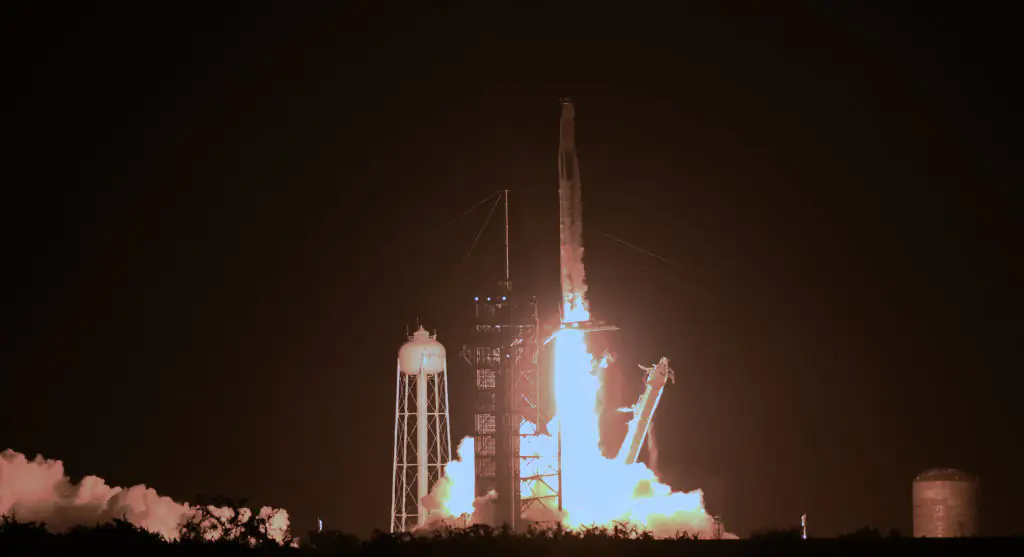
Jared Isaacman, 41, was one of those on board SpaceX's Crew Dragon capsule on its current mission to space.
Isaacman came out of the capsule on a tether just before 7AM on Thursday (September 12) to view the Earth from space.
It is the furthest from Earth that a human being has traveled since the Apollo moon missions, over 50 years ago.
The spacewalk was finally able to progress after SpaceX initially delayed the planned start by a few hours.
No explanation has yet been given as to why it was suddenly delayed, however, SpaceX said via Twitter (now X) that "all systems are looking good."
After emerging from the capsule and into space, Isaacman shared a poignant message, saying: "Back at home we all have a lot of work to do, but from here, Earth sure looks like a perfect world."
After around 15 minutes outside, Isaacman was replaced by SpaceX engineer Sarah Gillis, who was then slated to be followed by two other members of the crew - engineer Anna Menon and former Air Force Thunderbirds pilot Scott “Kidd” Poteet.
The spacewalk itself was scheduled to last around 30 minutes, with the full procedure to prepare and finish safely expected to take around two hours, with the experience being live streamed by SpaceX.
Before the crew was allowed to open the hatch and leave the vessel, they were seen waiting inside for the capsule to be completely depressurized.
The crew left Earth on Tuesday for the mission, which is expected to last five days until they return.
Isaacman, who is the CEO and founder of the credit card processing company Shift4, had helped to design the new SpaceX suits he and the crew were wearing for the mission.
Officials had confirmed that Isaacman would be able to leave the capsule but remain tethered to it, keeping at least one hand or foot on it to ensure his safety.
At present, longer spacewalks which are untethered are only able to be done wearing NASA space suits, which are equipped with jet packs for astronauts to be able to propel themselves back to safety.
The Crew Dragon does not have a pressurized airlock, meaning that all of the crew were required to wear the new spacesuits to protect themselves from vacuum conditions while on the mission.
The spacewalk took place once the capsule reached a distance of almost 870 miles above Earth, far past the location of the International Space Station and surpassing the Earth-lapping record set by NASA's Project Gemini in 1966.
It is the first time a civilian has been able to achieve such a feat, which has previously only been completed by trained professional astronauts.
Only the 24 astronauts who were part of the Apollo mission who flew to the moon have been further into space.
This mission has marked a significant step in space tourism, and while for most it would be a once-in-a-lifetime experience, Isaacman purchased three trips from SpaceX founder Elon Musk in 2022.
It is not known how much he paid for the trips, but he was also among the first group of space tourists who were taken up in 2021, with Isaacman setting a record by being the first space tourist to circle the Earth without having a professional astronaut on board.
space3 min(s) read
Published 17:10 04 Mar 2025 GMT
celebrity4 min(s) read
Published 13:41 14 Apr 2025 GMT