Vegetarian fast food is growing in demand.
Whilst there are clear health benefits to plant-based living, a herbivorous outlook does not have to be an exclusively healthy one.
Here, we take a look at the growing demand for vegetarian fast food – and why the fast food industry needs to listen.
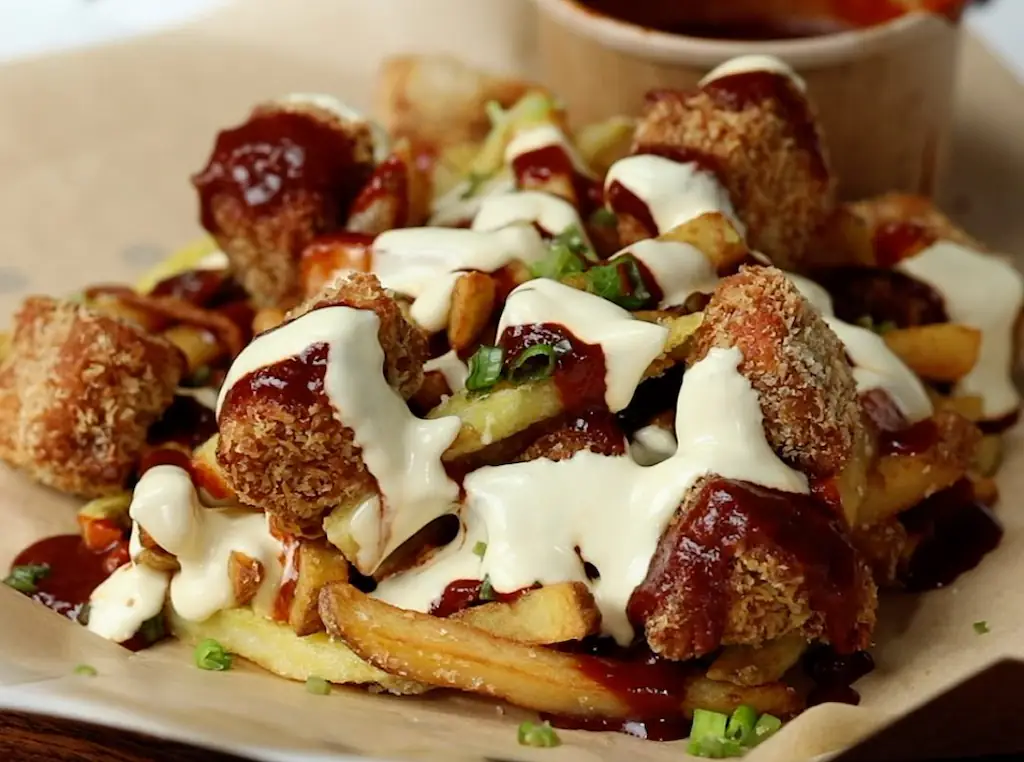
[caption id="attachment_12628828" align="aligncenter" width="2560"]
How has vegetarian junk food taken over the industry? (Credit: PA)[/caption]
Our love of fast food explained
There are many reasons for our modern love affair with fast food - speed, price, convenience and, above all, taste.
Fast food is designed to make us feel good, containing high levels of fat, salt, sugar and many other dangerously delicious ingredients.
READ MORE: What food is vegan? 8 everyday treats that are vegan-friendly
While large amounts aren't advisable for a healthy diet, the reaction they provoke is instantaneous and gratifying.
The modern fast food industry is essentially a box-ticking exercise for our pleasure receptors. Every famous franchise has found a way to deliver the right combination of tastes and textures that keep us coming back for more.
[[twitterwidget||[[instagramwidget||https://www.instagram.com/p/BbSaOCclb6q/]]]]
The challenge for vegetarian fast food
For some cultures, vegetables are absolutely integral. However, they have often been maligned in the modern Western world – where indulgence is synonymous with fried.
Science can help explain this divide. Vegetables are clearly not as salty, fatty or sugary as meaty alternatives. They also lack the more naturally stringy, chewable texture of flesh, which makes for a different eating experience.
But it's not just the difference in taste and texture that vegetarian options must overcome. Despite how essential vegetable dishes have been throughout history, there is a new, modern and peculiarly Western attitude to vegetarianism and veganism.
Often, vegetarian and vegan diets are unfairly labelled as pretentious lifestyle choices. Unfortunately, this is not what people want from their comfort food.
All in all, vegetarian fast food has faced an uphill campaign to win hearts and minds, challenge common misconceptions and overcome an inconvenient scientific reality.
Watch James Arthur eat Twisted's epic vegan Big Mac:
Perhaps the earliest attempt at Westernised vegetarian fast food was the veggie burger.
The DNA of the modern veggie burger is in many ancient Eurasian cuisines.
But it wasn't until the 1980s that what many of us would consider as the archetypal example was created.
The patty has many forms, and can be made from beans, mushrooms, legumes or grains. When the first version was created in London, the invention quickly took over to become the staple vegetarian option of fast food.
Though the veggie burger was undoubtedly a game-changer, it still lacked something - the intangible and unique texture of “meatiness”. Somewhere between sinewy and soft, this quality is impossible to replicate through a “traditional” vegetarian approach.
Unaltered fruit and vegetables simply do not have this consistency. This is why vegetarian food companies are trying to replicate the “feel” of meat. In recent years, this has given rise to a new batch of meat alternatives.
[caption id="attachment_46751" align="alignnone" width="1080"]
Even Twisted makes our own vegetarian fast food! (Credit: Twisted London)[/caption]
What is seitan?
Arguably the most successful modern meat surrogate is seitan.
Though seitan has been around since the 6th Century, its use in Western fast food is relatively new.
Seitan provides both the chewy consistency and the structure to handle cooking techniques such as deep frying. These attributes have helped the western fast food industry embrace the product with open arms.
In London, restaurants like Temple of Seitan go to show the popularity and potential of the meat substitute. It's fair to say that products like seitan have helped veggie options become a staple on fast food menus.
[caption id="attachment_12628831" align="aligncenter" width="2560"]
Seitan can come in many forms (Credit: Pa)[/caption]
The future of vegetarian fast food
Vegetarian fast food has come a long way over the last ten years.
In fact, it has helped challenge our perceptions of what junk food has to be.
Today, there are a host of companies developing new ways to take veggie food to the next level.
With global concerns about the amount of meat we’re eating, meat supplements could takeover the food industry.
Bearing this in mind, it seems unlikely that we will be able to taste the difference.
Seemingly every other week, there's a new diet making the rounds on social media, promising to help us shed the pounds without all that insane discipline or compromising too much in terms of deliciousness. It's a tricky balancing act, and there's a ton of people out there peddling different types of food discipline.
Alongside the vegetarians, vegans and the regular meat eaters, we've got the more left-field eaters who employ a different way to diet. We're talking pescatarians, we're talking about the keto diet and the Atkins diet, we might even be talking about the carnivore diet. But have you ever heard of a flexitarian?
[[imagecaption|| Credit: Getty]]
I hadn't either, but once you figure out what it is, you'll realise you might have been one all along. According to registered dietitian Dawn Jackson Blatner, the newest diet is one you're very familiar with.
"'Flexitarianism' is the hot new term for healthy dieting that minimizes meat without excluding it altogether. This is an inclusive eating plan, meaning it does not take away foods but rather adds new foods to those you already eat. The Flexitarian Diet gradually guides you to eat more veggies while still enjoying your favorite meats."
[[imagecaption|| Credit: Getty]]
Now, I don't know about you, but I feel as if we're already really familiar with the flexitarian diet. The way it's described, it's a combination of eating meat with vegetables and other non-meat products. It... it sounds a lot like... just being an omnivore.
But even so, that's not stopped some food brands from jumping on the trend, and producing some flexitarian menu foods. One such brand is the budget favourite Aldi, who made the rounds last week for producing a 'flexitarian' burger, but not everyone's exactly what you'd call "on board".
[[imagecaption|| Credit: Aldi]]
Okay, so above you should be able to spot the flexitarian burger, made with what looks to be fresh British beef. But one angry vegan is slamming Aldi for their newest store item. Laura Paterson posted an astonishing rant about Aldi flexitarian burgers on Facebook, letting everyone know exactly how she felt about flexitarianism.
"Are you taking the mickey? Is this for real? Flexitarian is not a thing. You either eat meat or you don't. Don't use Flexitarian as a poxy bit of advertising to flog your products. It's a meat burger and that's all there is to it. You've got this very wrong."
"If you're eating meat, technically you're an omnivore," she added, but the 44-year-old vegan got smacked down on the social media post, with other people labelling her a "ranting hysterical bore". This from user Robert John:
"Surely you should be encouraging people to try this diet rather than pushing them straight to veganism where ranting like a hysterical bore becomes a massive side effect!"
Yeah, it didn't take very long for things to descend into a flame war, this being the internet and all. But at least we've got a new way to eat that can help us to feel better about our dieting choices. Well, if we could stop arguing about it, that is...
A video circulating on social media of freshly cut meat is ruining people's appetite and causing some people to declare they want to turn vegetarian.
Meat eaters and vegetarians often appear to be constantly at odds with each other over dietary choices and requirements, and much like cats and dogs it seems nobody will see eye to eye.
Vegetarians and vegans often seem exasperated that those who chose to eat meat appear to disregard their pleas of wanting to save animal lives and help the environment.
Then meat eaters accuse those who have chosen a plant-based diet of being overwhelming and pushy about their views when a diet is a personal choice.
Meat eaters may soon be questioning the choices of what they consume following a viral video that is, quite honestly, incredibly gross.
The video has been viewed over 250,000 times since it was shared on Twitter, and appears to show the freshly cut meat spasming and moving when salt is applied.
Looking like it has come straight out of a horror movie, the muscle has a mind of its own as it twitches and flaps about uncontrollably.
The same gross twitching - or intriguing depending on how you look at it - has been seen to happen with squid and frog legs when soy sauce is added.
There's no need to panic - it's not the animal trying to come back to life to seek its revenge - there's a scientific explanation behind the contractions.
As per NPR, when salt (or a salty substance such as soy sauce) is added to freshly killed flesh it causes a chemical reaction that forces the intact and still operational muscles to spasm.
"Extra sodium (the salt) sends ions to the cell that trigger the cell to open up, creating a cascade of chemical activities that causes the cell to fire, so the muscle twitches," Robert Krulwich from NPR states.
Regardless of the science behind it, people still think watching a chunk of flesh moving of its own accord to be quite disgusting, with one Twitter user saying: "Well, this picture could make me give up eating meat."
A second person said: "honestly - can watch a lot of vegetarian/vegan horror videos of factory farming etc. BUT...this actually affects my mind more...might be doing meatless for a few days now."
A third person added: "Yo! I ain't eating meat again," with a fourth saying: "I could've done without this knowledge."
The video is sure to put people off their dinner, if not stop them from eating meat altogether.
Featured image credit: Lisovskaya Natalia / The Picture Pantry / Alamy
With more than 22,000 restaurants in 136 counties, KFC is undoubtedly one of the most popular and dominant names in the fast-food industry.
However, as time goes on, more and more people are opening their eyes to the impact meat-farming has on the planet, and many others are simply choosing to shun meat-based products for moral reasons - believing that no animal should be bred simply to be killed and eaten.
Last year, The Economist published an article detailing how 2019 would be the year of the vegan, stating:
"In America in 2015, according to one survey, 3.4% of the population were vegetarian and just 0.4% were vegan. But 2019 will be the year veganism goes mainstream."
Love meat and fast-food? Then you'll love watching this GIANT mayo chicken be constructed:
And there's no denying this has been the case. More and more supermarkets, outlets, and restaurants are selling vegan products, with global giants McDonald's even releasing McVegan burgers. As The Economist states:
"Giant food firms are clambering onto the bandwagon, creating vegan lines of their own, buying startups, or both. Tyson Foods, a meat behemoth, has a 5% stake in Beyond Meat, which sells meat-free patties to TGI Friday’s."
Now, the Colonel is getting in on the plant-based lifestyle, and is teaming up with Beyond Meat to bring vegan KFC meals to the States.
Per FoodBeast.com, as of August 27, KFC will start selling their new range of vegan products in the US. This comes after vegan products were successfully trialed in the UK. Check out these happy customers (being honest, the products look delicious):
The first items on the US menu will include two different Beyond Fried Chicken options. You can order yourself some nuggets with a choice of dipping sauce or boneless "wings" tossed in either Nashville Hot, Honey BBQ, or Buffalo sauce.
And the prices are very fair, too. The four-nugget option will cost just $1.99, and there are also combo meals featuring 6 or 12 nuggets for $6.49 or $8.49, respectively. As for the "wings", they're up for grabs for just $6 for 6, or a full dozen for $12.
However, these options won't be available to everyone just yet. KFC is looking to trial the new meat-free option at just one location only for now - and that's at the following restaurant in Atlanta, Georgia:
2637 Cobb Pkwy South East, Smyrna, Ga.
On August 27, complimentary samples of the vegan products will be given out between 10:30 am and 6:30 pm local time, and feedback from this test will determine whether or not the Beyond nuggets and boneless wings will be hitting more restaurants nationwide.
Remember, it's best to try and support the increase of vegan products, and not act like this guy:
If you think about it, it's very smart business from KFC - simple supply and demand. And to anybody who is annoyed by this news, just remember how grateful we are to even have just a diverse choice when it comes to what we eat.
With Veganuary well underway, plant-based diets and dishes are firmly in the spotlight. A recent study from the Vegan Society revealed that there are around 600,000 vegans now living in Britain alone, meaning that meat-free meals are increasingly on the agenda. Small wonder that fast food businesses are muscling in on the market.
Last year saw famous brands like KFC and McDonald’s announce plans for vegan-friendly products to appeal to this growing demographic. Now, at the start of a new decade, Burger King appears to have joined the movement with the release of their Rebel Whopper. However, as quickly became abundantly clear, all was not as it seemed with the plant-based dish.
Despite being made with a meat-free patty, it was soon revealed that the sandwich is surprisingly “not suitable” for vegans and vegetarians. According to a report by the BBC, the “soy-based version of (the) Whopper burger is cooked on the same grill as meat burgers”, meaning that it has contact with the meaty patties that it is intended to replace. To top it off, the Rebel is also served with egg-based mayonnaise.
Watch as boy pledges to donate $1 million to veterans if Trump can go vegan for a month:
The revelations around the dish’s cooking method prompted an almost immediate backlash on social media. Several accused the brand of “jumping on the bandwagon” of veganism, while Lifestyle blogger Donna Wishart wrote on Twitter:
“And it’s served with mayonnaise with eggs in. When every other fast food company is delivering actual vegan products it’s such a shame Burger King can’t be bothered to do the same.”
Sam Calvert, head of communications at the Vegan Society, echoed these claims, stating that the decision to not make the new burger vegan "seems a missed opportunity" and that products like vegan mayonnaise are “readily available” and used by competitors.
Though the backlash was severe, Burger King quickly issued a response. Katie Evans, marketing director for the brand, said the burger was aimed at "flexitarians" and was intended to recreate Burger King’s "flame-grilled taste" as closely as possible.
Perhaps surprisingly, Toni Vernelli, international head of communications and marketing at Veganuary, also rejected the idea that the brand was attempting to "capitalize on the vegan pound", insisting that "increasing the availability of plant-based options" was ultimately the best way to reduce overall meat consumption.
This article originally appeared on TwistedFood.co.uk
A trip to IKEA is a rite of passage for anyone trying to give this whole 'adulting' thing a go. Whether you're genuinely trying to find yourself a desk, a bed, or some state-of-the-art storage solutions, or you're just wandering through to sit in the display living rooms and imagine what life could be like, IKEA makes furniture shopping fun.
But before you think I'm going to keep rambling on about the Swedish furniture and homewares company like they're sponsoring me to (I wish), let me digress to share a story about someone who did not have such a chummy time at IKEA.
A woman has been left "mentally shaken" after she took a bite from a hot dog that was accidentally given to her instead of the vegetarian one she ordered. She was visiting the Exeter branch of IKEA with her family when things took a turn.
"I ordered a vegetarian hot dog from the deli area and when it arrived it looked just like the picture that was shown next to it on the menu board," Fern Jackson told Devon Live. "I put some ketchup on and took a bite, but as soon as I did I knew something was not quite right."
The 22-year-old claims never to have eaten meat in her life, and knew immediately after the first bite that something was off.
"I told my grandma it didn’t taste right and we called the manager over to have a look," she recalled. She said when the manager took a look at the food, they confirmed that she had been given a pork hot dog. Fern said it left her feeling "sick for days".
"She told me it definitely wasn’t a vegetarian hot dog," she said. "They look completely different. A meat hot dog looks like a normal Frankfurter but the vegetarian one is clearly lots of vegetables like peas and sweetcorn compressed together."
"I was so angry – it’s the first time meat has passed between my lips in 22 years.
"I have never eaten meat, fish or even gelatin my entire life. My mum was even vegetarian when she was pregnant with me."
Fern was understandably very upset, and was angered even further when all she got was an apology from IKEA. She was later told by the manager of the store she visited that all staff would be getting a refresher course on their allergen training.
"Sorry just doesn’t cut it I’m afraid," she said, before describing how unsettling it had been for her in the following days.
"My body isn’t used to meat so I think I had a bad reaction. It lasted for about two days.
"I think it left me pretty mentally shaken as well, I have never liked the idea of eating something that was once living and that has really played on my mind.
"I’m very angry at the whole situation, it’s been a really bad experience for me."
She claims she doesn't want compensation, and if she is given money as an apologetic gesture from the furniture store, she would be donating it to an animal charity.


.jpg_I4Ebof?tr=cr-0.338.2730.3068,f-webp,q-70,w-100)



.webp_QQJmGo?tr=cr-345.0.1535.1190,f-webp,q-70,w-100)

.jpg_I4Ebof?tr=cr-0.338.2730.3068,f-webp,q-70,w-1024)

.webp_QQJmGo?tr=cr-345.0.1535.1190,f-webp,q-70,w-1024)


