


Stories3 min(s) read
Researcher responds to call claiming python ate woman only to discover something even more disturbing inside

A wildlife researcher responding to a panicked call claiming a python had swallowed a woman found something completely different when the snake was opened up.
Wildlife biologist Rosie Moore has built a career around getting close to animals most people would prefer to avoid, from sharks and crocodiles to snakes in Florida's Everglades.
"Anything that can kill you is what I want to figure out," Moore told PEOPLE. "I think people overestimate how dangerous some animals are because they just don’t have any baseline knowledge on how to operate or be around that animal."
But even Moore was shocked by what she came across after receiving a call about an 18-foot python.
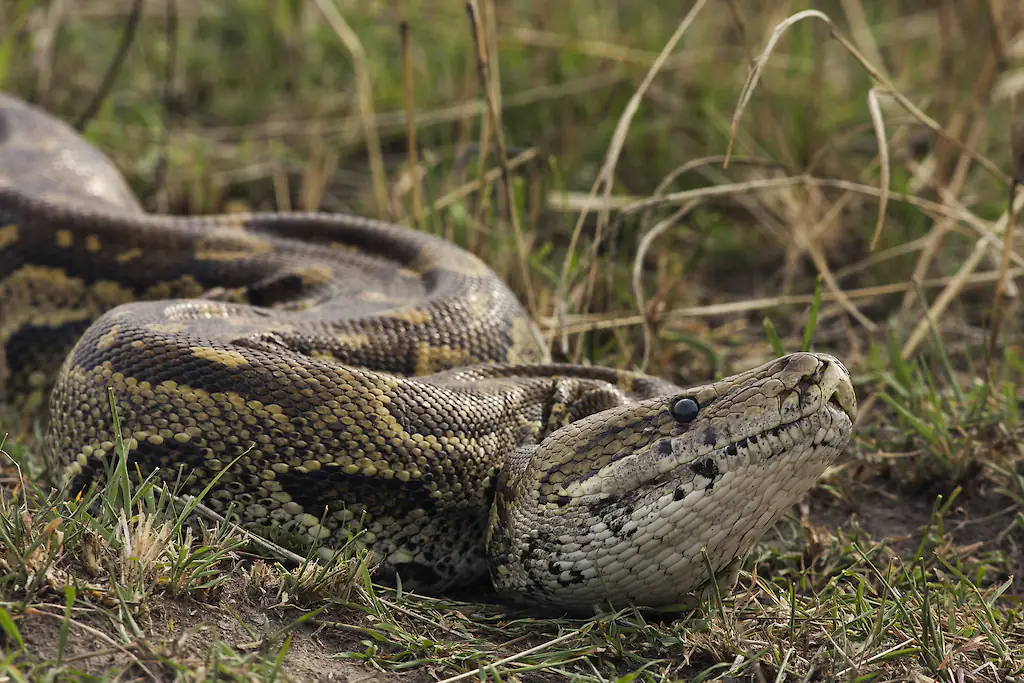
A panicked caller believed the python had swallowed a woman
Moore was working in the Everglades when she received the unusual call.
According to the researcher, the people involved believed the massive snake had swallowed a woman and were "panicked".
The animal was subsequently beheaded and brought to Moore and her team.
When the researchers opened the python, they did not find a person. Instead, inside was an intact five-foot alligator.
"The alligator is the size of me, and the snake literally went from one side of the room to the other because it was so big and so heavy," Moore recalled. "That was one of the craziest Everglades experiences ever. It’s very, very rare to see that in the wild, or get to dissect it and necropsy that, so that was really cool."
Burmese pythons are among the snakes found in the Everglades and are constrictors, meaning they overpower prey with their muscular bodies rather than using venom.
The encounter offered Moore a rare opportunity to examine firsthand a huge python that had swallowed another predator.
Researchers believe invasive pythons have contributed to declines in native wildlife and mammal populations in the Everglades.
Moore's fascination with dangerous wildlife started early
The wildlife biologist learned to scuba dive at just 10 years old with the help of her father, who was a search-and-rescue diver for the police force.
At 18, she relocated to Florida, where she began gaining experience with sharks.
She later worked in the Everglades, encountering crocodiles, pythons, and other snakes, before opening her own nonprofit for reptile research.
Moore also took a position with the International SeaKeepers Society, where her work includes extreme marine expeditions to locate rare species and tag dangerous wildlife.
Her career has also put her in some challenging situations.
During one research trip to Suriname, Moore developed an intense fever and full-body rash but continued completing the group's 12-mile daily hikes.
When she returned home, she learned she had dengue fever, which is contracted through mosquito bites.
She has also spent a month living aboard a boat and entering the water every day to swim with sharks.
Despite the potential dangers, the researcher said her work is about far more than seeking out extreme encounters.
"People ask me all the time, they’re like, 'Why are you doing that? And why would that even be worth it?'" she said. "A lot of the things I’m doing are for research and for protecting the animals, and also documenting the animals and filming."
"So, to me, it’s always going to be worth it because that’s just my lifestyle, and that’s just what I want to do. I can’t imagine what I would do if I wasn’t doing stuff like that in my spare time," she added.