Uncategorised5 min(s) read
us3 min(s) read
As fatal overdoses continue to plague the streets of America after a new street drug was reported to have killed over 2,000 people, a new bill has been introduced to Congress.
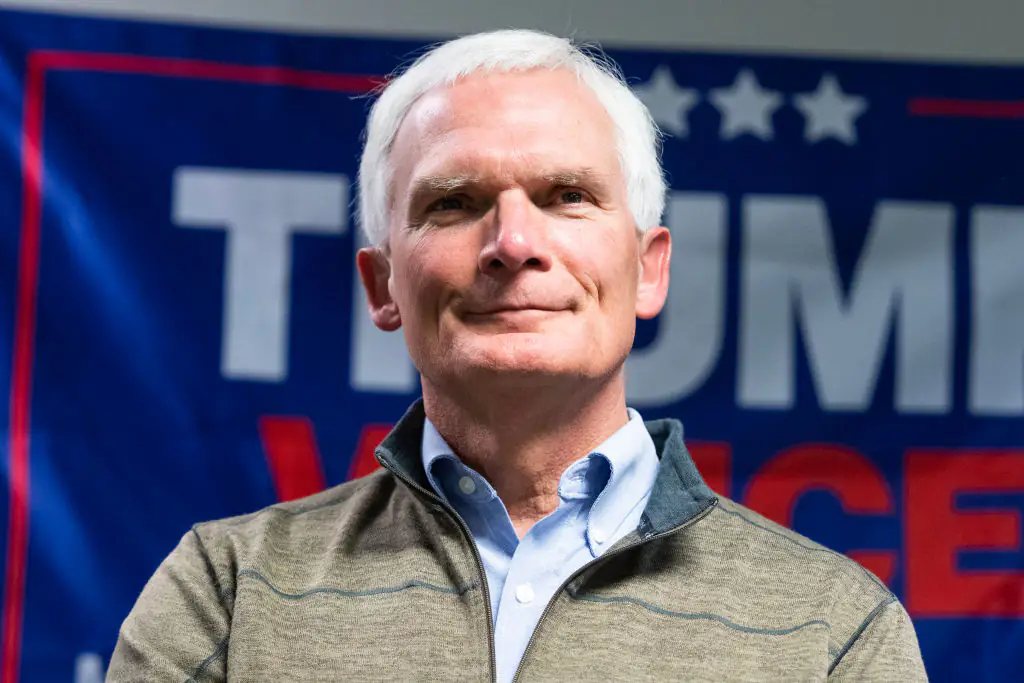
On March 18 Congressman Bob Latta introduced the Strengthening Tools to Outlaw Poisonous (STOP) Nitazenes Act.
The bill sets to permanently schedule 2-benzylbenzimidazole opioids, commonly known as nitazenes, as Schedule I controlled substances.
This would mean that the drugs are ruled to have no medical purpose and would be much more strictly regulated than if they remained classed as schedule 2 drugs.
Nitazenes, an extremely dangerous type of synthetic opioids are becoming one of the main contributors to overdoses nationwide.
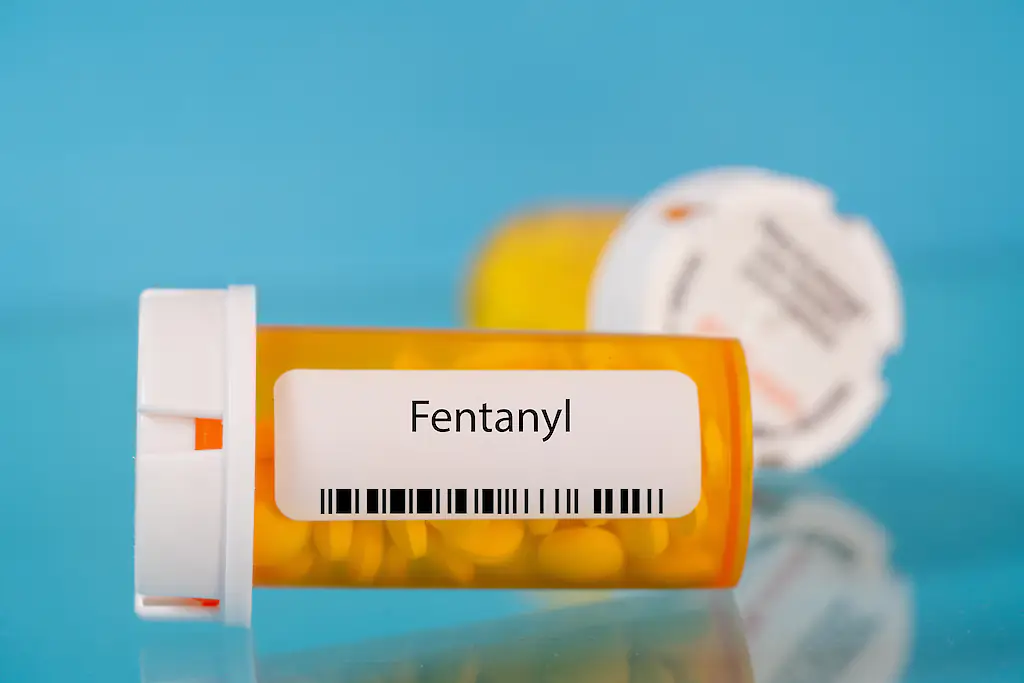
In a press release Bob Lutta said: "Families in Ohio and across the nation have already felt the devastating impact of the ongoing fentanyl crisis.
“With the rise in nitazene use, the opioid epidemic is becoming even more dangerous. That's why I introduced the Stop Nitazenes Act, to permanently classify nitazenes as a Schedule 1 drug, the most restrictive category, and to help curb the use of illegal opioids in our country.
“We must act now to stay ahead of the growing number of lives affected by this deadly drug."
It has been reported that some nitazenes are up to 800 times more potent than morphine and 40 times stronger than fentanyl, drugs that have historically been linked with street overdoses.
Similar to street drugs laced with fentanyl, users are often completely unaware that the substance they are using is laced with nitazenes.
Around 2,000 people in the US have died from nitazene-related overdoses since 2019 according to Medical Discovery News, and the number is predicted to continue growing.
The synthetic opioids were developed in the 1950s by an Austrian pharmaceutical company but were never approved for medicinal use and trickled into illegal markets instead.
As nitazenes are more potent than fentanyl, smaller quantities produce the same effects, therefore making it more cost-effective for production and distribution.
Potentially more significantly, they flew under the regulatory radar as authorities largely did not know of their existence, so the punishment for possession or distribution is less clear cut.
Illegal laboratories are thought to have discovered the chemical formulas for nitazenes in historical textbooks and learned how to synthesize them.
They are made, alongside experiments to create new strains using raw materials often supplied by Asian sources, across America and Mexico.
In 2023, synthetic opioids made up 70% of the 105,000 overdose deaths in the US, with fentanyl being the most prevalent.
Tragically the number of fatal overdoses is expected to increase dramatically as nitazenes surge in popularity, but hopefully stricter regulations will ease the increase.
health2 min(s) read
A university professor has admitted that he regularly uses heroin recreationally and claims that it hasn't negatively affected his life, health, or career.
Carl Hart, a professor of psychology and neuroscience, chairperson at the psychology department of Columbia University, and a published author has spoken about his heroin use at length in a newly-published non-fiction book.
In Drug Use for Grown-ups: Chasing Liberty in the Land of Fear, the 54-year-old describes how, in his opinion, heroin and other class A drugs have been unfairly demonized compared with alcohol.
Hart has espoused also the belief that the western world's perspective on drug culture is a way for the white hegemony to prop up structural racism and to protect America's prison industrial complex.
Per The New York Post, the father-of-three stated:
"There aren’t many things in life that I enjoy more than a few lines by the fireplace at the end of the day.
"I pay my taxes, serve as a volunteer in my community on a regular basis and contribute to the global community as an informed and engaged citizen. I am better for my drug use."
Hart went on to state that, although he does enjoy taking heroin and believes he uses the drug responsibly, he admits he does suffer from mild opioid withdrawal symptoms around "12 to 16 hours after the last dose."
However, he has had to deal with the effects of worse withdrawal in the past, and details one memorable experience in his book in which he was overcome with flu-like symptoms, such as chills, vomiting, diarrhea, and a runny nose.
In a recent interview with GQ, Hart spoke further about his drug-taking, and American attitude to hard drug use, stating:
"A large percentage of people who meet criteria for addiction have co-occurring psychiatric illnesses: depression, anxiety disorder, schizophrenia, a wide range of other psychiatric illnesses.
"A large percentage of them also have other illnesses. They may be pain patients. So that increases the likelihood of them becoming addicted.
"Another reason is that some people just have not developed responsibility skills. They haven’t developed an ability to exercise inhibitory control. It’s just one of these things that develops over time."
Per Insider, Hart has professed the hope that newly-elected President Joe Biden will take steps to emulate European models of drug rehabilitation programs, and move to gradually decriminalize the use of narcotics.
us3 min(s) read
Gun-related deaths happen at an alarming rate in America, and it's particularly disturbing when the tragedies involve children. After the massacre at Stoneman Douglas High School, in which 17 students and teachers were killed by a lone gunman, the survivors became outspoken advocates to stop the epidemic of gun violence. This sparked a contentious national debate about gun control, with emotions running high on both sides. That debate continues today, and a first-of-its-kind study sheds light on important statistics.
In a new study published by JAMA Pediatrics, researchers analyzed ER visits for gun-related injuries among American kids (victims younger than 18 years old). They discovered that 11 of every 100,000 children and teens treated in US emergency rooms have gun-related injuries, including many from assaults. That amounts to about 8,300 kids injured each year, and 75,000 kids injured over the course of nine years, at a cost of almost $3 billion.
This the first nationally representative study on American emergency room visits, and was paid for by University funding. Nearly half of the gun injuries were from assaults, while almost 40 percent were unintentional and 2 percent were suicides. The average age of victims was 15, with boys visiting the ER five times more than girls. The researchers analyzed data from 2006 to 2014, and noticed that gun injuries mostly declined, falling from a rate of 15 per 100,000 in 2006 to about 7 per 100,000 in 2013. However, in the final year, there was an upswing, with injuries jumping to 10 per 100,000 in 2014.
"I don’t know what more we need to see in the world to be able to come together and tackle this problem," said Dr. Faiz Gani, the study's lead author and a researcher at Johns Hopkins University. Of course, many American lawmakers are funded by the gun lobby, and therefore not eager to tackle gun control reform. Also, pressure from the gun lobby has restricted government funding for research on gun injuries and death. How can you solve a problem if you're unwilling to look at the information?
"It’s really important that we have an idea of the magnitude of life lost and injured and how much money we are spending... so we can prioritize it as a national health concern," said Dr. Denise Dowd, an emergency room physician at Children’s Mercy Hospital in Kansas City. "We need national surveillance systems just like we do with motor vehicle deaths, to track these injuries and figure out the circumstances."
The study's findings reveal that gun violence involving children is not limited to the horrific mass shootings that attract the most media attention. "It’s extraordinarily sad because these children grow up in fear and it affects their ability to feel safe and comfortable at home or in school. It has an enormous ripple effect on child development," said Dr. Robert Sege, the co-author of an American Academy of Pediatrics gun injuries policy.
Too often, when people discuss gun control, they engage in irrational slippery-slope arguments, trying to paint the other side as extreme. And sometimes people are so passionate about this issue they become extreme - in Sacha Baron Cohen's new show, he tricked Republicans into filming an advertisement calling for kids to have guns. Hopefully in the future more funding will be allowed to study the facts about gun-related deaths, and more lawmakers will be capable of reasonable thoughts and common-sense action, without being nakedly beholden to the gun lobby.
health5 min(s) read
Australia is the land of sun, sea, surfing and beachside barbecues. A gap year favourite offering glistening coastlines, golden deserts and sprawling grasslands, its natural beauty is rivalled only by its vibrant nightlife. However, somewhere between the city and suburbia, there is a growing drug problem.
Australia has the highest use of methamphetamine in the English-speaking world. Known as crystal meth or “ice”, it is cheap and highly addictive. It’s a growing phenomenon which is putting strain on public services, tearing apart families and taking lives.
According to the US National Survey on Drug Use and Health, around 0.4 per cent of Americans have used the substance before. By comparison, according to the National Drug Strategy Household Survey, a staggering 6.4 per cent of Australians have tried it.
According to researchers Coomber, Morris and Dunn, the discourse on drugs has been hugely affected by “exaggeration, distortion, inaccuracy, and sensationalism”. So just what is the actual cause of Australia’s meth problem?
Between 1996 and 1997, 156 kilos of methamphetamine were seized by Australian customs. However, between 2001 and 2002, this had increased tenfold - to 1.8 tonnes. In 2014, Australian Federal Police seized 849 kilos in a single bust. Clearly, the demand has risen dramatically.
Yet attitudes towards crystal meth don’t appear to have changed. It is still stigmatised and derided and is often associated with homelessness and addiction. But perhaps this is exactly the reason that users become trapped.
According to the Australian Institute of Health and Welfare, around 90 per cent of Australians disapprove of personal methamphetamine use with around 85 per cent opposing legalising the drug. Meth users are often mocked or feared - creating a stereotype similar to the Victorian notion of a “dope-fiend”.
Of course, there are many other drugs in Australia. Research shows that both heroin and marijuana are considered to be more of a problem by Australians. While the notion of a "gateway drug" would be mocked by many an expert, there are also fears that the prevalence of amphetamine - especially the street drug, speed - helps to normalise hard drugs within a culture that is already touted as fun-loving and hedonistic.
However, in trying to understand the drug problem in Australia, one must remember that it is an island nation. In contrast to the US, which has a near-constant stream of cocaine and heroin flowing over the border from Mexico, Australia’s nearest neighbours include China and Southeast Asian countries such as Myanmar and Laos.
These countries typically don’t produce much cocaine or heroin - but instead produce some of the raw materials needed for the manufacture of methamphetamine in colossal quantities. Shipments of ephedrine and pseudoephedrine are imported legally, for industrial production, but are often then diverted towards meth labs.
There may be no restrictions on these chemicals in the source country and though there are import restrictions imposed by Australia, the chemicals which, in turn, are used to manufacture these precursor chemicals don’t have the same restrictions placed on them.
Nonetheless, Detective Superintendent Tony Cooke, the New South Wales Police Drug Squad commander, says Australia is seeing “an increase in importation of finished product.”
It is hoped that a national end-user declaration system will begin to take effect and tighten controls on chemicals associated with methamphetamine production. Meanwhile, an analysis of Queensland’s wastewater suggests that its major cities have seen an increase in methamphetamine use of nearly 500 per cent since 2009. Furthermore, April of last year saw a seizure more than 900 kilos of methamphetamine - worth close to a billion Australian dollars ($742 million).
However, it is often rural communities which are the most badly affected - due to the lack of support. Drug rehabilitation programmes are usually focussed in cities, with little hope of reaching far-flung townships.
Again due to its geography, Australia is known for the high prices and low purity of its drugs. Comparatively, methamphetamine is far cheaper in Australia but still so overpriced - by international standards - that it is an attractive market for the criminal gangs who produce and traffic it.
In Queensland’s Yeppon, a mother told TIME of how her daughter had spent $30,000 of inheritance money on methamphetamine in just six months. While this sounds like an unbelievable sum of money to spend in such a short time, it may have equated to somewhere between 60 to 80 grammes.
According to the United Nations Office on Drugs and Crime, the average street price of methamphetamine in China is $80 per gramme. Yet in Australia, it costs $500 per gramme. Granted, this seems extortionate enough to put off even the wealthiest of potential users. However, it is far more cost-effective than other drugs available in the country and one point of methamphetamine - one tenth of a gramme - may be enough to sustain a new or moderate user for a whole weekend.
If this person’s use of the drug continues and increases, their tolerance will increase also. As dabblers become users and users become addicts, millions of dollars are wasted and families are torn apart.
Its victims aren’t always what you’d expect, either. Former addicts include Olympic gold medal diver Matthew Mitcham and world champion surfer Tom Carroll. “The drug was incompatible with surfing,” Carroll states. “I was way too sped up to get into synch with the rhythm of the waves. Normal-circumstance surfs for me would last one to one and a half hours. Under the influence of meth, I struggled to stay in the water for 15 to 20 minutes.” Ice, he recalls, “almost robbed me of my life, it certainly robbed me of time with my kids and threatened to take everything I had built in my life away.”
Clearly, there are a number of interrelated factors which cause a vicious cycle of deprivation, desolation and dependency. Users rack up enormous debts and have to beg, borrow and steal to feed their addiction. Australia may be known for its beaches and barbecues, but there’s a dark side to the land of surfing and sunshine.
us2 min(s) read
Donald Trump has been causing controversy again. Ahhh, how many times are we going to type that sentence before the year is up? This time though, it's nothing to do with him sleeping with a porn star, or eating a McDonald's every day, nor is it even anything to do with his plan to arm teachers with guns. No, this time it's about the hard-line approach he's about to take towards drug dealers. And when we say hard-line, we really mean it.
According to a report published on Thursday by Politico, who specialize in American political journalism, part of the President's new plan to combat America's raging opioid epidemic will be giving the death penalty to some convicted drug dealers. He will also seek tougher punishments for those that are, y'know, allowed to continue living.
The plans, which are set to be officially revealed this week, will also include measures to stem access to opiate-based painkillers, which are considered to be responsible for causing the crisis in the first place. From the late 1990s, a sharp jump in the number of such painkillers being prescribed led to an increasing number of people reporting addictions, with more and more turning to street heroin and the fentanyl - which is 100 times more potent - in an attempt to get their fix.
It's not the first time that Trump has raised the idea, commenting in a speech on March 1 that he believed that countries with "the ultimate punishment" tended to "have much less of a drug problem than we do. So we’re going to have to be very strong on penalties.”
Unsurprisingly, the news of the proposals has divided opinions. Many of his more right-wing leaning supporters have expressed their support for the plan, taking to Twitter to air their beliefs that it might help solve the crisis:
[[twitterwidget||https://twitter.com/JacobAWohl/status/972878551086084096]]
[[twitterwidget||https://twitter.com/mike_Zollo/status/974531026771832832]]
But while the plans may win the support of some of Trump's more hardcore fans, he may still find that he has trouble getting his plot up and running. The move is likely to meet with resistance in Congress, with some politicians already speaking out against the plans: "We will not incarcerate or execute our way out of the opioid epidemic”, said Massachusetts Senator Ed Markey, a Democrat, in a statement. Even Lou Barletta, a Trump loyalist, stopped short of advocating for the death penalty when asked about the plans, simply saying that there should be "severe penalties" for those who deal drugs.
Ironically, the drug industry will probably be more than a little cautious too, considering many pharmaceutical firms now legally object to their creations being used to carry out the death penalty. The move is also likely to meet with resistance from the wider public, especially following a recent bodged execution. Already, it is being ridiculed by some on Twitter:
[[twitterwidget||https://twitter.com/irishrygirl/status/972863794115497984]]
[[twitterwidget||https://twitter.com/EdKrassen/status/974450677425434624]]
[[twitterwidget||https://twitter.com/bjcreigh/status/974500767167107072]]
Whether it's safe-rooms, better support for addicts or the death penalty that's going to help America out of this situation, it's true that something desperately needs to be done about it. The epidemic now kills 115 people every day, and in the last two years has killed more American than died in the whole of the Vietnam War. But is killing drug dealers really the answer to an issue caused by the medical industry? Probably not.