ADVERT
Film & TV3 min(s) read
Published 14:43 24 Mar 2026 GMT
A movie with unsimulated sex acts that was banned in its own country was previously added to Netflix.
Though it has since been removed, the streaming giant added Gandu, an Indian erotic black-and-white abstract film that was initially blocked from release in its home country, as well as several other countries.
The title, which translates to “a*****e” in English, follows a frustrated teenage rapper who robs his mother’s lover before going on a "drug-fuelled rampage with a rickshaw puller".
The flick features several explicit scenes, including scenes between Gandu’s mother (played by Kamalika Banerjee) and her lover Dasbabu (Silajit Majumder), which the main character (Anubrata Basu) often witnesses.

Directed by Qaushiq Mukherjee, the film didn’t get its first screening in India until almost two years after its initial release, at the Osian Film Festival in July 2012. It was then reportedly unofficially released online five years later, per Metro.
The most talked-about moment in Gandu is a climactic scene in which lead actor Basu is shown with a fully erect p***s during a sex scene with co-star Rii Sen.
At a Q&A session during the 2011 Slamdance Festival, Mukherjee said the actors were "good friends" who had real sex and "really went at it, in the spirit of their favourite extreme films, such as The Idiots," according to a review from Hammer to Nail.

If you thought two actors having real-life intimacy on screen was shocking, then this next revelation will truly blow your mind.
Sen, who portrays multiple characters in the film, was actually in a relationship with Mukherjee when the oral sex scene was filmed.
She opened up about this during an interview with Open magazine after the movie's release, saying: "I didn't have any problems at all. I have been a professional actress for 10 years now. It doesn't bother me if the camera is off or on."
The Tepantorer Math actress revealed that she took part in "physical workshops that helped us shed our inhibitions and become real," adding: "If someone were to touch my boobs, it's natural that I'd be aroused.
"But it is the aftermath that is important. How do you feel after such a shoot? I wasn't shattered or anything after I shot Gandu," she continued. "I was shooting lovemaking scenes with my co-actor that were being shot by my boyfriend. Now, how weird is that?"
The director also spoke about the scenes during an interview with the Indian Telegraph: "For Gandu, I just told my actors Anubrata and Rii that Gandu has to get superf****d in one scene. They did the rest."
Despite the backlash, which included some audience members reportedly walking out of the theatre, the movie scored a 67% audience score on Rotten Tomatoes and was positively reviewed by some viewers and critics.
Variety described it as a "high-energy example of a rarefied genre" and a "happily transgressive rhyme-fuelled romp," while a viewer said it was "imaginative, entertaining, shocking – probably not coming to a screen near you sadly."

film & tv3 min(s) read
movies2 min(s) read
Published 09:50 29 Aug 2024 GMT
movies3 min(s) read
Published 11:25 30 Aug 2024 GMT
film & tv4 min(s) read
entertainment news3 min(s) read
Published 13:00 30 Jun 2025 GMT
Netflix has added one of its most controversial films yet, giving viewers access to a 2010 Indian movie so explicit that it was initially blocked from release in its home country.
Gandu, an erotic black-and-white abstract film directed by Qaushiq Mukherjee, is now available to stream in the UK.
The title, which translates to “a*****e” in English, follows a frustrated teenage rapper who steals from his mother’s lover before “embarking on a drug-fuelled rampage with a rickshaw puller," per Metro.
The film features multiple graphic sex scenes, including scenes between Gandu’s mother, (played by Kamalika Banerjee), and her lover Dasbabu (Silajit Majumder), which the main character (Anubrata Basu) often witnesses.
However, the most talked-about moment in Gandu is a climactic scene in which lead actor Basu is shown with a fully erect p***s during a sex scene with co-star Rii Sen, with the filmmaker claiming the actors had real, unsimulated sex for the camera.
At a Q&A session during the 2011 Slamdance Festival, Mukherjee, who is also known as Q, said the actors were “good friends” who had real sex and “really went at it, in the spirit of their favourite extreme films, such as The Idiots,” according to a review from Hammer to Nail.
The extended scene also shows Sen role-playing as a kitten, lapping at a bowl of milk. In addition to this, the film includes explicit language, using words like “c***,” “f***,” and “p****,” adding to the controversies that surrounded it upon release.
Gandu’s taboo nature in India meant it did not receive its first screening in the country until nearly two years later at the Osian Film Festival in July 2012. It was reportedly unofficially released online in 2017.
Despite walkouts and backlash during its initial screenings, the movie received positive reviews from some critics. Variety described it as a “high-energy example of a rarefied genre” and a “happily transgressive rhyme-fuelled romp.”
The film currently holds a 68% audience score on Rotten Tomatoes, with one viewer writing, “Imaginative, entertaining, shocking – probably not coming to a screen near you sadly,” while another review called it “more a revolution than a film".
Some viewers on IMDb praised Gandu as “an ode to Andy Warhol,” noting, “The film consists of some erotic scenes which are explicit in nature but most certainly not pornographic in any way whatsoever.”
However, not everyone was impressed, with one reviewer slamming: "Sex is super-imposed every time you start snoozing off on the non-sex scenes...porn! Nothing more, might be less!” in a 1/10 rating.
For those seeking something provocative and divisive, Gandu is now available to stream on Netflix.
Published 17:18 06 Jan 2026 GMT
For those curious about the behind-the-scenes world of cinema, a list recently compiled on Letterboxd delves into the realm of movies featuring unsimulated sex scenes, where the on-screen action is as real as it gets.
These are not your typical staged performances - these are films where actors, or sometimes their body doubles, are actually engaging in sexual acts.
If you're intrigued by such raw depictions, this list offers a fascinating (albeit controversial) look into a niche of cinema that continues to spark conversation.
There's no judgment here for those who enjoy films that embrace such raw realism. Directors catering to this demand have created content that suits specific tastes.
Among the usual suspects in this genre is Caligula, a movie that stirred controversy upon its release. The film, infamous for its explicit content, had to undergo significant editing to meet approval for public screening.
Banned in several countries, including Italy, the government seized reels of the movie and labeled it "flagrantly obscene."
Also gracing this list are the Nymphomaniac films, directed by Lars von Trier.
These movies, which depict the sexual journey of a woman played by Charlotte Gainsbourg, include explicit unsimulated sex scenes, making them a staple in any conversation about boundary-pushing cinema.
The films were met with a polarized reception, but they remain a key part of this specific cinematic category.
Other notable films on the list include Antichrist (2009), I Am Curious (Yellow), and Starlet.
Each of these films gained notoriety for their bold and sometimes shocking portrayals of sex, not just for their narrative content but also for how they dealt with intimacy on screen.
Directors of such films often face backlash from censors and audiences alike, but these works are integral to understanding the evolution of how filmmakers approach the topic of sex in cinema.
While unsimulated sex may still intrigue certain audiences, the film industry is evolving. The rise of intimacy coordinators - a relatively new role on set - has brought more structure and safety to on-screen depictions of intimacy.
These coordinators ensure that actors feel comfortable and safe, regardless of whether the scene is simulated or unsimulated.
Nicole Kidman recently spoke about her experience working on Babygirl, where long takes of sex scenes were filmed with meticulous care.
Despite the physically demanding nature of these scenes, Kidman expressed how she felt "incredibly safe" due to the precise coordination of the intimacy team.
In a statement, Kidman shared her experience: “I never came out of it, really," she said. The rigorous effort to structure these scenes helped ensure the actors' comfort, even during difficult shoots.
Such attention to detail suggests that filmmakers might not need to resort to unsimulated sex anymore when simulated scenes can be just as convincing, thanks to modern filmmaking techniques and careful planning.
With the rising role of intimacy coordinators and advancements in film production, unsimulated sex scenes might soon become a thing of the past.
Instead of raw, real-life sex on set, most filmmakers can achieve the same visual effect through careful choreography and professional actors' craft.
The demand for unsimulated sex scenes could eventually diminish as the filmmaking process itself becomes more refined, allowing for the depiction of intimacy without the physical risks involved.
However, some actors have faced serious consequences from unsimulated sex scenes.
Filmmaker Melvin Van Peebles, known for his revolutionary film Sweet Sweetback's Baadasssss Song, once contracted gonorrhea from a co-star during the filming of an explicit scene.
This serves as a stark reminder of the physical risks involved when intimate scenes are portrayed without simulation.
You can see the full Letterboxd list HERE.
Published 15:11 11 Aug 2025 GMT
Films are often banned for political reasons or for containing graphic, controversial content.
One title, however, managed to be banned in four countries for a particularly provocative reason: its inclusion of unsimulated sex scenes.
While other films have faced censorship for similar content, this one drew even greater outrage because the act takes place between the main character and her on-screen son.
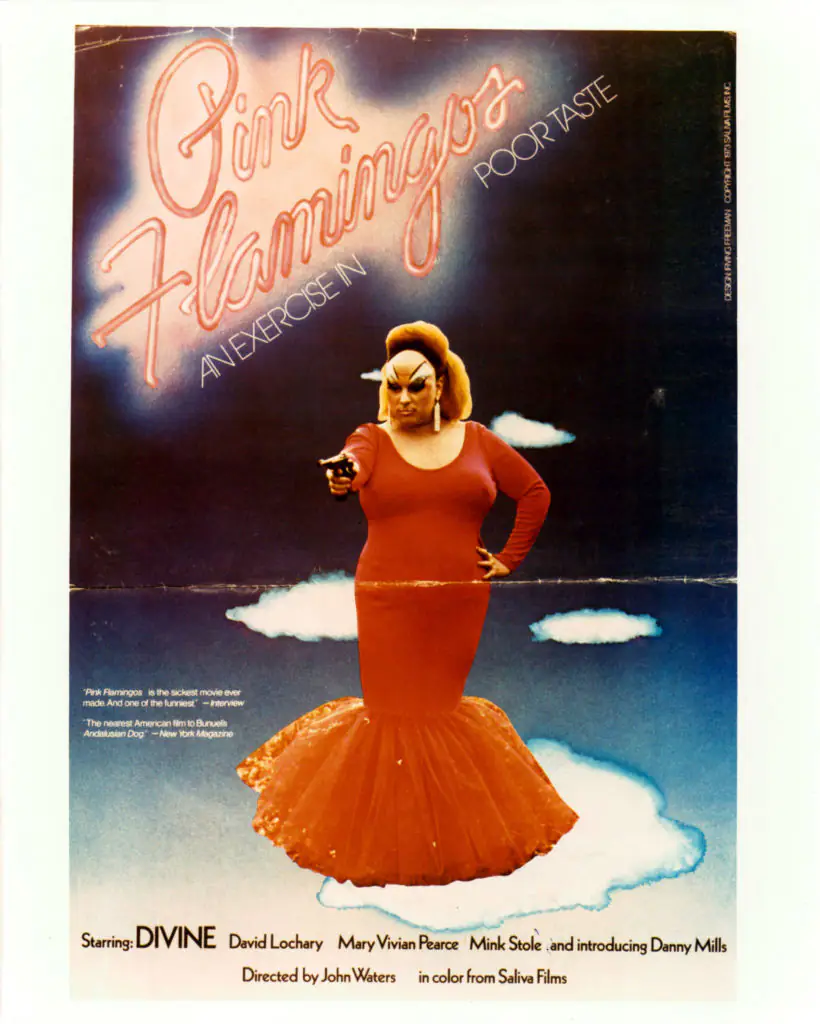
That film is Pink Flamingos, directed by John Waters — a filmmaker whose face many would likely recognise (even if they couldn’t exactly remember where they recognise him from).
Released in 1972, the movie follows drag performer Divine, who proudly lives under the self-proclaimed title of “the filthiest person alive.”
Her bizarre and grotesque lifestyle is challenged when two criminals, envious of her notoriety, set out to dethrone her as the reigning figure of shock and depravity.
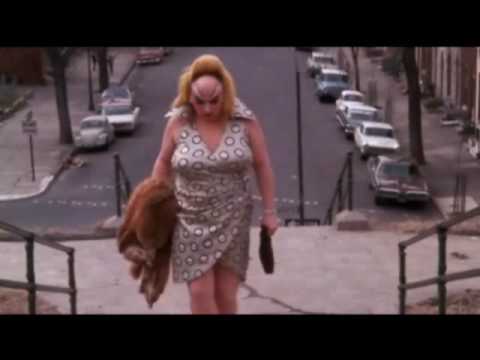
The film’s scenes are designed to shock. Divine is shown eating dog excrement on camera (an act that was entirely real) alongside staged murders and the now-infamous unsimulated sex act with her on-screen son.
Although the actors were not related in real life, the explicit portrayal of incest pushed boundaries far beyond most cinematic taboos. The British Board of Film Classification warns that the movie features “a man’s semen seen in close-up detail” and “a focus on a man’s dilating anus, in close-up detail,” underscoring its extreme nature.
Upon release, Pink Flamingos was banned outright in Switzerland and Australia, and faced partial bans in Canada and Norway.
Critics at the time were scathing. Variety called it “one of the most vile, stupid and repulsive films ever made.” Celebrated critic Roger Ebert, speaking at a 25th anniversary screening, said (per Far Out Magazine): “With any luck at all that means I won’t have to see it again for another 25 years. If I haven’t retired by then, I will.”
Waters, known for embracing controversy, used the negative press to his advantage, incorporating Variety’s damning quote into the film’s promotional material.
Over time, despite its graphic and disturbing content, Pink Flamingos developed a cult following, appreciated by some for its shock value, dark humour, and unapologetic defiance of cinematic norms.
Viewer reactions remain divided. One reviewer on IMDb summed it up as “outrageously sick, disgusting and grotesque”, but also very funny.
The film’s notoriety has kept it largely inaccessible in some countries. In the UK, it is not available on major streaming services, and physical copies are scarce. Many editions are region-locked to the United States, leaving determined viewers to hunt for the expensive Criterion Collection 4K restoration, which can cost upwards of $30.
Even decades later, Pink Flamingos retains its place in cinema history as one of the most controversial films ever made; a work that some see as art, others as obscenity, and many as both.