


Film & TV3 min(s) read
Netflix accused of recreating ‘one of the most unethical experiments ever’ as viewers threaten to cancel subscriptions
.jpg_xKEaT0?tr=cr-0.328.2730.3058,f-webp,q-70,w-100)
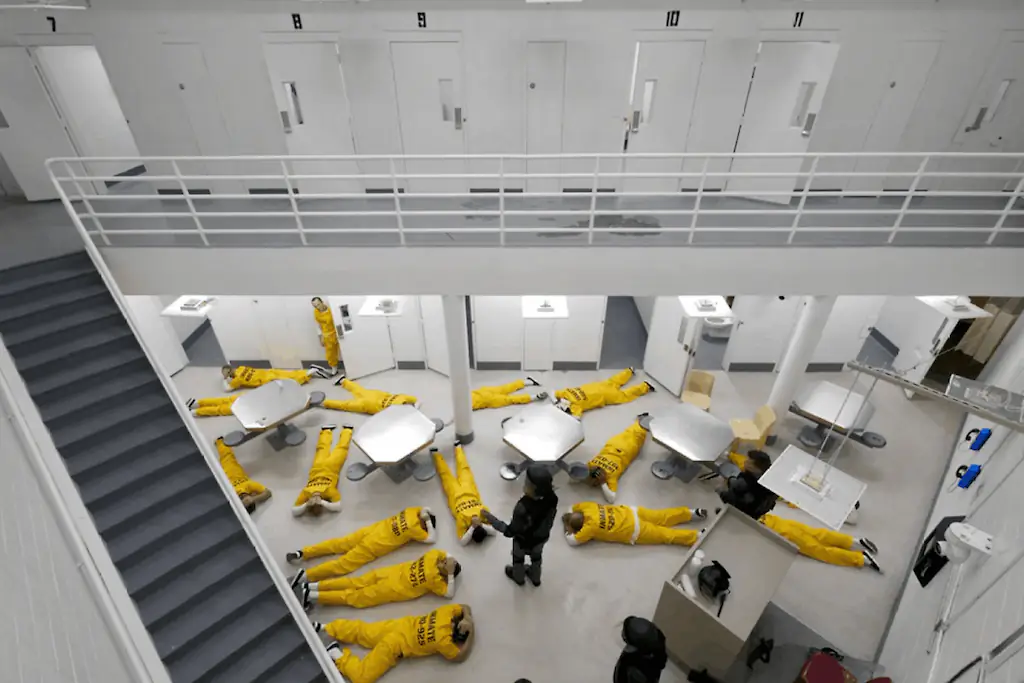
Netflix has announced an upcoming unscripted series on the infamous Stanford Prison Experiment, which has drawn criticism online.
The series has been titled The New Stanford Prison Experiment, as reported by Variety, and it's set to hit the streaming platform on October 21.
Its first season will consist of six 45-minute episodes, where the show's creators will look to recreate the conditions of the original 1971 psychological experiment.
The synopsis reads: "Thirty willing participants enter a real prison and are randomly assigned as guards or prisoners.
"Thrust into a system of power, hierarchy, and control, they’ll discover whether ordinary people inevitably conform to the roles they’re given - or whether empathy, morality, and individuality can withstand the forces pushing them in the opposite direction.
"As the pressure builds and the balance of power begins to shift, the central question feels more urgent than ever: Does power corrupt?"
Explanation from the creators
The upcoming Netflix series is being produced by Alfred Street Industries, with the likes of Dan Volpe, Jane Lipsitz, Dan Cutforth, Nan Strait, and Mike Odair executive producing.
Lipsitz in particular told Variety that the original experiment 'always fascinated' her, as she explained: "Despite its serious ethical flaws, it asked a fundamental question that feels even more relevant today: how does power affect ethical choices?
"Getting the opportunity to reimagine this social experiment was one of the most intense, exhilarating — and definitely nail-biting — experiences we’ve ever had," she admitted.
The executive producer also praised Netflix for supporting 'ambitious projects that take risks,' admitting that they pushed the boundaries.
What did the original experiment involve?
The original Stanford Prison Experiment was carried out on the Stanford campus in 1971, headed up by psychology professor Philip Zimbardo.
What was meant to be a two-week experiment was instead cut short to less than a week, after those assigned to be guards started to abuse those assigned as prisoners.
Other ethical concerns also rose as the experiment progressed, with other experiments around the time also helping to contribute to stricter rules being implemented for psychological experiments.

Reaction to the upcoming Netflix series
It's safe to say that several subscribers weren't pleased with Netflix's announcement, as one wrote: "Leave it to Netflix to reproduce one of the most notorious and unethical social experiments ever, but as reality TV."
Another added: "Wow, recreating a failed experiment that is widely known as flawed, unethical, and inhumane. Go ahead and show people how a little bit of power can turn individuals into abusive monsters."
"Wasn’t the Stanford prison experiment done with incredibly dubious methodology?" a third asked.
One viewer pointed out: "The idea was to learn FROM this failing the first time."