ADVERT
Sport3 min(s) read
Published 11:38 17 Jul 2026 GMT
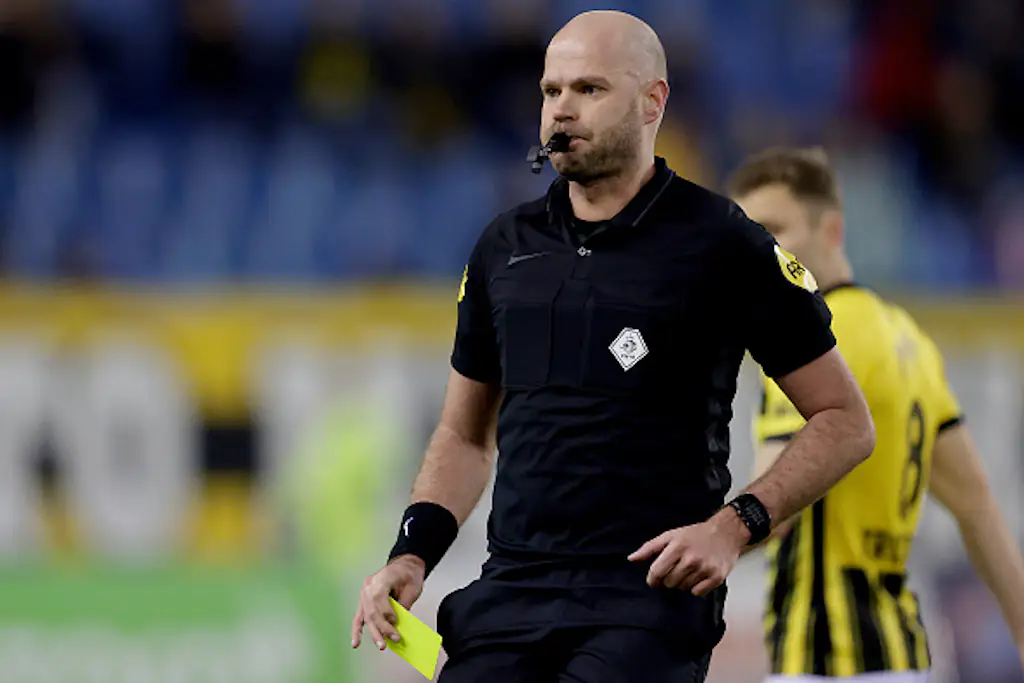
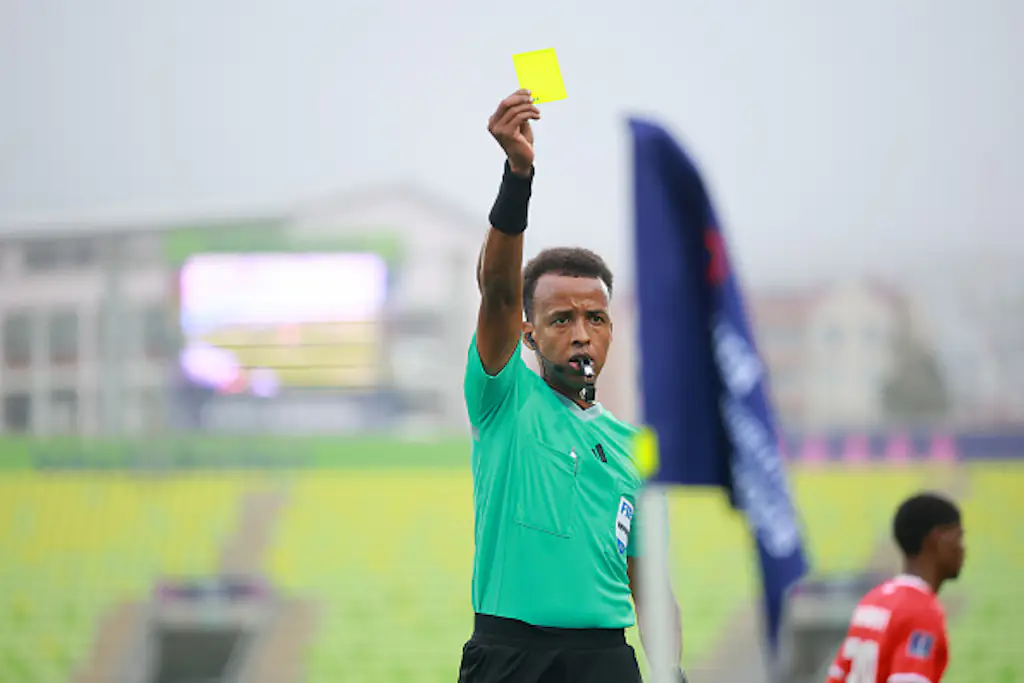
Slavko Vincic is set to take charge of the FIFA World Cup final on Sunday (July 19), but just six years ago, he found himself caught in the middle of a drugs bust.
The Slovenian official has been an internationally listed referee since 2010, and this weekend he will be rewarded for his hard work with the biggest gig in world soccer.
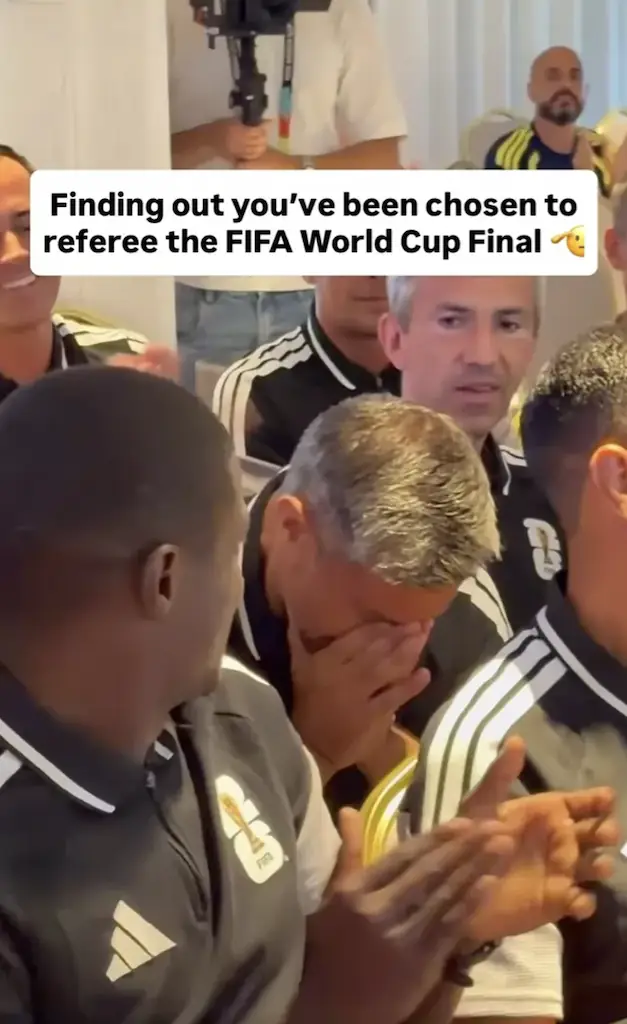
A video of the referee being told of his appointment for the final has recently gone viral online, as he burst into tears and hugged his peers.
But just over six years ago, the match official was arrested in the middle of a drugs and prostitution raid while he was at a "business lunch".
Vincic was shocked as police apprehended him, but he would address the situation soon after it unfolded.
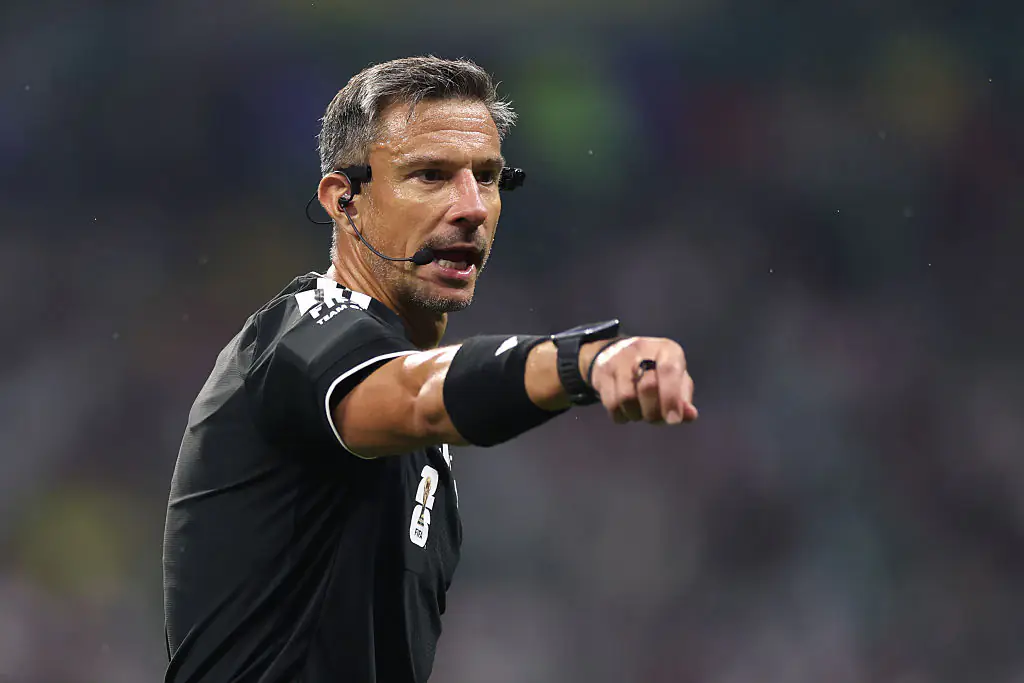
Vincic was said to be attending a meal in Bijelina, Bosnia, when he was wrongly arrested in the midst of a "sex party."
During the raid, police seized four packets of cocaine, 10 pistols, over £8,000 ($10,800) in numerous currencies, as well as three protective vests.
Following his arrest, Vincic was probed by police as a witness before his release, as officials decided that he had nothing to do with the crime operation.
Another man who was arrested at the scene, Tijana Maksimovic, would plead guilty to international enticement to prostitution.
But the Slovenian referee would soon speak to his nation's media to clear his name, explaining: “I found myself on this ranch by chance. I have my own company, I was in Bosnia and Herzegovina for a business meeting.
“I accepted an invitation to lunch, which turned out to be my biggest mistake. I regret it. I was sitting at a table with my company, all of a sudden the police came and what happened, happened.
“I have nothing to do with the group that was arrested and detained, nor do my business partners.
“Yes, they really took us to the police, asked [us] as witnesses, when it turned out that we didn’t even know them, we were able to go.”
Vlado Sajn, the Slovenian refereeing chief, said in a statement: “According to the information we gathered from official and unofficial sources, and last but not least from Slavko himself, he is not suspected of anything, no proceedings have been instituted against him.
“He found himself in this place at the wrong time.
“He was invited to a party where there was a large group of people – he did not know the vast majority… I consider this story to be a web of unfortunate circumstances.”
But as seen by his appointment for the World Cup Final, the Slovenian referee has become one of the best over the years.
He has prior experience in big games, having been in charge of two games at Euro 2020, before officiating the 2022 Europa League final and then the 2024 Champions League final at Wembley.
Vincic has been in charge of three games at this summer's World Cup in North America: Brazil's 1-1 draw with Morocco, Algeria’s 2-1 victory over Jordan and Mexico‘s 2-0 win against Ecuador, where he showed a red card to Ecuadorian defender Piero Hincapie.
On Sunday, he will have the whistle as Messi and Yamal face off in a highly anticipated match-up as Argentina and Spain will battle it out to secure soccer's biggest prize.
world1 min(s) read
Published 08:42 18 Jun 2019 GMT
world3 min(s) read
sport3 min(s) read
world2 min(s) read
Published 15:40 21 Nov 2022 GMT
sport3 min(s) read
Michel Plantini, the former president of UEFA and head of European football, has been taken into custody over the decision to award the 2022 World Cup to Qatar.
France's Mediapart claim that Platini was arrested on Tuesday as part of the investigation into the decision to host the World Cup in Qatar. He was allegedly taken to the premises of the Anti-Corruption Office of the Judicial Police (OCLCIFF)
The 63-year-old was the president of UEFA between 2007 and 2015, before he was banned by the Fifa Ethics Committee.
Platani is currently serving a four-year ban from football - which is due to end in October of this year - after he was found guilty of receiving a "disloyal payment" from ex-Fifa president, Sepp Blatter.
Qatar was named as the host of the 2020 World Cup back in December of 2010, however, there have been doubts regarding their suitability.
The former Juventus midfielder and France captain was also co-president of the organising committee at France 98, and recently admitted that the group allocations for seeded teams were made with a "dream" final in mind.
More to follow...
Published 09:31 14 Jul 2026 GMT
Further details have emerged following the death of Dutch referee Rob Dieperink, who had originally been selected for the 2026 World Cup before being removed from FIFA's officiating team.
The Dutch Football Association (KNVB) said it was "shocked and deeply saddened" following the sudden death of referee Rob Dieperink, weeks after he was removed from FIFA's World Cup officiating list despite an investigation into sexual assault allegations being dropped by authorities.
Dutch media reported on Monday that the 38-year-old had died unexpectedly. Police were later seen outside the street where Dieperink lived, with authorities confirming they were investigating the death of a man. The cause of death has not yet been disclosed.
In a statement, the KNVB paid tribute to the official, saying: "We are shocked and deeply saddened by the passing of referee Rob Dieperink. With Rob, the refereeing community loses a highly valued referee with international experience, but above all, a fine and dedicated colleague."
The association added: "Our thoughts go out to his family, friends, and everyone who held him dear. We wish them much strength and support in coping with this great loss."
It had been reported by The Athletic that Dieperink had been arrested in London following Crystal Palace's 3-0 Europa Conference League victory over Fiorentina. He was later released without charge, and in May the Metropolitan Police confirmed the case had been dropped after concluding "the evidential threshold had not been met."
Although the KNVB continued to back the referee, FIFA opted to remove him from the group of Dutch match officials selected for this summer's World Cup in North America.
Explaining its position, the Dutch FA said: "We stand for a safe and honest football culture at all levels and always take reports of unwanted behaviour seriously."
The governing body continued: "Obviously, we think that a Dutch referee should be of unquestionable behavior, but we also think it is important that he gets the chance to tell his story and not be wrongly accused."
It added that British police had "investigated and closed the case," and said: "Rob Dieperink has cooperated fully and given openness to the KNVB from the very beginning, and based on all available information, we see no reason not to appoint him for matches in the Dutch league."
Dieperink had been due to serve as a video assistant referee as part of Daniel Makkelie's officiating team before FIFA decided against including him at the tournament.
Speaking to De Telegraaf after learning of the decision, Dieperink admitted he was devastated.
"It makes me very sad that I have been wrongly accused," he said. "I fully cooperated with the police investigation and also immediately gave full openness to FIFA, UEFA and the KNVB."
He continued: "The allegations were refuted and the case was dismissed within two weeks after an adequate and thorough investigation by the police."
Dieperink also thanked the Dutch FA for standing by him, saying: "I am grateful for the support I have received from the KNVB and the way they have dealt with this case."
He concluded: "It is a pity that FIFA has decided not to appoint me for the World Cup, I am of course disappointed about that."
Published 11:29 10 Jun 2026 GMT
Donald Trump’s administration was dragged into further disrepute after it banned one of Africa’s top referees from entering the country, and now the White House has come out to explain its decision.
With the FIFA World Cup just days away, Somali referee Omar Artan was due to make history by becoming the first official to represent the country at FIFA’s flagship tournament.
However, upon arriving in Miami, Artan was subjected to a lengthy interrogation from US immigration officers before being sent home.
Somalia is currently one of the countries on the United States’ “banned list”, which prohibits travel to and from the East African nation due to concerns around safety and immigration.
The White House has since explained its decision to bar Artan from entry, with Andrew Giuliani, the executive director of the White House task force for the 2026 World Cup, saying: "There have been some officials that have been denied, and for good reason."
Responding to the question, Giuliani added: "We're striking that balance between making sure that any bad actors that try to come into the country under the guise of the World Cup will not get access to the United States."
In a statement to Fox, Giuliani said: "This individual was seeking admission to the United States. Upon further inspection by CBP, derogatory information, including association with suspected members of terror organizations, was discovered making the traveler ineligible for admission to the United States under the Immigration and Nationality Act (INA).
He continued: “The traveler was refused admission and given immigration forms that provide the section of law used to complete an expedited removal under 8235 of the INA. President Trump's administration will not allow any security threat to enter our country - full stop.”
This comes after numerous players, officials, and fans have either been detained or denied access to the United States for similar reasons.
Due to the ongoing war in the Middle East, Iran’s national side has been forced to house its training base in Mexico, only permitted to access the US for games.
While Artan was denied entry, he was greeted by hundreds of fans when he arrived back in Somalia's capital, Mogadishu.
“What happened has happened and it was unfortunate. I am grateful for the support Fifa gave me,” Artan said.
Despite the ongoing civil war, Artan urged his compatriots to support the country, “Somalia is ours, whether things are good or bad. I want to tell our youth not to lose hope in our country. I am now in my country, and there is no other place I want to be.”
“I promise you, God willing, that I will attend the next one,” he said as hundreds of supporters at the airport waved the Somali flag. “I want the Somali public to take comfort in this and remain confident.”
A reporter at the World Cup in Qatar was robbed whilst doing a live report, with the thief stealing her wallet and documents.
The tournament in Qatar has never been far from controversy since it was announced that the country would be hosting the event.
It was announced 48 hours before the tournament that beer would no longer be sold within the stadiums, a controversial move that coincided with a Netflix documentary adding insight into alleged bribery taking place to secure Qatar as the host nation.
As the tournament commenced on Sunday with Ecuador defeating Qatar 2-0 in Doha, a reporter from Argentina became the victim of a robbery as she was live on air.
Dominique Metzger was in the Corniche area of Doha when she says the items were stolen from her, reports the Daily Mail.
After the incident, she spoke to the anchor at Todo Noticias (TN) and outlined what had happened. She said: "I had my small bag on me with all the things that one needs, my wallet, the keys to our hotel room, some napkins.
"I was dancing with the crowd and I'm convinced that it was at that moment when someone opened the bag zipper and took my wallet."
The robbery wasn't captured on camera, but the report showed the journalist dancing with fans and her bag hanging down by her side. "I didn't realize at that moment, you know you're live on air, with music and crowds around you, and I was focused on you talking to me too. So I wasn't paying attention," she explained.
She went on: "After I finish my live report, I wanted to take my wallet to buy a water bottle and then I realized I didn't have it."
When Metzger came to report the crime, she was shocked at the response from the police. "Male police won't register you," she explained. "As soon as I got to the police station, they took me to another place where there were only women. I asked why I was there and they told me as I'm a woman, it has to be a policewoman who has to help me.
"The moment my declaration was taken was shocking. They told me, 'What do you want justice to do about this? We will find the wallet... We have cameras everywhere, high-tech cameras and we will find the thief with face detection technology. What do you want the justice system to do to them when they are found?'"
Metzger explained that the police were asking her what she would like to happen to the culprit. They offered suggestions such as deporting the individual or sentencing them to five years in prison.
The reporter declared that she just wanted her possessions returned.
Published 22:07 28 Feb 2018 GMT
Russia's not exactly known for its liberal policies, from its persecution of artists who criticize Putin to its multiple laws oppressing the gay community. But it turns out they're pretty chill when it comes to drugs. The Moscow Times reports that soccer fans will be able to bring marijuana, cocaine and heroin to the 2018 FIFA World Cup. Because if there's one thing soccer hooligans need, it's cocaine. They're so low energy.
Of course, there is a catch. People that want to bring these aforementioned drugs will have to fill out the necessary paperwork - and that doesn't mean ZigZags for your blunts. The Russia-led Eurasian Economic Union grants travelers the right to bring banned substances so long as they bring documentation written in the Russian language that the narcotics are for medical use. So good luck with that. While medical marijuana is a thing, I've never heard of medical cocaine or medical heroin. What’s next, medical crystal meth? But hey, if you can convince your doctor to write you a note, in Russian, you can bring all three drugs to the World Cup, and party it up. (If you survive.)
The Russian 2018 World Cup Organizing Committee says that law enforcement officers will be on duty at the stadium to verify the authenticity of the drug prescriptions. It's unclear how they're going to decide which prescriptions are real or fake. They simply say, "Security officers will monitor the enforcement of rules for carrying prescription drugs to stadium grounds at checkpoints." (I mean, all the doctors' notes for cocaine and heroin will be forgeries, right?)
In addition, Russia’s Federal Customs Service says that soccer fans carrying the drugs will have to fill out a customs declaration, which is hilarious. Finally, filling out those annoying little forms and going through customs will be fun. "Yes, officer, I'm just declaring my weed, coke and heroin. But it's okay. I have a doctor's note. I need weed because I have trouble sleeping. I need coke because I have trouble staying trouble awake. And I need heroin to cheer me up when I'm feeling blue."
However, don't think anything goes at this stadium. Smoking of all kinds is forbidden. Unlike shooting up heroin and snorting cocaine, smoking cigarettes serves no medical purpose - according to the Russians, anyway. But I guess we shouldn't be surprised Russia has such lax laws on drugs, considering their athletes were busted doping in the 2014 Winter Olympics, and again at the 2018 Winter Olympics. (Or maybe this is all a scam to troll and get free publicity for the World Cup. Well played, Russians. You win again!)
Russia will host the World Cup from June 14 to July 15, with events in 11 cities, including Moscow, St. Petersburg and Sochi. Soccer is the number sport in every country in the world, except the United States. But you know what? I bet if America adopted these rules for our soccer matches, allowing fans to bring in marijuana, cocaine and heroin, attendance would spike through the roof. (And so would overdoses.)