Uncategorised2 min(s) read
uncategorised2 min(s) read
us4 min(s) read
An 11-year-old boy made the discovery of a lifetime while walking along a New Jersey beach.
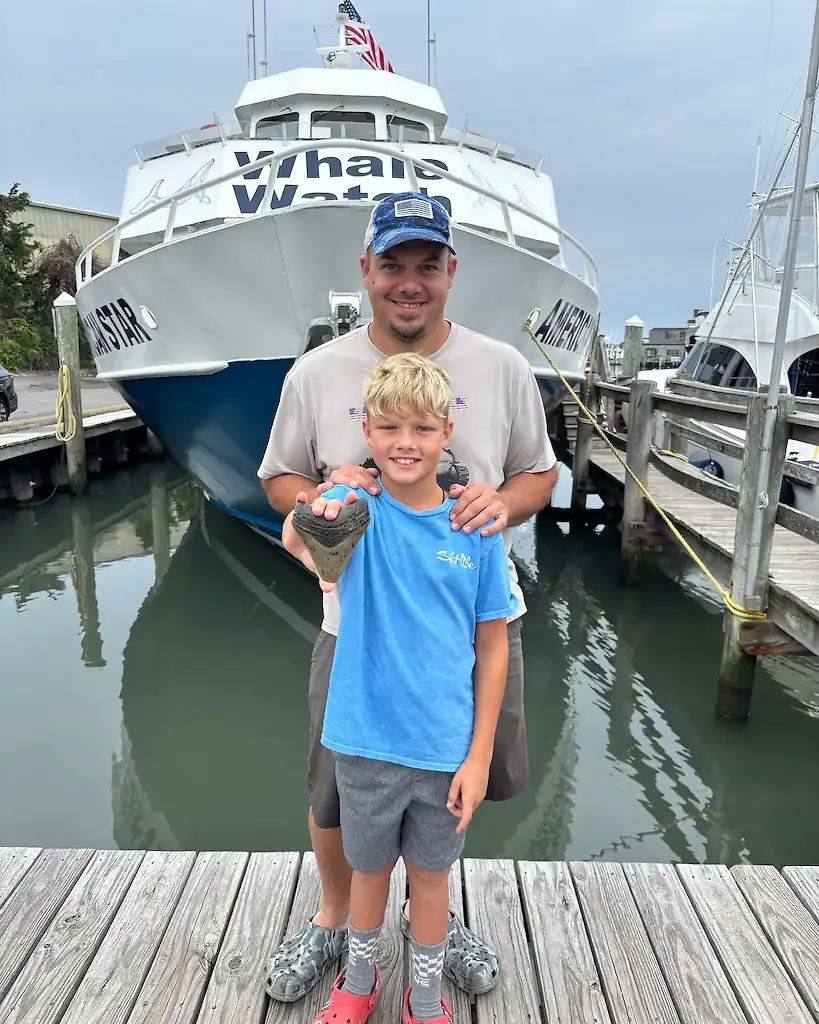
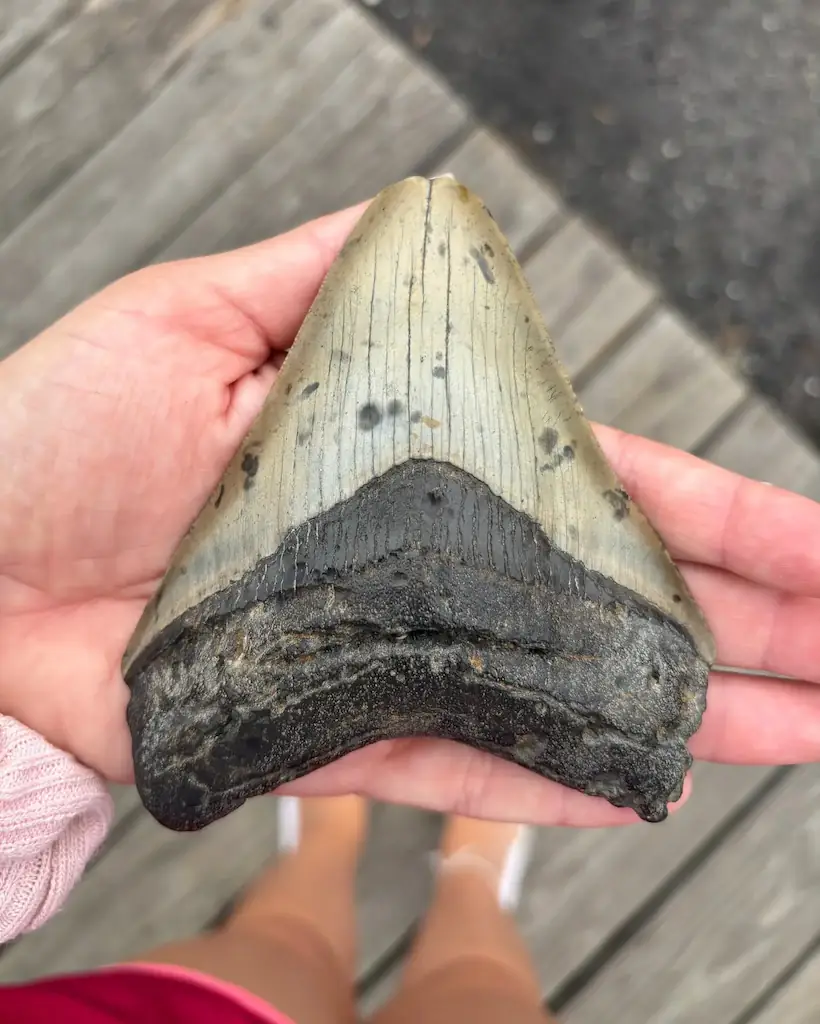
Bo Bowers was on vacation in Sea Isle City with his father, Michael, when the pair found the four-inch megalodon tooth wedged among rocks on the beach.
The fossil belonged to the largest shark known to have ever lived, and experts say only a handful of megalodon teeth have been recorded along New Jersey's coastline.
The father and son had been digging through rocks when they spotted the unusual object inside a narrow opening.
Michael, 42, from Pittsburgh, couldn't fit his hand into the gap, but Bo's hands were small enough to reach inside and pull the tooth free.
"I was like shocked and like excited at the same time," Bo said, per NBC Philadelphia.
His father was also shocked by what they had stumbled across.
"I never in a million years would have guessed that we would have found something like this. My son was speechless," Michael said, as cited by The Telegraph.
"It’s on my bucket list of stuff to find," he continued to NJ.com. "My knees were shaking."
The family showed the fossil to experts at the Cape May Whale Watch and Research Center and the New Jersey State Museum, where it was confirmed to be a real megalodon tooth.
Daniel Lovino of the Cape May Whale Watch and Research Center said: "It's an amazing sighting. That family's really lucky."
"There's only a handful of recorded findings of Megalodon teeth off of New Jersey's coastline," Lovino added.
Dana Ehret, natural history curator at the New Jersey State Museum, said fewer than five megalodon teeth have been found in the state.
Matt Remuzzi of the Cape May Whale Watch and Research Center was impressed by the fossil's condition.
"It is actually the best condition Megalodon tooth I've ever seen. It was pretty incredible," Remuzzi said.
The tooth also proved substantial once the family had it in their hands. "It's actually a lot heavier than we both thought it would be," Michael said.
One noticeable chip may even offer a clue about what happened while the shark was still alive.
"This big chip on the end, they say it was probably from it biting into something, hitting the bone and it chipped it," Michael said.
Researchers believe the fossil may have been dredged from the ocean during a beach replenishment project carried out by the US Army Corps of Engineers in July before eventually being discovered by Bo.
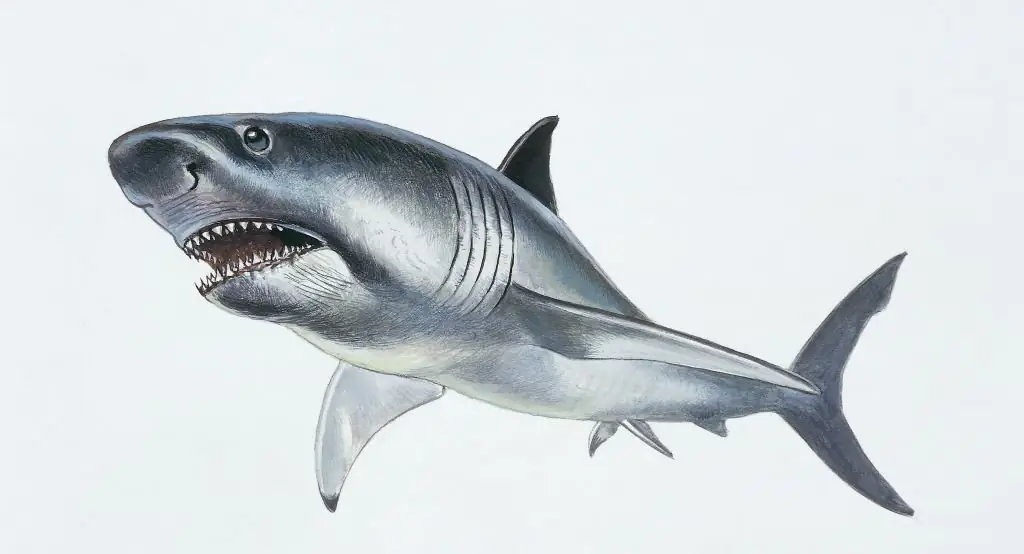
Megalodons were huge carnivorous sharks that lived in warm tropical and subtropical waters around the world.
Estimates cited in the supplied material put the biggest specimens at around 24.3 meters long and up to 94 tons, making them far larger than the largest recorded great white shark and even longer than today's largest whale sharks.
Their diet primarily consisted of large marine mammals, including baleen and toothed whales, dolphins, and seals.
Research published in Science Advances has suggested a megalodon's huge jaws could have consumed a creature the size of a killer whale in just five bites.
Scientists also believe the predator could swim at speeds of up to 3.5 kilometers per hour.
Research suggests megalodons vanished by the close of the Pliocene as the planet entered a period of global cooling, with the last of the species estimated to have died at least 3.6 million years ago.
Bo and his family now plan to hold onto their extremely rare piece of prehistoric history.
"A bucket list item for sure," Michael said.
uncategorised3 min(s) read
lifestyle2 min(s) read
When Rosie the Great White shark first got caught up in a family's tuna-fishing net in 1997, she probably never thought she would go on a journey that spanned the oceans and took her onto dry land.
But that's exactly what happened to her when she became a famous tourist attraction at the Wildlife Wonderland theme park in Australia.
As per All That's Interesting, the incredible marine animal was transported to the park in a refrigerated truck, where she spent more than a decade in a "custom tank flooded with formaldehyde."
For those of you who might not be aware, formaldehyde is a colorless and odorless substance that can help to preserve the bodies of animals.
Rosie became the ultimate hot spot at the theme park before it ultimately shut down in 2012.
While you would assume that someone probably transported the shark carcass to another location where it could continue to be admired, unfortunately, it was left behind and forgotten until an urban explorer stumbled across it.
In 2018, Luke McPherson uploaded a video to his YouTube channel titled 'Abandoned Australian Wildlife Park. Decaying, left to rot' and since then, the clip has been viewed over 16 million times.
Check out Luke's video below (Rosie appears at around 18:00):
However, while the video was supposed to raise awareness about an issue, it instead invited vandals and hooligans into the abandoned property where they ended up graffitiing the tank as well as trying to throw things into the liquid.
When the tank eventually started leaking, local authorities were forced to release a statement warning people about the toxic fumes.
"The fumes were so bad you couldn’t last longer than a minute in that room, the formaldehyde must have been evaporating," McPherson said as per The Sun. "The tank was huge and in bad condition, with a rusting metal frame and smashed panels of glass and trash thrown inside. Once I got the light behind the tank I was like ‘wow, that’s creepy.'"
Then came the news that Rosie would be destroyed in order to stop the vandals' behavior, however, this sparked a social media movement to "Save Rosie" and eventually, the owner of the Crystal World and Prehistoric Journeys Exhibition Center, Tom Kapitany transported and re-displayed the animal himself.
And that's where she remains.
"It’s a remarkable thing, for starters with all the vandalism and everything that has happened to the actual wildlife park and to Rosie’s tank," said Shane McAlister, an employee at the exhibition center. "I had to go down there and do a patrol and make sure no delinquents were going to vandalize Rosie’s tank any further."
Rosie the Shark still remains a tourist attraction to this day and her official Facebook page has over 54,000 followers.
stories1 min(s) read
I know some people with serious shark phobias; the kind that even if you called "shark!" in a swimming pool they would look around for the danger. I don't feel this fear to the same level, but it's hard not to be a little creeped out when you see them in nature documentaries hunting for food. There's something about their staring eyes and rows of jagged teeth that gets under your skin.
And that's just one of them. I don't fancy my chances getting caught out in the water with a shark nearby, but if there was more than one I would be royally screwed, that's for certain. Now, imagine that instead of a trio of sharks to deal with, you had an entire swarm of them, with numbers in the thousands. After reading this, you may be put off any vacations to Florida's beaches any time soon.
[[instagramwidget||https://www.instagram.com/p/BQk3rgiB1Yp/?taken-by=sharkmigration]]
In an annual trip, thousands of Blacktip Sharks migrate past the east coast of Florida. These sharks range from five to six feet in length and weigh in between 60 and 80 pounds.
While they're normally wary of humans, this species can become aggressive when in the presence of food and have been known for a number of attacks on people.
[[twitterwidget||https://twitter.com/BlacktipH/status/966301369966780416/]]
With countless Blacktip sharks migrating along the east coast, the region can become a little dangerous. Add to that the fact that they stick close to the beaches as they follow schools of mullet and other baitfish, and you have a problem for many beachgoers. These particular sharks will keep to themselves for the most part, but can cause a problem for Spring Breakers partying on the beaches and in the ocean.
"The shark migration normally peaks this time of year," NBC Meterologist and surf forecaster James Wieland wrote in a tweet, which included a video of the sharks. "Shark experts say just offshore is the "shark super-highway" where thousands of sharks are on the move this time of year".
[[twitterwidget||https://twitter.com/SurfnWeatherman/status/965064629528522753]]
The YouTube channel BlacktipH Fishing also has some footage of this natural phenomenon. Hosted by extreme angler Josh Jorgensen, who regularly films big game fishing, you can see the Blacktip sharks from the overhead view of a drone. But what's surprising about this footage is the appearance of giant Hammerhead sharks that are nearly three times the size of the Blacktips, hunting the smaller sharks.
"One of the most amazing sights that I've ever seen is a giant great hammerhead shark hunting blacktip sharks," Josh wrote. "This past winter, I filmed some incredible drone footage of giant great hammerheads hunting blacktip sharks in the shallow coastal waters of Florida."
[[youtubewidget||https://www.youtube.com/watch?v=hgBhlu2p70w]]
He also noted that there were multiple hammerhead sharks sighted, ranging between 12 and 14 feet long, and the biggest hammerhead estimated to weigh 1000lbs. Without Hammerheads picking them off, the migration can be huge, with 10,000 or more of them swimming together all at once.
How does that beach holiday sound now?