


Health4 min(s) read
Early signs of mouth cancer everyone should know as cases skyrocket among young people

Experts and healthcare professionals are urging people to familiarize themselves with the early warning signs of mouth cancer, as cases of the disease continue to increase, particularly among younger adults.
The number of people diagnosed with mouth cancer, also known as oral cancer, has more than doubled over the past two decades, with a considerable rise among those under the age of 50.
Experts issue warning over mouth cancer increase

However, new research from the Oral Health Foundation suggests public awareness has not kept up with the increase, with fewer than just one in three adults saying they have ever checked their mouth for anything unusual, while around half would struggle to identify even one symptom.
Experts are now encouraging people to take persistent mouth ulcers, patches, and lumps seriously, rather than automatically putting them down to tiredness or being run down.
Registered dentist and President-Elect of the Oral Health Foundation, Dr. Catherine Brady, warned that seemingly minor changes can sometimes be easy to overlook.
"It's easy to explain away an ulcer, patch, or lump, especially if it doesn't hurt. But a change that persists for over three weeks needs checking by a healthcare professional,” she urged.
"Most changes won't be cancer, but you need a professional diagnosis to know for sure. If something is unusual for you, contact a dentist or doctor. You are not wasting anyone's time.
"Mouth cancer can affect anyone, and knowing the signs matters whatever your lifestyle."
More than 60,000 US citizens are estimated to have been diagnosed with mouth cancer in 2026, with the disease developing in several areas, including the tongue, gums, lips, and the lining of the cheeks.
One of the warning signs people should look out for is an ulcer that refuses to heal, particularly if it appears on the tongue or gums, according to Dr Victoria Sampson, a dentistry expert.
"If the tongue has some sort of painless ulcer that doesn't clear up in a matter of weeks, that's one of the biggest warning signs of a high risk oral cancer," she warned.
Karen Liesching-Schroder knows how important it is to recognize this symptom, having initially overlooked an ulcer that eventually became a much more serious problem.
"I had an ulcer on my tongue, but it didn't heal and it turned into a hole in my tongue," she recalled. "But I still didn't realize that that was tongue cancer at the time."
Treatment for mouth cancer varies according to the size of the cancer and whether it has spread, with surgery commonly required to remove the affected tissue, and potentially surrounding areas to reduce the risk of the cancer returning. In more serious cases, this can involve removing part of the tongue or jaw.
Brady stressed that people should not put off seeking advice simply because they have heard about the three-week guideline.
"Do not wait three weeks to seek advice about any worrying changes," she urged. "The three-week message applies specifically to an ulcer that has not healed.
"Dental practices should take concerns about changes in the mouth seriously and arrange prompt assessments. But if you cannot get a dental appointment, contact your GP."
Symptoms that could be a sign of mouth cancer
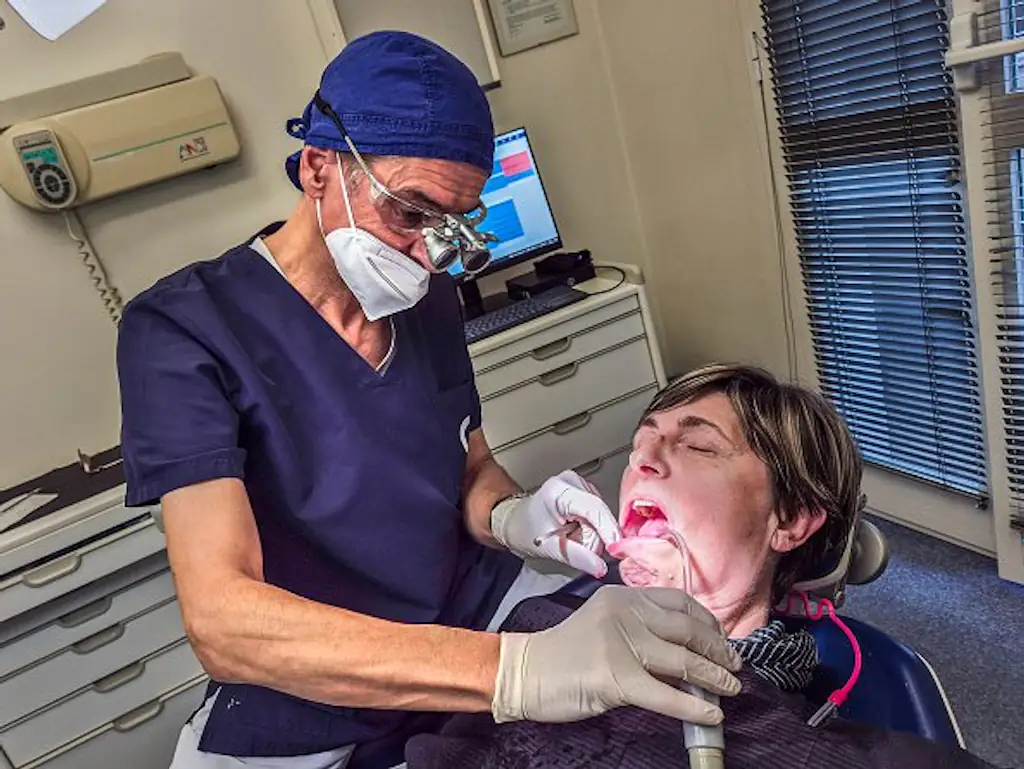
An ulcer that does not heal is not the only potential warning sign of mouth cancer.
Other symptoms include:
- Red or white patches inside the mouth.
- Unusual lumps or swelling in the mouth, lips or neck.
- Difficulty swallowing.
- A persistently hoarse voice.
The disease can affect people of different ages and backgrounds, although smoking, alcohol consumption, and human papillomavirus (HPV) are among its main risk factors.
The Oral Health Foundation is encouraging people to make regular mouth checks part of their routine, using a mirror to become familiar with what is normal for them, and Brady recommends looking for anything unusual after brushing your teeth.