ADVERT
Health2 min(s) read
A Florida man who spent 100 days living underwater says his body has since undergone a shocking transformation.
In fact, he's saying that a new "glitch" has totally transformed the way he uses his body on land.
Doctor Joseph Dituri, also known as Dr Deepsea, spent more than three months 30 feet underwater inside a special pod at a Key Largo lagoon in Florida.
Once he landed back on dry land, Dituri went to work seeing just how those 100 days underwater had changed his body. He was shocked by what he found.

After returning from his world record-breaking stay underwater, Dituri started to examine himself and the many changes his body had undergone.
In fact, it turned out that living underwater in such a high pressure environment for so long had changed his body.
Dituri says that, following his underwater adventure, his body had de-aged, with his cells appearing younger than when he had gone in.
Speaking to NBC, he revealed that he'd undergone a host of tests in order to determine just how much his body had changed.
When the results came back, they showed that his cholesterol levels had decreased, the inflammation throughout his body had gone down, and that he was now able to concentrate on tasks much better than he had before.
He also maintains that, now back on land, he sleeps much better and, due to his rigorous workout schedule underwater, retained his total body mass.
Dituri says that his stay underwater was motivated by curiosity, that he wanted to know how living in a pressurized environment could affect the human body, and claimed the results of the experiment could help ocean researchers and astronauts planning manned missions to Mars in the future.
The pod Dituri stayed in was designed to have the same pressure as the ocean outside of it.
But Dituri did actually break a world record whilst spending all that time underwater.
With his original experiment taking place in 2023, Dituri officially became a Guinness World Record holder for the longest time spent living underwater in a fixed habitat, something which has since been broken again.
But he remained steadfast that his work was about much more than a title.
"It was never about the record," he told. CBS News. “It was about extending human tolerance for the underwater world and for an isolated, confined, extreme environment.”
world3 min(s) read
travel3 min(s) read
world2 min(s) read
relationships3 min(s) read
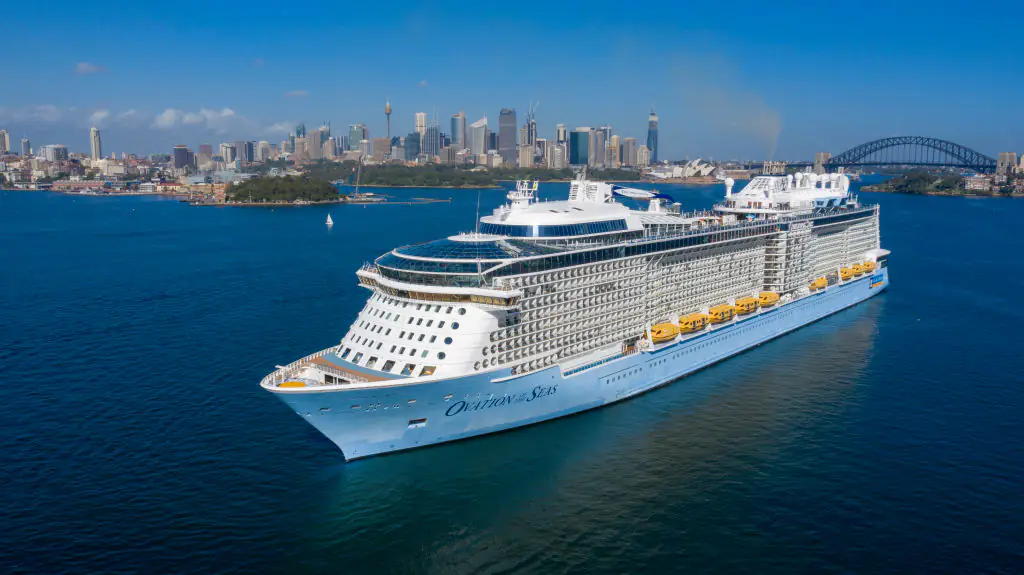
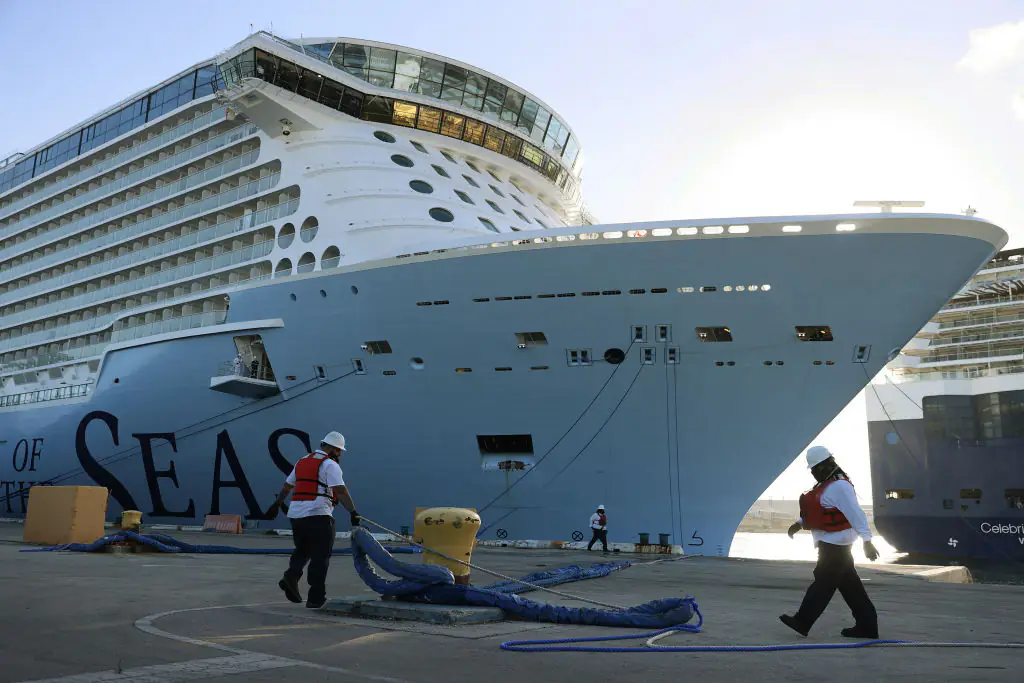
A man who has spent the past 25 years traveling on 1,000 cruise ships has revealed a strange health effect that he’s developed.
Mario Salcedo, who is nicknamed “Super Mario” in cruise circles, has spent more than two decades living at sea.
While his lifestyle may sound like a dream to some, it has come with an unexpected side effect.
In a candid interview with Conde Nast Traveler, the Cuban-born businessman, who recently completed his 1,000th voyage with Royal Caribbean, has shared that he lost his “land legs" as his body had become so accustomed to the motion of cruise ships.
“I’ve lost my land legs. I’m swaying so much I can’t walk in a straight line,” Salcedo said, cited by The New York Post. “I’m so used to being on ships that it feels more comfortable to me than being on land."
Salcedo's milestone 1,000th voyage took place aboard the Explorer of the Seas, an 11-night trip from Miami to Panama and the southern Caribbean that set sail on January 5, 2025.
Elaine Warren, CEO of The Family Cruise Companion, told Daily Mail that the cruiser's condition is known as Mal de Débarquement Syndrome (MdDS) - a rare vestibular disorder that makes you feel like you’re moving even when you’re not, per Cleveland Clinic.
"Spending extended time on a cruise ship sounds like a dream for many families. The convenience, entertainment, and all-inclusive nature of the experience make it an attractive idea,” Warren said.
"But when you shift from a vacation mindset to actually living at sea, a lot of unexpected things happen — especially to your body.”
Warren noted that long-term cruisers often develop “sea legs,” which is when they become so used to the ship’s movement that walking on land feels disorienting.
“I’ve spent years helping families plan cruise vacations, and while short-term trips are one thing, staying on board long-term is a different experience entirely,” she continued. “The first adjustment is to constant motion. The body adapts to the ship’s movement over time, but that doesn’t always mean in a good way.”
According to the Cleveland Clinic, MdDS symptoms typically fade within 24 hours, but in some cases, they can persist for months or even years.
Salcedo spends around $101,000 per year on cruises. He splits his time between working about five hours a day and enjoying the luxuries of life at sea.
The full-time cruiser previously told the publication that he first fell in love with cruising in 1997 and never looked back. His time at sea was only interrupted once - when he was forced to return to land for 15 months during the pandemic in 2020.
“Nothing could lure me away from them, because I get treated like royalty,” he said about his journeys with Royal Caribbean. “The captains all know me."
Now, back on the water, it seems Salcedo has no plans to give up his floating paradise, even if it means never walking straight again.
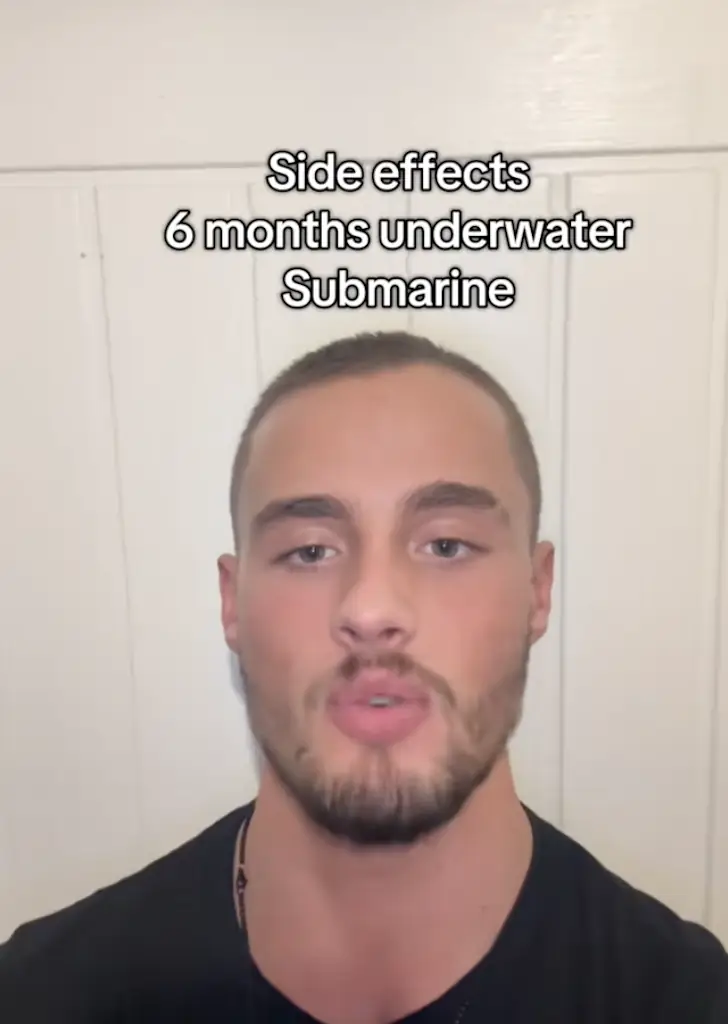
A nuclear submariner who spent six months living underwater on board a UK Navy sub has revealed the strange side-effects that he experienced when he came back to shore.
Paul McNally spent half a year under the waves without natural light or air, and that’s something you are definitely going to notice.
On his TikTok account, McNally took his followers on a journey to the bottom of the sea aboard a nuclear vessel - and it turns out that there are a few factors that make it a difficult life.
First off, he shared pictures of himself before and after the voyage, which he took aboard the HMS Vengeance.
The first photo before his deployment shows a fresh-faced young lad, then the second shows - well - seemingly the same lad, just a bit later on.
But, as he’d go on to explain - things had changed.
“The first main side effect is complete sensory overload and disorientation,” he explained.
You might expect that, spending six months without knowing - figuratively speaking - which way was up can do that.
He continued: “Imagine this, all you have been seeing for the past six months straight is artificial light and every breath that has entered your lungs has been from recycled air.
“When it’s finally time to come back, you’ve been counting down the days and letting people climb up the ladder, and as you climb to the top of this ladder you get a glimpse of what real light looks like for the first time in six months.
“Then it’s just pure euphoria, you stand on top of the submarine casing, it’s complete sensory overload of all your senses, you take in the fresh air, the nature, the fact that you are finally back after what has felt like years underwater [in] legitimate purgatory.”
Paul added: “The second one is social overstimulation.
“Being around crowds of people that you don’t know after living with the same crew for the past six months feels completely alien and definitely takes some getting used to.
“The third one is post-deployment emptiness.
“A mixture of exhaustion and loss of structure just creates complete emotional numbness and a hollow feeling inside of you as you sit alone in your room after being constantly surrounded by people for the past six months.”
One more for good measure, though.
Paul said: “The last ones sleep disruption.
“When you are used to only having a six hour slot to sleep for six months and you have three whole weeks to yourself to do anything, you generally spend most of it sleeping and ordering takeaways.”
Fair enough, after six months underwater you’ve probably earned it.
Credit: Handout/Getty