


Health4 min(s) read
'Godzilla' weight loss drug could cut weight by up to 25% according to new study
.jpg_xKEaT0?tr=cr-0.328.2730.3058,f-webp,q-70,w-100)
The 2020s have witnessed a sharp rise in weight loss injection use, with millions of adults around the world buying into the method.
However, questions have been raised about the long-term effects of GLP-1 drugs, and whether they really are safe to use.
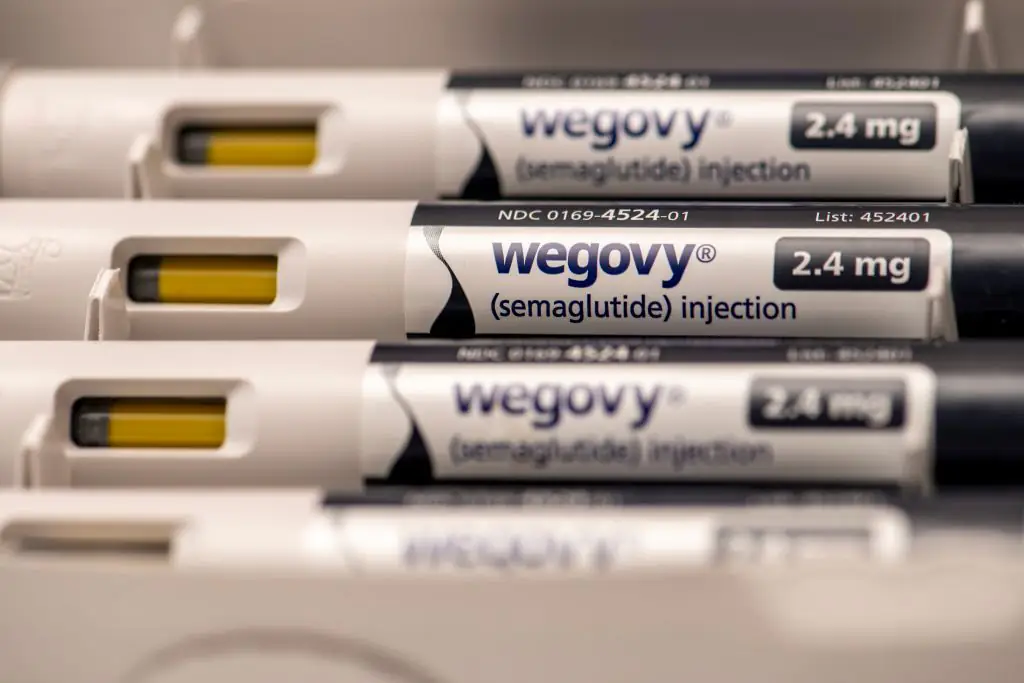
Doctors have issued warnings over the use of GLP-1 drugs such as Ozempic, Mounjaro, and Wegovy in recent years, as many realized they can aid in weight loss.
Though they were originally used to treat type 2 diabetes, people figured out that the drugs can help curb appetite, helping patients with obesity issues.
But a newer version of the medication, called Retatrutide, has gained popularity in recent months, with a new study claiming that it can help you lose weight quickly.
What does the new study claim?
Retatrutide is known as a triple-agonist, meaning it targets three hormone receptors: GLP-1 (glucagon-like peptide-1), GIP (glucose-dependent insulinotropic polypeptide), and glucagon.
Known also as 'reta' or the 'godzilla weight loss drug', it has become more popular in the bodybuilding community, with many describing it as a 'fat-loss peptide' or a 'cutting aid'.
However, no medication containing retatrutide has yet been approved for public use by the MHRA, or other regulators around the world.
Despite this, a new study has found that it can improve blood sugar levels and reduce inflammation.
The large new trial, which was reported by the Guardian, revealed that almost a third of adults with type 2 diabetes on the highest dose lost at least a quarter of their starting body weight.
It has been reported that reta maker Eli Lilly funded the study, which is also the largest of its kind.
The findings were published in the Lancet, before being presented at the annual meeting of the European Association for the Study of Diabetes in Milan, Italy.
Researchers comment on findings
Scientists behind the study stated: "Retatrutide demonstrated substantial reduction in body weight alongside glycaemic control and cardiometabolic risk factors, with a safety profile generally similar to other molecules with GLP-1 receptor agonist activity."
The study lasted 80 weeks, with the phase 3 trial being randomized, double-blind and placebo-controlled.
It involved 2,047 adults who participated from Argentina, Australia, Brazil, India, Mexico, Romania, Spain and the US.
All participants had type 2 diabetes, as well as a BMI of 27 or above, which is classified as obese.
Results revealed that 72% achieved a n HbA1c of 6.5% or lower, which is a standard threshold used to diagnose type 2 diabetes, in comparison to 29% in the placebo group.
Researchers also noticed huge improvements in blood pressure, lipid profiles, and hsCRP (inflammation).
Participants received weekly injections of either placebo or retatrutide at 4 mg, 9 mg or 12 mg.
Overall, those on 12 mg lost 18.8% of their body weight, dropping to 16.8% on 9 mg, and 11.9% on 4 mg, while those on placebo lost 5.1%.
But if you delve deeper, those on the highest dose saw 47% of individuals lose at least 20% of their starting weight, while 31% lost at least 25%.
Doctor warned against use of Retatrutide
Abdal Alvi, Chief Clinical Officer at Simple Online Pharmacy, told Unilad that the jab, nicknamed the 'Godzilla shot', has not yet been approved, explaining: "The clinical findings have understandably created considerable excitement, but promising trial results are not the same as regulatory approval."
Alvi added: "Retatrutide is still being formally studied. Any website or social media account claiming it can currently sell the treatment to members of the public should immediately raise alarm bells."
Eli Lilly, the pharmaceutical company that makes reta, confirmed that genuine retatrutide is currently only available to people enrolled in its authorized clinical trials.
The US Food and Drug Administration (FDA) has warned the public not to purchase the medication through websites or social media accounts, where it is often labeled as 'research use only’ or ‘not for human consumption’, as the quality is unknown and it could potentially be harmful.