Being able to see yourself reflected in the world can make a powerful difference, particularly when it comes to children.
That’s why Mattel’s decision to introduce its first autistic Barbie has been met with widespread approval.
The release follows the launch of its first Barbie with type 1 diabetes just six months earlier, signalling a continued shift towards more inclusive representation.
The new doll joins the Fashionistas line and has been created to help a broader range of children recognise themselves in Barbie, while also encouraging others to engage with toys that better reflect real-life diversity.
The new Barbie was developed in partnership with the US-based Autistic Self Advocacy Network and is intended to represent some of the ways autistic children may navigate communication, sensory input, and social interaction.
If you were unaware, autism is a type of neurodivergence that affects how people perceive, process, and interact with the world. Experiences of autism differ from person to person, but it is estimated that more than one in every 100 children globally is autistic.
The design of the new doll has many details that reflect some of the signs that are associated with autism. Its eyes are angled slightly away, a nod to the fact that some people find direct eye contact uncomfortable. Her elbows and wrists are fully flexible, allowing for repetitive movements such as stimming or hand-flapping, which can help with sensory regulation or emotional expression.
She wears a (pink, of course!) fidget spinner to support self-soothing, along with noise-cancelling headphones designed to reduce overwhelming sounds.
The doll also comes with a tablet displaying symbol-based augmentative and alternative communication icons, offering a visual aid for everyday interaction.
Another detail is her clothing, which is a loose-fitting purple pinstripe A-line dress to reduce friction against the skin, and flat purple shoes to provide stability and allow for easy movement.
Barbie has existed since 1959, but the dolls only began representing disabilities in 2019. Since then, Mattel has expanded the range to include dolls who are blind, use wheelchairs, have Down syndrome, prosthetic limbs, vitiligo, or hearing aids.
The Ken range has followed suit, featuring dolls with prosthetic legs, wheelchairs with ramps, and hearing aids.
Jamie Cygielman, Mattel’s global head of dolls, described the autistic Barbie as a natural extension of the company’s broader commitment to inclusion.
“Barbie has always aimed to reflect the world children see and the futures they imagine,” she said, adding that the new doll helps broaden perceptions of inclusion, “because every child deserves to see themselves in Barbie.”
She also stressed the importance of collaboration with the autistic community, noting that autism is not always visible and is experienced differently by every individual.
The design elements, she said, are intended to reflect some, but not all, autistic experiences, with the goal of showcasing a wider range of authentic stories.
New Barbies have been introduced to better represent society. Credit: Jakub Porzycki/NurPhoto via Getty Images
The announcement was shared on Instagram and was quickly inundated with comments, with many people welcoming the doll.
One person wrote: "As an autistic mother to a non verbal daughter this is literally everything we could have asked for! Thanks for representing us so beautifully. Seeing diversity and representation in the doll world is just so beautiful it makes me feel immense joy."
Someone else asked: "Can you please make a Ken version too? My Autistic son would like one."
However, another follower wrote: "Autism doesn’t have a ‘look’ though… mine doesn’t wear ear defenders." And another person added: "I’m autistic and so confused…"
Mattel has unveiled the first-ever Barbie with Down's Syndrome which will help more children find a toy that represents them.
The toy company partnered with the National Down Syndrome Society (NDSS) in the United States to create the product - their first with an intellectual disability.
Mattel worked with NDSS to ensure the new Barbie accurately symbolized those with Down's Syndrome, such as giving the doll's body a shorter frame and longer torso.
The new product also has other physical details associated with those who have an extra chromosome including a single line running across the palms.
Check out the first-ever Barbie with Down’s Syndrome below:
Guided by the organization, the doll's pink pendant necklace has three upward chevrons that illustrate the three copies of the 21st chromosome - the genetic material that causes the characteristics associated with the condition.
In addition to this, Barbie's dress pattern has butterflies and yellow and blue colors - emblems associated with Down's Syndrome awareness. She will also sport pink ankle foot orthotics often used by kids.
The creation was praised by charities such as Carol Boys, chief executive of the UK Down’s Syndrome Association, who remarked: "Children in our community will be able to play with a doll that represents them," as cited by The Guardian.
Ellie Goldstein, a 21-year-old British model with Down’s syndrome who appeared in a campaign with the new Barbie, applauded the product and said that she was "so happy" to see the new doll.
"Seeing the doll, I felt so overwhelmed - it meant a lot to me and I'm so honored and proud that Barbie chose me to show the doll to the world," she continued, per The Mirror. "Diversity is important to me as people need to see more people like me out there in the world and not be hidden away."
According to The Telegraph, Lisa McKnight, executive vice president of Barbie and Dolls at Mattel also spoke about the significance of Mattel's latest doll for children and said: "As the most diverse doll line on the market, Barbie plays an important role in a child’s early experiences, and we are dedicated to doing our part to counter social stigma through play."
"Our goal is to enable all children to see themselves in Barbie, while also encouraging children to play with dolls who do not look like themselves," she went on. "Doll play outside of a child’s own lived experience can teach understanding and build a greater sense of empathy, leading to a more accepting world."
"We are proud to introduce a Barbie doll with Down’s syndrome to better reflect the world around us and further our commitment to celebrating inclusion through play," Knight concluded.
The new Barbie will go on pre-order from April 25 from the toy store Smyths. It will be part of the Barbie Fashionistas line, which was launched in 2022.
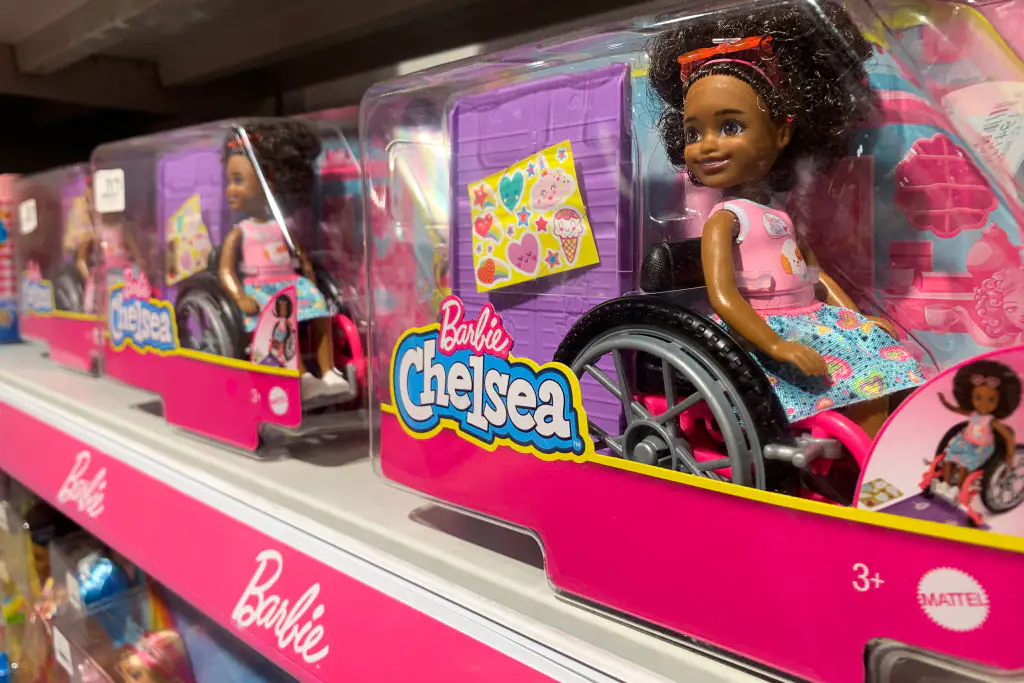
Mattel, the makers of Barbie, has released a black Barbie in a wheelchair in order to further the cause of diversity.
The brand has already made efforts towards the inclusion of traditionally marginalised groups with its hijab-wearing Barbie, released in November of 2017. And now Mattel has decided to take it a step further by launching a black barbie in a wheelchair, alongside a more traditional blonde-haired Barbie in a wheelchair.
[[imagecaption|| Credit: Mattel]]
Complete with a rolling wheelchair and a ramp, the barbie "has 22 ''joints'' across her neck, upper arms, elbows, wrists, torso, hips, upper legs, knees and ankles so she can comfortably sit and manoeuvre in her wheelchair."
This woman has the face of a Barbie and the body of an adonis:
Considering how much certain groups in society yearn for better representation, it should come as no surprise that the move was met with a great deal of praise on Twitter.
"They made a barbie in a wheel chair [sic]," one person wrote. "I am not a fan of Barbie but the last ones that look different are alright and that one in a wheel chair I really had to get it."
"If you read the thread, it sounds like a Barbie in a wheel chair had previously existed but been discriminated at some point," another added. "Glad to see she’s back. - Everyone means every one [sic]."
"Christmas toy shopping today," one Twitter user shared. "Great to see @Barbie being more inclusive. My sister used a wheelchair as a child, and collected Barbie dolls. She would have LOVED this."
"Currently crying because @Barbie has this amazing doll in a wheelchair! All about that representation! #BridgeTheGap," wrote a fourth.
But the reaction to Mattel's recent stab at inclusivity wasn't entirely positive, with some commenting on certain "ableist" aspects of the move.
"So Mattel thinks it's okay to charge more for Barbie in a wheelchair? PLUS she gets posable arms while her walking counterparts have stiff board arms?" one disgruntled user wrote.
Another user complained about a particular Toys "R" Us store assigning the new exclusive barbie to the bottom shelf.
"Was @ #ToysRUs yesterday and saw this disgusting display of #Ableism in the #Mattel #Barbie aisle," they wrote. "Why TF is the @Barbie in the wheelchair singularly excluded to the bottom shelf?? She doesn't deserve to be disregarded just because of her #Disability."
We used to play with her, Aqua wrote a song about her, and at one point or the other, we all thought that she embodied womanly perfection on a physical level. Yes, Barbie, in all of her iterations followed the majority of us from childhood into early adolescence. But for the last few decades, every girl's (or boy's) favourite playmate has faced a great deal of controversy. Barbie has been accused of promoting an unhealthy body image, and it's not hard to see why; what with her impossibly tiny waist, skeletal frame and stick thin legs.
However, Mattel, the company behind the popular children's toy has endeavoured to update the doll, bringing her more in line with society as it stands today. As such, Barbie has undergone quite the transformation. In her biggest update since 1959, Mattel unveiled three new body types, all of which are more representative of a healthy, everyday woman. They feature buxom busts, curvy hips, plump stomachs and in some models, even hormonal acne and stretch marks.
And now, Mattel has taken it one step further, giving Barbie her first girlfriend.
[[instagramwidget||https://www.instagram.com/p/Bbm4HZ6gxb_/?taken-by=barbiestyle]]
Yes, Barbie came out this week. And about time too. Official photographs of Barbie and her new girlfriend were featured on Mattel's "Barbie Style" Instagram page, and they're both pictured sporting marriage equality and LGBTQ awareness "Love Wins" T-shirts.
The post is captioned:
"Proud to wear this “Love Wins” shirt with @songofstyle! Did you know that her exclusive t-shirts benefit different causes and non-profits? Such an inspiring initiative and fabulous few days I have spent with Aimee, she’s a doll! #barbie #barbiestyle."
[[instagramwidget||https://www.instagram.com/p/BbxjgH3g8dz/]]
While it doesn't explicitly state that Barbie is gay, it's made pretty clear - and in any case, we're not going to challenge it.
Naturally, Twitter had quite the field day with the news, hailing it as a breakthrough moment for LGBTQ rights. One user wrote, "2017 is the year Barbie realised she's a lesbian I'm so happy for her" while another hilariously added, "Barbie has been gay... i had one ken doll and about 17 barbie dolls so the one straight couple was the minority in my dollhouse".
[[twitterwidget||https://twitter.com/gerudoboi/status/935521185181388800]]
[[twitterwidget||https://twitter.com/lilheartnose/status/934333913857740800]]
But this comment has to take the cake: "barbie is gay, her skin is glowing, just got her hair done, got a cute emo gf who wears chokers. literally living her BEST life."
[[twitterwidget||https://twitter.com/sydlauc/status/934514310621081600]]
The move to make Barbie more LGBTQ friendly is certainly in line with Mattel's new mission statement. Speaking about the doll's recent cosmetic changes, senior vice-president and Barbie's global general manager, Evelyn Mazzocco asserted:
"We are excited to literally be changing the face of the brand – these new dolls represent a line that is more reflective of the world girls see around them – the variety in body type, skin tones and style allows girls to find a doll that speaks to them. We believe we have a responsibility to girls and parents to reflect a broader view of beauty."
And good on them too. I look forward to seeing a new generation of young women, who, unlike us, have benefitted from having more diverse depictions of sexuality and what it means to be a "woman" from a young age.
It's no secret that disabled people have historically been marginalised in our society. And unfortunately, to this day, little is done to shed light on their experiences from their own perspective.
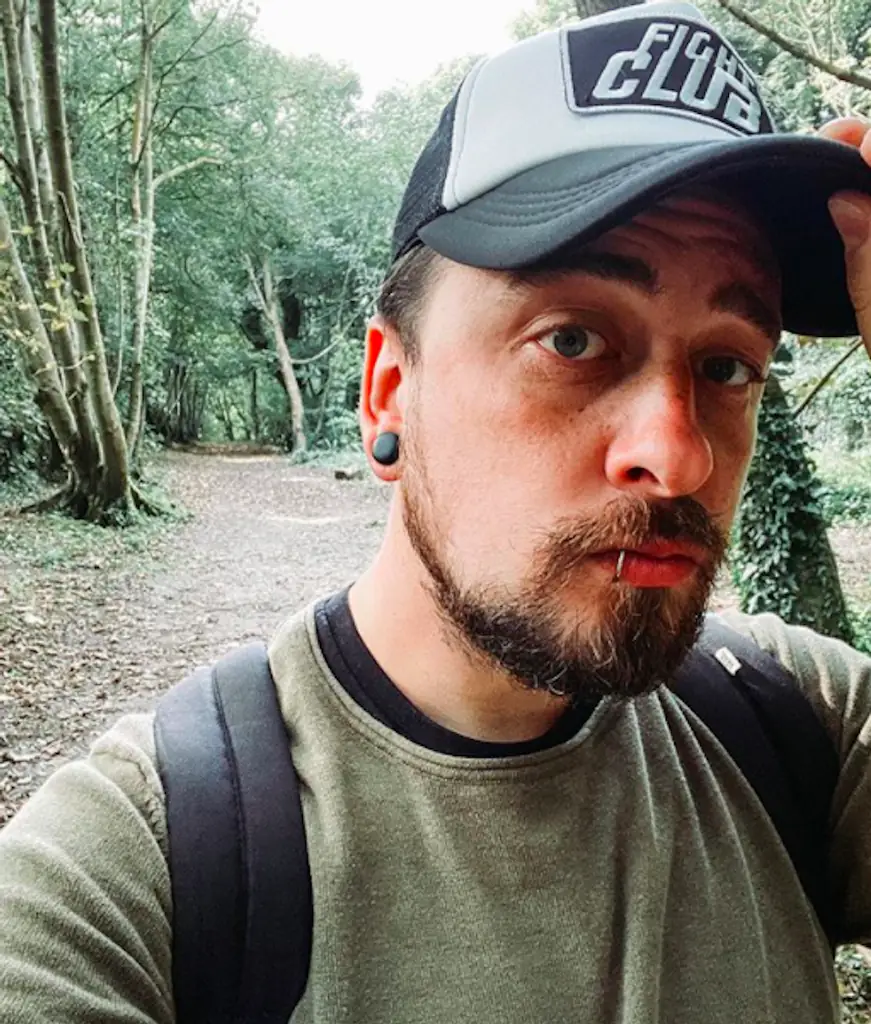
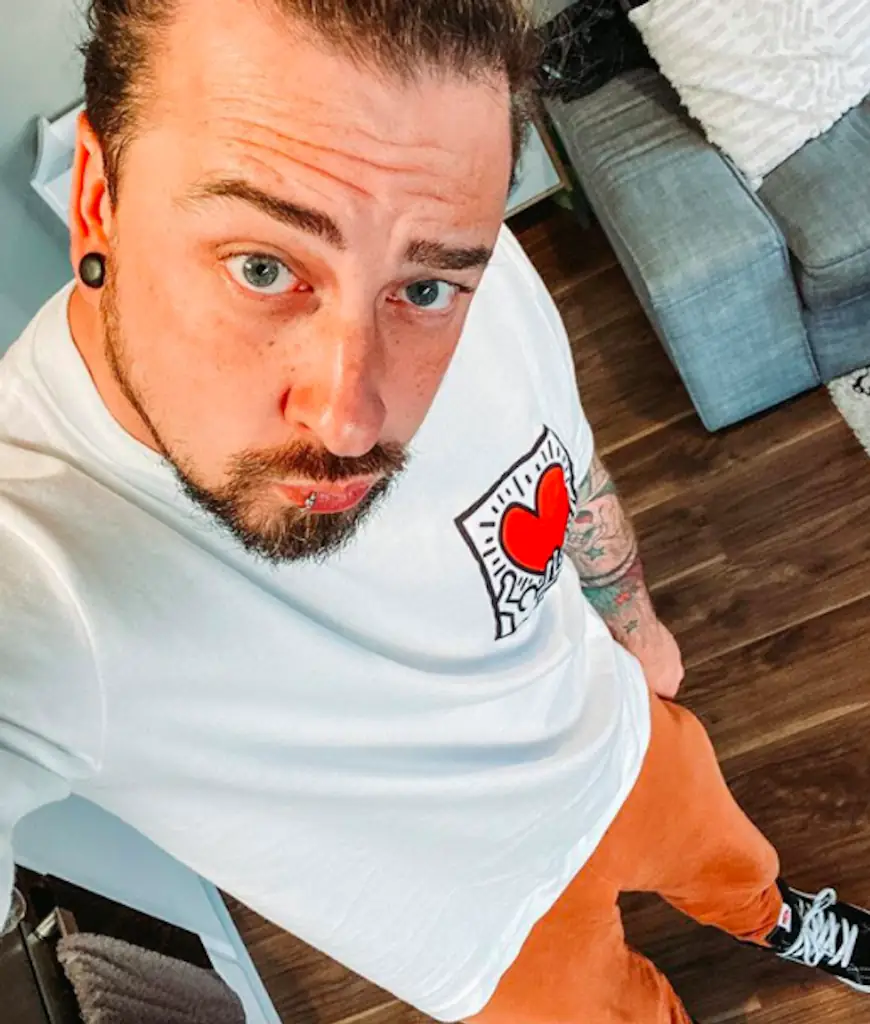
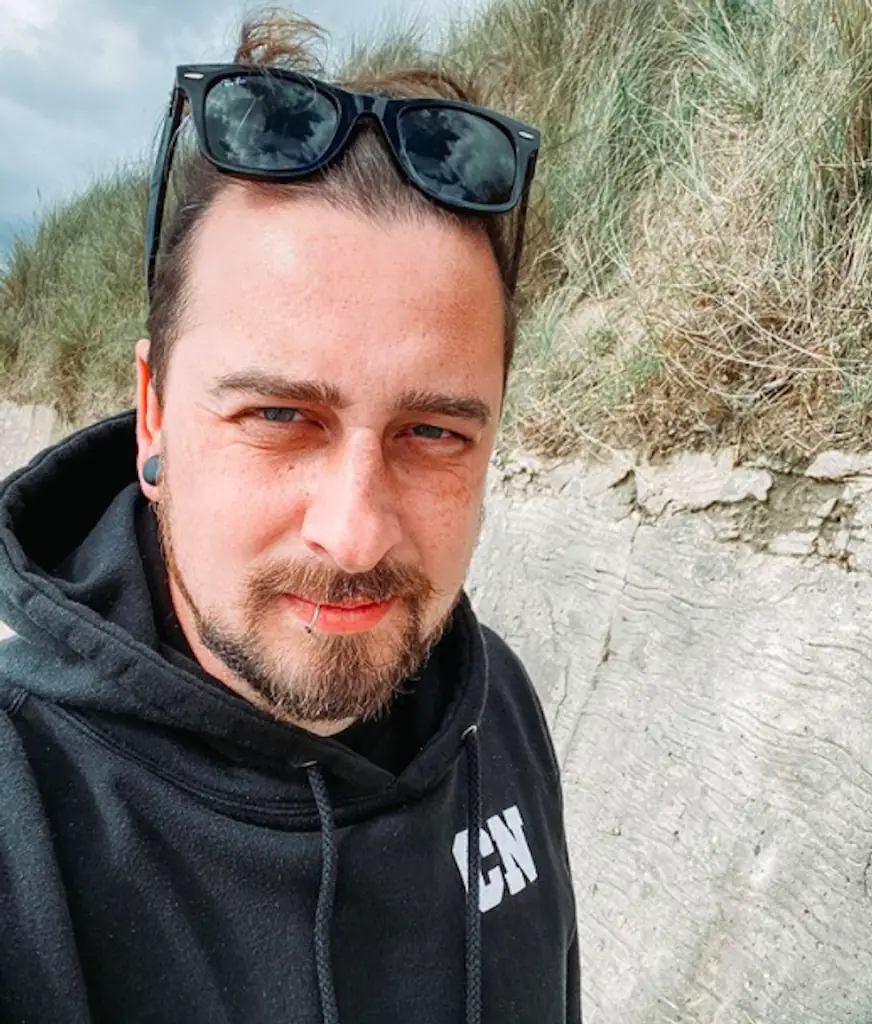
Far too often, disabilities such as autism are misunderstood, oversimplified, and undermined. So, keen to learn more about autism, VT spoke with one of the UK's most influential voices on the topic, Daniel Jones.
The Welsh content creator currently has more than 140,000 subscribers on his YouTube channel, The Aspie World.
Credit: Dan Jones / The Aspie World
When Dan, who is now 34, was diagnosed with Asperger's Syndrome at the age of 26 back in 2013, he knew practically nothing about the condition.
These days, Asperger's Syndrome is widely considered an outdated term.
In fact, in the same year that Dan received his diagnosis, Asperger's merged with other sub-diagnoses to become the all-encompassing Autism Spectrum Disorder (ASD).
It should be noted, however, that there are autistic people who still identify with the label of Asperger's Syndrome and may use it interchangeably with autism.
Credit: Dan Jones / The Aspie World
Autism is a lifelong developmental disability whereby communicating, processing information, and adapting to social norms can be extremely challenging for the individual.
It can also affect the way that autistic people experience everyday life through their five senses.
"Basically, all my life I'd been struggling with issues up until I was 26 and got diagnosed. Issues ranging from socialising, finding friends, shyness, and what my parents thought was extreme agoraphobia," Dan tells VT.
From a young age, his parents and teachers were aware that he had "issues", but Dan grew up in Anglesey, Wales, which was a "long way away from anywhere that was diagnosing autism back in the '90s," he explains.
Credit: Dan Jones / The Aspie World
Concerned about Dan’s development, his parents took him "to see all kinds of shrinks".
"At about six or seven years old, they arranged with the school that I was allowed to stay indoors at break times and play on the computers," he recalls.
"Because autism wasn't a thing that people were diagnosed with, they were like 'maybe it's attachment issues, extreme separation anxiety, extreme shyness, or short-term memory loss'. They just didn't know.
"I was given one-to-one sessions every day in the library to improve my speech and reading," he explains.
Credit: Dan Jones / The Aspie World
Dan also shared that he was placed in "the special ed class" at school.
"It was rubbish," he says. "They didn't really teach anything. You'd just draw pictures all day. It was s**t."
Teachers noticed that while Dan showed signs of developmental issues, he also showed a precocious interest in topics such as Ancient Egyptian history and science.
In fact, following an access course, Dan later went on to earn a degree in Chemistry.
But while Dan enjoyed learning, he found the social aspect of university overwhelming.
Credit: Dan Jones / The Aspie World
"I felt quite alone," he says. "Sometimes I thought, 'Am I brain-damaged or bipolar?' Because I'd heard of those things. But I didn't align with any of those."
On top of all this, Dan is extremely sensitive to certain sounds, smells, tastes, textures, food temperatures, and lighting due to his Sensory Processing Disorder (SPD), which often co-exists with autism.
One of the more interesting aspects of Dan's SPD is that even certain words can be extremely uncomfortable - painful even - for him to hear.
"There are certain words that hurt," he explains. "The sound and formation of the word. It just hurts when I hear them."
Credit: Dan Jones / The Aspie World
Dan’s Asperger's diagnosis at the age of 26 came about during a difficult time in his life.
"The company I worked for was quite a small company. There were only about six of us in the office and it was cool because I had my spot," he says. "But then on one of the days I went in, they moved our desks around and it expanded to a 200-person company."
"I had a meltdown because they were changing my desk around, moving me from where I was positioned," he continues. "I had to take time off work and I worked from home for a little bit. That really rocked me to my core. I had to go to therapy."
It was only when his partner, Naomi, who was studying Childhood Development in Autism, and her mother, a mental health nurse, suggested he might be on the spectrum that a developmental disability became a possibility for Dan.
Credit: Dan Jones / The Aspie World
Through his doctor, Dan was able to get a referral for an autism assessment. The process included interviews, tests, and neurological brain scans. Ultimately, he was diagnosed with Asperger's Syndrome and ADHD.
"When they said I had Asperger's Syndrome, I went home and Googled it and went on YouTube," he recalls. "There was nothing really on YouTube. It was really bleak. The videos on YouTube were all very depressing."
"I wanted to create educational and entertaining videos," Dan says. "I don't want people who have the condition to feel alone."
At the start of each video, the content creator - now a bona fide influencer - introduces himself, saying: "My name is Dan. I have autism, ADHD, OCD, and dyslexia" - conditions that often go hand in hand.
Credit: Dan Jones / The Aspie World
But in spite of the many challenges he has faced from an early age, Dan told VT that he sometimes feels "guilty" that he is classified as having the same disorder as non-verbal autistic people with much higher support needs.
"There are kids with Autism Spectrum Disorder who cannot even go to the bathroom on their own - and they can't say one word," he says.
"People are visual - so to them, disability has to be visual," Dan adds. "So, if there's a guy with tattoos talking on a stage about autism, they're thinking this doesn't compare to the kid next door who has to use an iPad to talk."
"It's a lack of knowledge," he continues. "If everybody knew that autism was a spectrum of different levels of ability and support needs then no one would bat an eyelid."
Credit: Dan Jones / The Aspie World
Unfortunately, this lack of knowledge certainly isn't helped by the fact that autistic people in mainstream media are very hard to come by.
In fact, Dan was actually supposed to feature on a reality TV show called The Circle, but at the last minute, Channel 4 pulled the plug on his involvement.
"People are too scared to put autistic people on reality television," he says. "They don't want to be persecuted for representing somebody and potentially getting it wrong."
"But Channel 4 is one of the most diversity-driven channels - people with disabilities, people of colour, people of different religious backgrounds, and I love that. But then they let me down."
Credit: Dan Jones / The Aspie World
There are many misconceptions about autism - and excluding autistic people from the media only serves to perpetuate them.
When VT asked Dan what he felt was the biggest misconception about autism, he responded:
"Everyone thinks you're going to be like Rain Man. There's a misconception that we're all great at maths, that we can't communicate, and that we'll never fall in love and start a family.
"But I've got a partner I've been with for 11 years, and I've got a son who's two years old. Yes, I may be good at maths and have a degree in chemistry, which is a bit cliché - but not everybody on the spectrum is like that."
Credit: Dan Jones / The Aspie World
On the whole, it's important to realise that autism is referred to as a spectrum for a reason.
Not all autistic people will have each and every trait associated with autism. Some may be non-verbal, in need of round-the-clock care, or have severe temper tantrums - while other autistic people might be independent, have jobs, partners, and children.
However, the autistic people who may outwardly seem as though their condition is "not as severe" may have other common - albeit less visible - autistic traits.
Some of these traits include severe social anxiety, OCD, depression, ADHD, difficulty following instructions, difficulty learning via mainstream teaching methods, difficulty connecting with and understanding people, and repetitive behaviour patterns.
If you identify with some of these traits, have a think about whether you might want to seek a diagnosis. It might end up helping you in the long run.
In the meantime, if you'd like to download Dan's free PDF on Autism Hacks, click here.
When you take your child to daycare you expect them to be looked after, not ridiculed. However, for Jessica and Steve Rold, their daughter received the latter.
When the parents were picking up their two year-old-son from daycare with their infant daughter in tow, daycare staff took it upon themselves to issue some unsolicited parenting advice, telling the Rolds to dress their daughter "more girly" for the benefit of the other children.
According to the staff, dressing their child in pink means that they would be able to identify her as a female. But, rather than going home and ordering dollars upon dollars worth of baby clothes, these two came up with another idea.
Addressing the situation humorously, Jessica and Steve rolled up the next day with their daughter looking like this:
Steve posted the image onto Reddit and fellow fathers decided to come forward and contribute their experiences of raising their children in a gender-obsessed society. This man, for example, has a son who loves the colour pink and My Little Pony.
"My four-year-old loves pink. All his friends are girls and they all love pink, MLP, and princesses.... so my son loves to wear pink (he has exactly one pink shirt that he wears the moment it is clean), he begs to watch MLP the moment he gets home from school, and he talks about princesses all the time. I see our family visibly cringe. Its great."
While this dad's daughter loves Hot Wheels and Mine Craft. However, as he says, they are children, so let them have fun.
"I have a 5 year old girl. She loves Pokemon, Minecraft, and has said she wants a Hot Wheels track set for Christmas. She also loves MLP, Barbie, mermaids, princesses, and unicorns.
"Her lego sets include Creator sets, Lego City, Disney Princess, Lego Friends, both "Friends" style and traditional style super hero stuff, Minecraft, and Ninjago.
"Sometimes we buy her T-Shirts and PJs from the boys section. Actually we've been buying PJs from the boy section more and more, because its easier to find stuff that doesn't have those annoying little frilly things on the sleeves that feel scratchy and bother her."
Just let kids have fun and enjoy what they want.
Finally, this little legend loves to live the high life and is partial to a manicure.
"I have boy girl almost three year old twins. My son goes to daycare with all girls. He loves trucks, sports, riding bikes..doing boy things but he also insists when my wife and daughter get their nails painted that he gets his nails (toes as well) painted. Its pretty funny to see and we get a lot of comments on it from strangers but hey, hes happy."
It seems ridiculous that in this day and age, we're getting so hung up on the colour a child is wearing. Kids are kids - let them wear what they want for goodness sake.