


Health4 min(s) read
Photographer captured women before, during, and after orgasm to show what happened

A photographer set out to challenge unrealistic portrayals of female pleasure, arguing that the way orgasms are shown on-screen is frequently “fake.”
Often depicted in films as an all-consuming electric surge through a woman’s body, an authentic depiction of a female orgasm is just as uncommon as finding a man who actually knows how to bring one about.
Marcos Alberti's peculiar project
Marcos Alberti, known for his 2016 project ‘3 Glasses Later’, which documented how people’s expressions changed after drinking wine, later created ‘The O Project’.
This series captured four stages of women’s experiences using a personal massager: before starting, as arousal began, the moment of climax, and the euphoric “afterglow’. In the first images, some participants appeared understandably nervous, but their expressions evolved throughout the sequence.
Finding participants proved difficult. Although around 2,000 women initially showed interest, only 22 agreed after learning what the project involved. Alberti acknowledged the challenge, saying: “How do you say to someone: ‘Do you want to masturbate in front of me and my camera?’”
Despite the sensitive subject, he emphasized that the images were created in a respectful and artistic way, not exploitative. Explaining his motivation, he said: “On television, actresses are usually trying to look good all the time for the camera in an unrealistic way and when we look to internet, porn in particular, it's very fake. The sexual positions, expressions, the bodies with a lot of make-up... this is unreal. Women feel pressured to achieve what they see on these channels and they're looking for something that doesn't exist.”
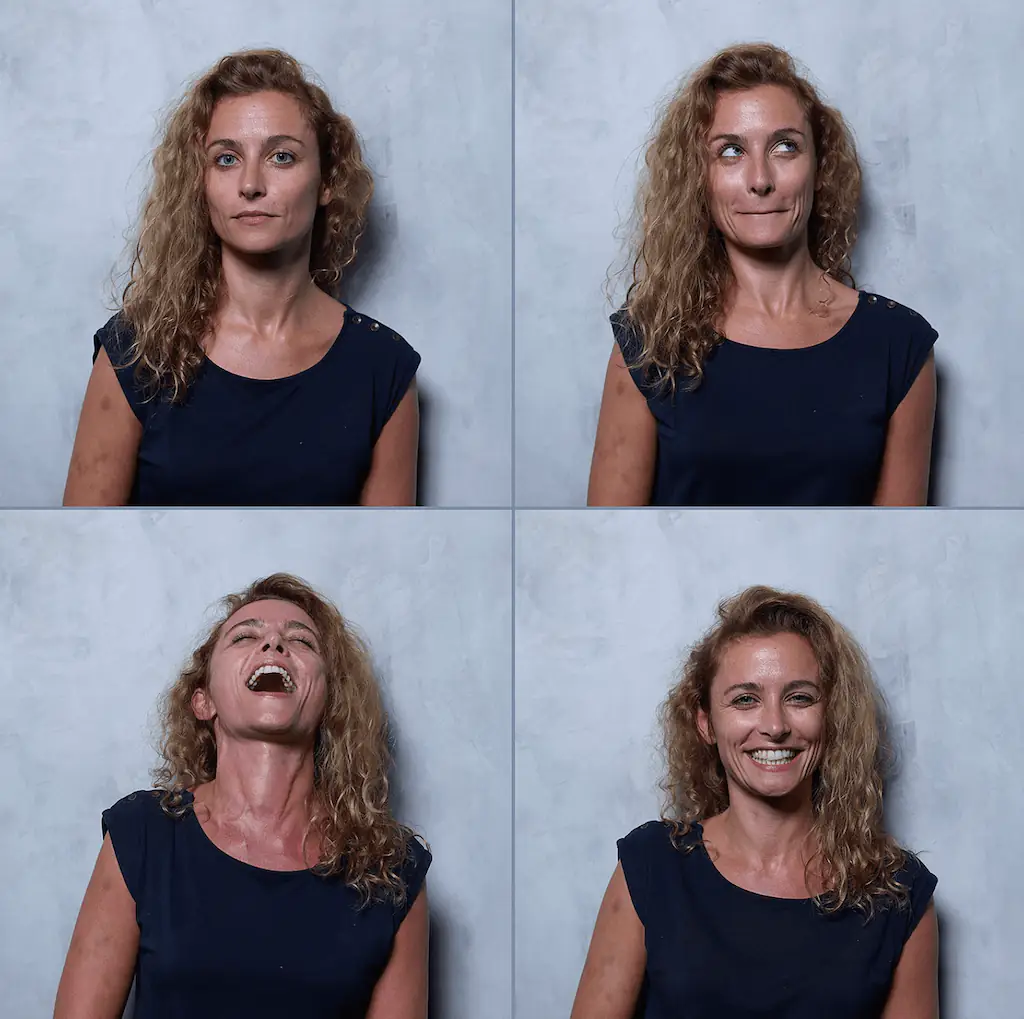
He described ‘The O Project’ as “the first project to document the female orgasm without approaching it from a sexual or erotic perspective.”
To make participants comfortable, Alberti spent time building trust with them. He highlighted their bravery, saying it required “enormous courage.” Working with the sexual wellness brand Smile Makers, he aimed to present female sexuality in a new, more authentic way.
The photos were carefully staged to maintain privacy, participants were fully clothed, and their bodies were concealed behind a curtain and tablecloth, with Alberti photographing through a small opening. He explained: “In this project, there is no sexuality involved… which allows us, for the first time, to observe what an orgasm does to the body and the expression it creates, from a purely human and emotional perspective.”
Women from countries including Singapore, South Africa, China, Thailand, Ukraine, the US, and Russia took part. One participant described her initial anxiety: “Initially I was like, the apprehension... Like anticipating that I am going to be doing this. How is it gonna be? So there is a lot of worry.” But by the final image, her outlook had shifted to: “Ha! Life is beautiful.”
Alberti noted that participants often forgot he was even there, recalling how he would ask afterward, “Did you forget I was here? And they always do.”
Fan Yang of Smile Makers explained the broader goal: “Female sexuality is more often shrouded in shame and secrecy… [we wanted] to upend that social stigma… and encourage women to take control of their own pleasure.” She added that many participants loved their photos, especially the final image, saying: “That final shot, of a strong female grinning into the camera, is exactly what we want people to see.”
Alberti also reflected on the openness the project created: “I love that we were able to speak so frankly with these women about sex and pleasure. When you approach the taboo topic of sex through the lens of humour, people start to open up… which can lead to a monumental change in people’s mentality.”
The broader discussion around women's sexual health and pleasure
The discussion ties into wider conversations about sexual health. Experts highlight that self-pleasure can support wellbeing. Studies have also found links between masturbation and higher sexual satisfaction, as well as potential benefits for pain relief and even cognitive function later in life.
The project also touches on the so-called “orgasm gap,” a well-documented disparity in how often men and women experience orgasm during partnered sex. Research shows heterosexual men are significantly more likely to climax than heterosexual women, while women tend to report higher rates of orgasm alone or in same-sex relationships. This gap is often attributed to factors like lack of representation of clitoral stimulation in mainstream media and broader social attitudes toward female pleasure.
.jpg_sJTyL1?tr=cr-0.0.2120.1414,f-webp,q-70,w-1024)
Overall, Alberti’s work aimed to replace unrealistic portrayals with something more genuine and unadulterated, displaying not just the physical, but the emotional reality of women’s experiences.