


Health3 min(s) read
Woman living with a rare skin condition that causes her skin to blister and tear reveals the extreme precautions she takes every day

What would you do if even the slightest touch to your skin resulted in a breakout of angry, painful blisters?
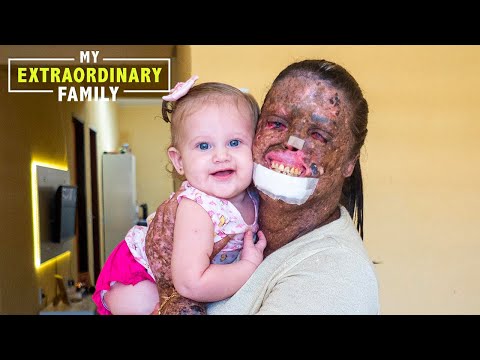
This is the reality for Rachel Buyle - a woman who lives with the world's rarest skin condition.
Just 500,000 people around the globe are thought to suffer from Epidermolysis Bullosa, and one of those people is 36-year-old Rachel Buyle, who lives in Michigan.
Now, Rachel is opening up about what it's like to live with the world's rarest skin condition, and the challenges she's had to overcome.
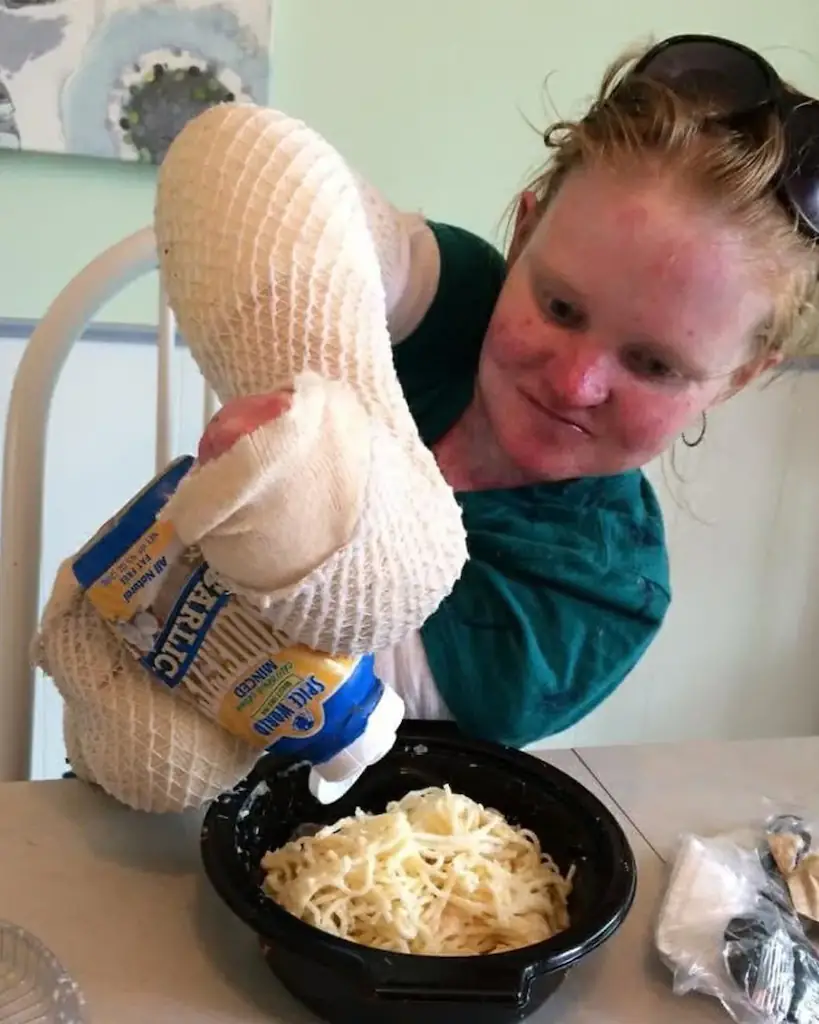
What is Epidermolysis Bullosa - the world's rarest skin condition?
Epidermolysis Bullosa is known as the world's rarest skin condition. Just 500,000 people worldwide are thought to suffer from it.
The condition causes the sufferer's skin to be very fragile and blister easily from the slightest touch, such as scratching, rubbing or heat, according to the Mayo Clinic.
In severe cases, the blistering may even occur inside the body, such as the lining of the mouth or stomach.
Rachel was diagnosed with EB shortly after she was born, after doctors became concerned that her skin tore easily as they tried to clean her up.
The condition is inherited and usually develops in babies, but some people don't show signs of suffering from EB until they're a teenager or young adult.
There is no known cure for EB, although treatments are available to help day-to-day.
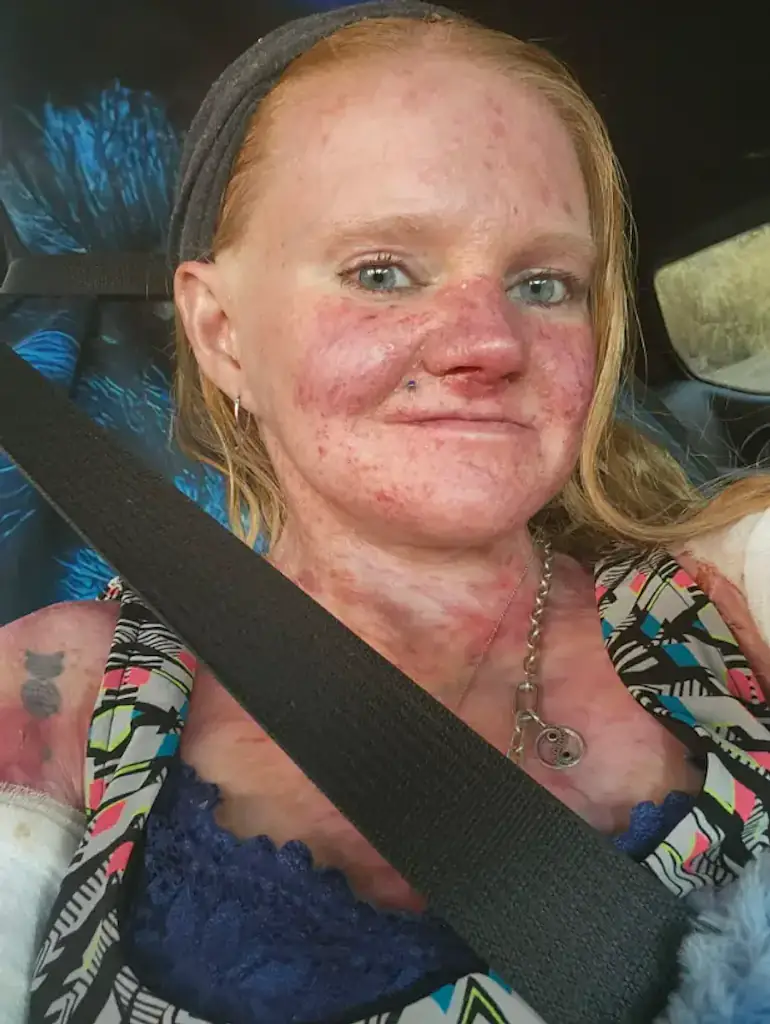
The extreme precautions Rachel takes every day to protect herself
As one of only 500,000 people to suffer from EB, Rachel has a very specific routine that she has to go through each day to protect herself, and her skin, from blistering any further.
As reported by WXYZ, for three days a week, six hours at a time, Rachel is in her "bandage room" at home to prevent blisters from forming.
Last summer, Rachel even had her left arm below the elbow amputated in an effort to prevent the spread of skin cancer, something that's a common side effect on EB.
Despite all these challenges, Rachel - who works as a substitute teacher and Lyft driver - is determined to live life to the fullest, and has even skydived.
"The most difficult part of living with Epidermolysis Bullosa is that it is time-consuming," Rachel told UNILAD.
"Lots of time is spent changing dressings and going to doctor appointments."
She went on to say that she '[tries] to take precautions to prevent injuries by using padding and modifying things.'
"If my skin tears, I will fix it afterwards because the pain was worth the adventure."
Now, Rachel is crowdfunding to save for a new power wheelchair that she says 'would prevent a lot of pain and injury' since it has tracks and not wheels.
Every bump in her ride currently causes her pain and discomfort, with blisters forming on the bottom of her thighs and bottom.
You can contribute to Rachel's GoFundMe here.
.jpg_I4Ebof?tr=cr-0.338.2730.3068,f-webp,q-70,w-100)


.webp_vBqgAR?tr=cr-242.0.1293.1051,f-webp,q-70,w-100)



.jpg_I4Ebof?tr=cr-0.338.2730.3068,f-webp,q-70,w-1024)

.webp_vBqgAR?tr=cr-242.0.1293.1051,f-webp,q-70,w-1024)


