


Health4 min(s) read
Doctors issue warning of ‘toasted skin syndrome’ from prolonged laptop usage
.webp_lli6Ty?tr=cr-74.9.445.380,f-webp,q-70,w-100)
Doctors have warned laptop users against "prolonged" use after a young boy developed 'toasted skin syndrome'.
Millions of people around the world regularly use a laptop, with most never having any significant issues with it besides the odd slow internet connection.
However, doctors have warned laptops can cause erythema ab igne - also known as 'toasted skin syndrome', an unsightly skin condition caused by heat emitted from the device.
It gets the name from the fishnet-like pattern it can leave across parts of the body that have had extended contact between the laptop and the skin.
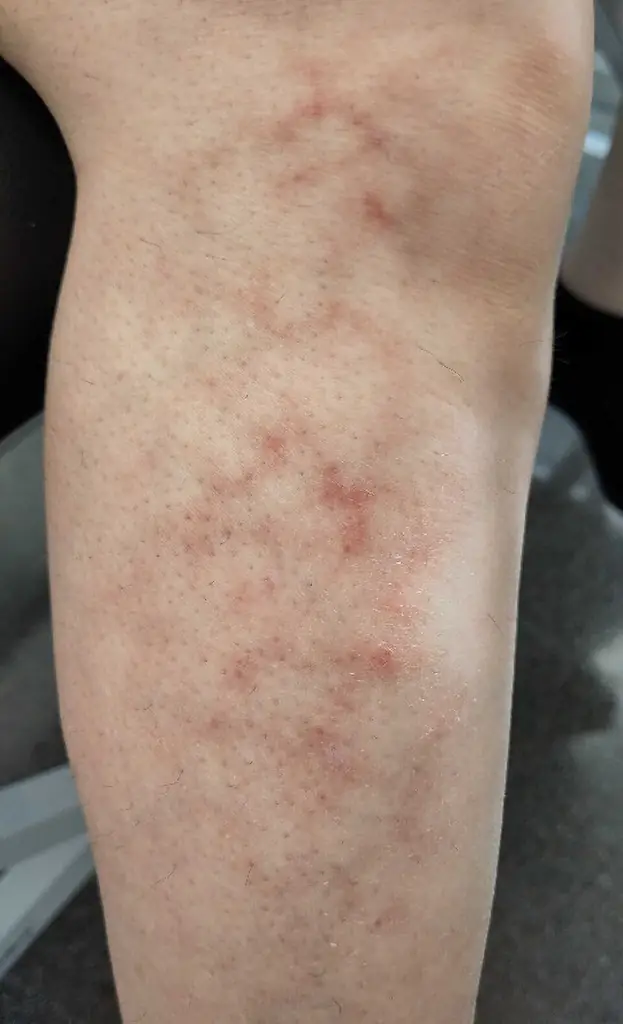
Doctors from the University Hospitals of Leicester NHS Trust noted that the boy's injuries had come from resting a laptop on his abdomen for up to eight hours a day while completing his schooling from home.
They added that his laptop would also often be charging while he was using it this way.
Erythema ab igne is caused by consistent exposure of the skin to heat, which warms it but isn't enough to create pain or blistering as a burn would do.
The prolonged heat can damage tiny blood vessels and fibres below the skin, causing pigment to build up, as well as sparking a rash, and even causing the skin to peel in some cases.
The condition is commonly seen in older adults who use heating pads or hot water bottles, or from prolonged time sitting close to open fires and electric heaters.
However, it is also on the rise in younger patients "due to the growing use of electronic devices".
Doctors had initially suspected the patient may have a liver injury, per the BMJ Case Reports, Dr Mara Znagoveanu of University Hospitals of Leicester NHS Trust said the patient went to a children’s emergency department with "spontaneous bruising".
Though the rash appeared alarming, blood tests and scans showed no signs of concern, and he was otherwise well with no signs of trauma, fever, or weight loss, so he was able to be discharged.
However, he presented back to the hospital two weeks later, after the reaction had worsened, spreading further across his stomach, with some areas so irritated that they had begun peeling.
Doctors were able to establish the cause of his discomfort after quizzing him on his day-to-day routine and discovering that he was home-schooled, and spent several hours with his laptop on his stomach while studying.

Dr Znagoveanu said, per the Independent: "As more commonly reported in adults, EAI may be overlooked in children, especially when the source of heat is less obvious than the traditional sources such as hot water bottles and heating pads.
"The increasing use of electronic devices, particularly during home schooling, has emerged as an under-recognised cause of EAI in paediatric populations."
Experts from the Primary Care Dermatology Society say most mild reactions will gradually fade over several months once the heat exposure has been stopped, but in some cases, it can result in permanent hyperpigmentation.
In the boy's case, his father later confirmed to the doctor that his rash had eventually cleared up.
The doctors also issued a warning to other laptop users to take precautions to avoid the same issues, which can be prevented by not resting the laptop directly on the body, by using either a stand or placing the device on a table instead.
They wrote: "This case highlights the importance of considering [the condition] in children presenting with reticulated [net-like] rashes, particularly in the context of increasing electronic device use.
"Early recognition can prevent misdiagnosis and avoid unnecessary investigations."