


Health4 min(s) read
Vaping likely causes lung and mouth cancer, major study finds
.jpg_I4Ebof?tr=cr-0.338.2730.3068,f-webp,q-70,w-100)
A new study has claimed that vaping could cause lung and mouth cancer and is not a safe alternative to smoking.
Despite being initially recommended as a way of quitting smoking, the evidence is starting to stack up against electronic cigarettes.
Vaping is almost as controversial as smoking in the healthcare world
According to many scientists and medical professionals, vaping is safer than smoking and can be used as a method of breaking the habit.
The idea seems to be that users gradually reduce the level of nicotine in the fluid, weaning themselves off the addiction to the point where they can stop altogether.
However, there have been longstanding concerns about the safety of vaping and reports that it is dangerous to health, to the environment - it accounts for a lot of litter - and is increasingly marketed to children.
It’s become so prevalent that some countries have banned it altogether.
Now, a team from the University of New South Wales in Sydney have published their findings after looking into the available literature on vaping between 2017 and 2025, discovering a worrying link between vaping and DNA change that can cause an increased risk of cell malfunction linked to cancer.
They concluded that vaping is certainly not risk-free, as most people knew or suspected already, and may even increase cancer risk.
It’s too early to make a direct link as there is not enough evidence or research behind the hypothesis, but it might be worth thinking twice about your habit.
As well as the DNA change, vaping can cause tissue damage in the respiratory tract, which has been linked to lung cancer, as well as changing the oral microbiome, which can increase cancer risk in that area.
For those who smoke cigarettes and vape the risk is highest, increasing the risk four-fold.
The study’s lead author Professor Bernard Stewart, said: “The research shows vaping is not an alternative to smoking or illicit drugs.
“It is not an alternative to anything in the context of being safer.
“It's dangerous and that's the message.”
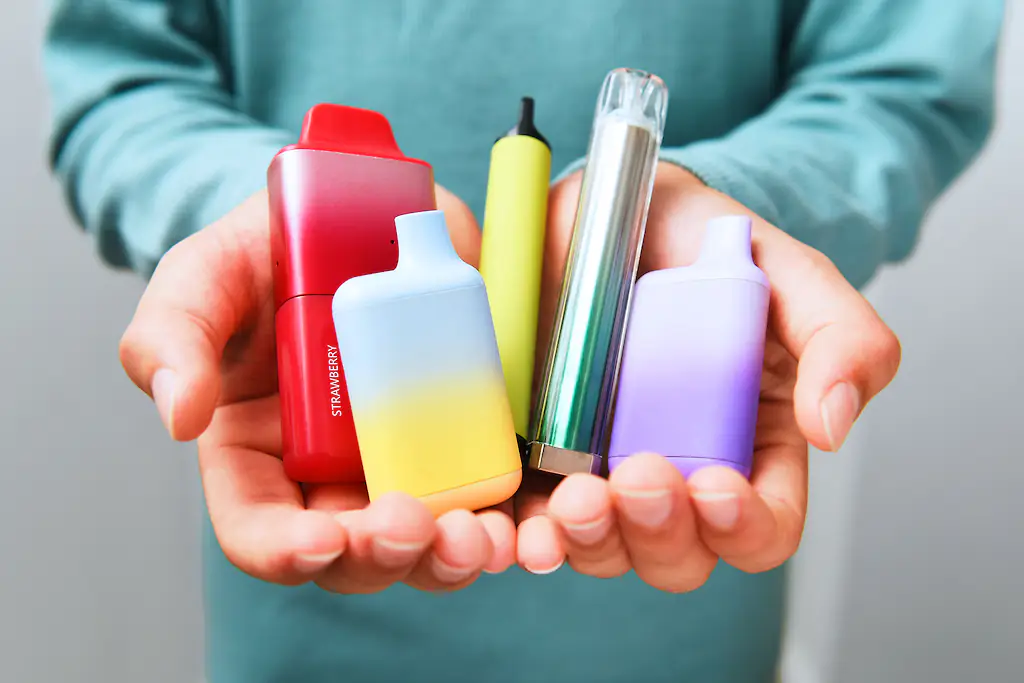
Some important context on the health concerns
There is growing evidence that vaping is harmful, as many vapes contain toxic chemicals, and it can be linked to inflammatory diseases, among others.
However, it is still widely accepted that it is not as harmful as smoking, given the decrease in exposure to toxins.
It has not yet been proven that there is ‘no doubt’ that vaping causes cancer, as there simply isn’t the evidence yet.
“It took about 100 years for the evidence to be conclusive enough to say that smoking causes lung cancer and the history of events evolved over time as people became more and more exposed to tobacco,” added Professor Freddy Sitas, the co-author of the study.
However, he warned: “We are seeing a similar evolution with e-cigarettes.
“As such, e-cigarettes should not be offered as a pathway to quit smoking to put patients at ease, particularly without strict precautions around minimising dual use.”
He continued: “Delayed findings have played right into the hands of tobacco companies who don't mind whether they make their money though vapes or cigarettes.
“We know that there is a significant group of people who both vape and smoke, despite the former being marketed as an effective means to stop smoking.
“We've always assumed that vapes are safer than cigarettes, but what we're showing is that they might be as safe after all.
“It's like saying that knives are less dangerous than machine guns because they can kill fewer people in a given time.
“That notion is absurd and it's absurd to approach vaping in reference to the safety of smoking.”
“While our understanding of causation has improved, we should not have to wait 100 years to decide what to do.
“There is a window of opportunity now to be able to discern these effects and now is the time to be proactive rather than reactive.”

The conclusion is clear, though
The scientists are definitive about one thing - you shouldn’t vape as it isn’t the most healthy thing you can do.
You also shouldn’t smoke, as that does have an established causal link and over a century of evidence to support that claim.
For that reason, some countries have offered vapes as a smoking cessation aid, but new evidence seems to suggest that might not be the best option either.