ADVERT
Travel2 min(s) read
Published 10:13 29 Dec 2025 GMT
A pilot's salary can vary wildly depending on the airline and how many hours they’ve logged each year - but one American Airlines captain’s paystub has just sent jaws dropping across social media.
Shared by Breaking Aviation News & Videos on X (formerly Twitter), the now-viral paystub appears to belong to a Miami-based captain flying a Boeing 737.
The eye-popping figure has left people stunned.
One major reason behind the sky-high salary is the pilot’s hourly wage, reportedly around $360. And believe it or not, that isn’t even the top-tier rate.
Captains flying larger aircraft like the Boeing 777 or Airbus A350 can pull in as much as $450 an hour. With the average pilot logging about 900 hours a year - roughly 75 hours per month - the math quickly adds up to a hefty annual income.
That all amounts to $458,000 in yearly earnings.
Of course, pilots can’t just keep flying to boost their checks.
Federal regulations put strict limits on how many hours they’re allowed to fly.
Flying magazine explains that factors like rest periods between flights, time spent on pre- and post-flight duties, and seniority with the airline all come into play when calculating a pilot’s total working hours.
The salary sparked strong reactions online, with many users backing the high pay for those who literally have passengers’ lives in their hands.
“I am absolutely fine with the bloke who’s in charge of the machine that is holding me 35k ft in the air being paid a lot of money,” one user commented.
“Go get your pilot license kids,” joked another.
“When your life rides in the hands of someone, you want the most capable person at the wheel. I love that captains get paid well, and that they have the training and expertise to keep the skies safe,” someone else added.
But not everyone was sold on the lifestyle that comes with the paycheck.
“Still couldn’t pay me $500k to deal with horrible schedules, airports, the general public, constant hotel stays, union BS, delays etc etc etc. I abhor every aspect of commercial air travel. Sounds like a horrible existence,” one commenter wrote.
As for me, I'm off to research how quickly I can become a pilot.
us3 min(s) read
lifestyle1 min(s) read
Published 16:46 07 Oct 2020 GMT
lifestyle3 min(s) read
Published 16:15 29 Dec 2023 GMT
uncategorised2 min(s) read
Published 15:52 30 Oct 2017 GMT
Published 11:13 25 Jun 2025 GMT
If you’ve ever stared out the airplane window wondering what the pilot up front is getting paid to fly you across the country, buckle up, because the answer might shake your in-flight snacks.
Garrett Ray, a commercial first officer (aka co-pilot) flying out of New York, has gone viral for revealing just how much he earns on the job. And let’s just say, it’s enough to make you consider swapping your office cubicle for a cockpit.
Ray, who documents his flying life on YouTube, recently shared that he rakes in $213.97 an hour. Yes, per hour. That’s not a typo. But before you start practicing your “this is your captain speaking” voice in the mirror, there’s a catch (and it’s a big one).
While $213 an hour sounds like dream money, being a pilot isn’t exactly a smooth ride. There are long hours, unpredictable schedules, and sometimes entire days spent waiting around. And no, you don’t get paid to sit in a hotel room eating room service.
One of Ray’s favorite flights is from JFK to Phoenix, but it comes with a 24-hour layover before he can fly back. So while he’s technically “on the clock,” he only gets paid for the actual flight time (around 10 hours) despite being away from home for nearly 40.
“It’s not always the best bang for your buck,” Ray admitted, per the New York Post. Fair point.
To maximize his time (and his paycheck), Ray focuses on strategic routes. Recently, he shared a flight where he “deadheaded” (industry speak for flying as a passenger to his next assignment) from LaGuardia (LGA) to Dallas Fort Worth (DFW), then operated the flight back home.
Even though he only worked one leg of the trip, he still made $1,556 in just over seven hours. Not bad for a guy who also got to scroll his phone and sip coffee on the way there.
“This is a phenomenal scenario,” Ray told The Daily Mail. “Yeah, I had to get up super early, but I’m back by 3PM.” Sounds like the dream shift, honestly.
With a schedule like his, Ray averages about 80 hours of flight time a month, which adds up to around $17,000.
And if he gets promoted to captain? His hourly rate would skyrocket to $350 an hour, with a monthly paycheck soaring to over $27,000.
So yes, the money is absolutely wild. But unless you're cool with erratic schedules, early mornings, surprise layovers, and spending most holidays 30,000 feet in the air, it’s not exactly the chill lifestyle it might seem.
Still, if you're the kind of person who likes free travel, tight uniforms, and getting paid like a tech bro without having to code, maybe the skies are calling.
A flight attendant has gone viral on social media this week, after sharing some incredible behind-the-scenes secrets about what life is really like for staff on airlines.
Ally Rae Case, a flight attendant who works for American Airlines, has been posting a series of videos where she answers some of the questions she's heard from other people hundreds of times in the past about her job.
[[tiktokwidget||https://www.tiktok.com/@allycase1/video/6879973949900475654]]
For instance, in one video Ally states that flight attendants usually get to stay in hotels for free, and that they don't have to share their rooms with anyone else.
In the video in question, Ally can be seen showing her 70,000 followers her hotel room in London, showing that it is otherwise uninhabited except for herself.
[[tiktokwidget||https://www.tiktok.com/@allycase1/video/6876978229979172102]]
Another secret she revealed in one of her clips was that, according to her, most flight attendants are only paid while the plane’s boarding door is closed.
In that video, Ally states:
"Yes, once the door closes, the clock starts. Once it opens, the clock stops. So your flight attendants are not getting paid during boarding and deplaning, so be especially nice during those times."
[[tiktokwidget||https://www.tiktok.com/@allycase1/video/6873103678664920325]]
Indeed, according to Business Insider, a number of airlines only pay their flight attendants while their planes are actually in the air. However, others, also give their attendants a small, hourly rate (approximately $2.20 as of 2019), while they’re away from home because of their work.
Ally also stated that she can fly anywhere in the United States for free because of her job, and only has to pay the exit taxes for the country she’s leaving when she's flying internationally.
[[tiktokwidget||https://www.tiktok.com/@allycase1/video/6877370842284592389]]
Other revelations included the fact that Ally has to always keep a case packed, sometimes has as many as five flights a day, and jokingly revealed that flight attendants don't get to chow down on some kind of special food while flying: they eat the same meals as everyone else on the plane.
Ally has also been sharing some helpful hacks and tips to help other flight attendants while traveling, showing them how to stay safe staying in hotels during the global pandemic.
[[instagramwidget||https://www.instagram.com/p/CD3yfk2Jfq5/]]
So if you're worried about flying and staying safe, why not shoot over to her TikTok account to stay up to date with more great content from her.
A woman has taken to TikTok to share her paycheck after working 70 hours at a bar... and it's staggeringly low.
I dare say that most of us want more money than we currently earn, but that's just human nature, isn't it?
Once you've got one yacht, you're going to want two - maybe, I've never owned a yacht.
Either way, money makes the world go around, and as much as it causes a lot of stress at times, it's also important to have so you can live a comfortable life. But it would appear that some places rely on the generosity of others to pay their staff.
Austin-based bartender Aaliyah Cortez bared her payslip to TikTok, unveiling the grim reality of her earnings after a grueling 70-hour workweek.
Cortez, employed at a local sports bar for over a year, disclosed that her base pay stood at a meager $2.13 per hour, emphasizing the critical role tips play in her ability to make ends meet.
The video, posted in January 2020, breaks down her compensation, revealing a shocking sum of $9.28 after factoring in federal taxes, social security, and Medicare.
"So this is why you should always tip your bartenders and servers, anyone who waits on you or provides a service for you," Cortez conveyed in the video.
Speaking to BuzzFeed, Cortez criticized the current state of the service industry, expressing her desire for fair and consistent compensation.
"It’s not right that we have to do this, but I wanted to shed some light on the issue and inform the public about the importance of tipping," she said.
Cortez's plea for adequate pay and consistency struck a chord with viewers, who flocked to the comments to offer their thoughts.
One person said: "No mam, your bar/restaurant is getting free labor and that's not ok," to which Cortez responded: "It’s bc we get tips, our tips are supposed to amount to minimum wage or more, if not then they must pay us minimum wage."
Another user said: "This is why the US should be like EVERY other developed nation and not have a tip culture. Businesses should pay your wages. Tips shouldn't be a thing."
Another comment really captured the culture of tipping, as they said: "I always tip 20%. If I can’t afford 20% I don’t go to a restaurant."
It's worth noting that the paycheck also reveals that Cortez made $700 in cash tips, but it opens up the ongoing debate about whether customers should have to tip to supplement a server's wages.
What do you think?
Published 12:30 20 Mar 2025 GMT
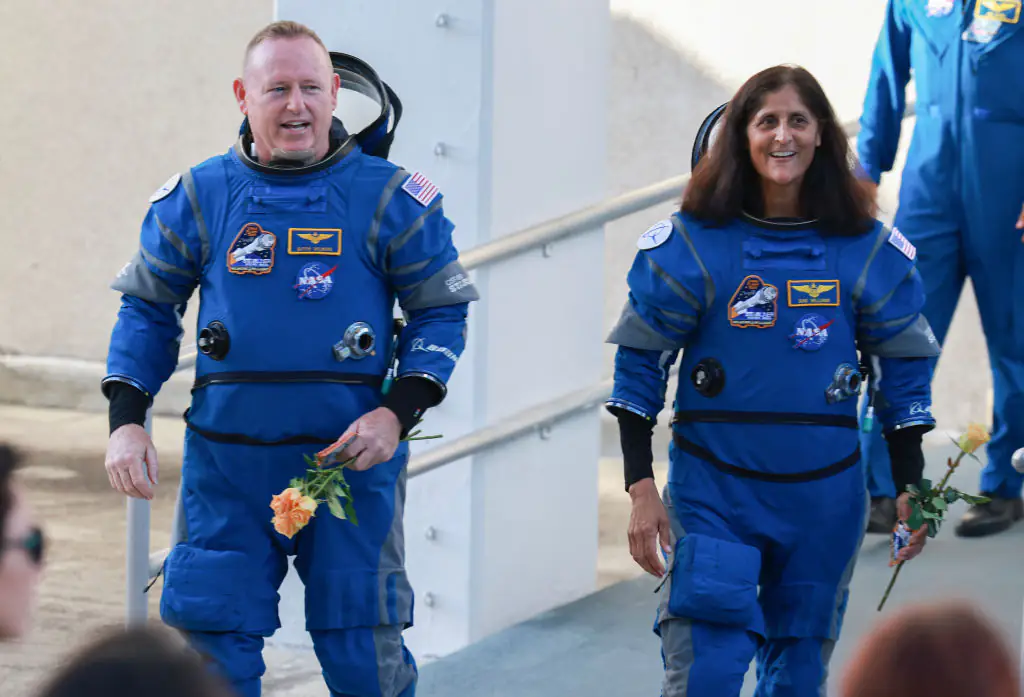
A former astronaut has shared the surprising payout that NASA astronauts Butch Wilmore and Suni Williams could receive following their prolonged mission in space.
Wilmore and Williams initially set out last June for what was meant to be an eight-day test flight aboard Boeing’s Starliner spacecraft.
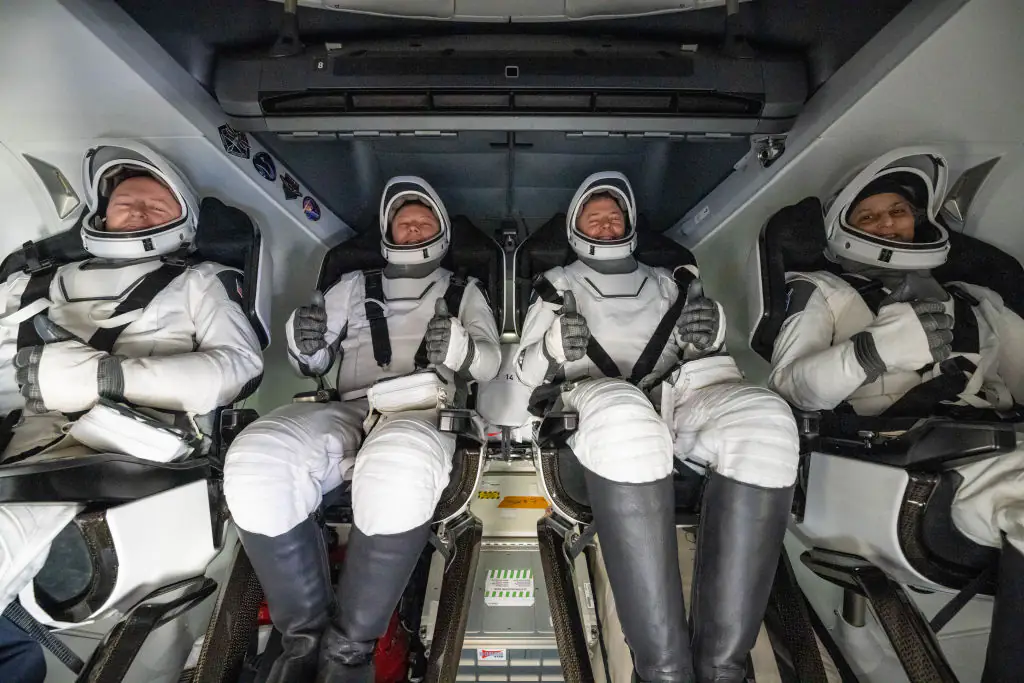
However, due to persistent technical setbacks, the mission stretched into an unexpected 286-day stay in orbit before they finally returned to Earth on Tuesday (March 19) night aboard a SpaceX Crew Dragon capsule.
With their return, the astronauts now rank as the sixth longest-serving NASA crew members for a single mission, spending nearly 285 days in space.
Their time just falls short of Peggy Whitson’s 289-day record, while Frank Rubio remains the longest-serving NASA astronaut with 371 days in space, according to The New York Post.
Despite the 278 extra days beyond their planned itinerary, the financial compensation for Wilmore and Williams's prolonged mission may be far less than one might expect.
According to former astronaut Cady Coleman, NASA astronauts receive incidental pay, similar to federal workers on a business trip.
Coleman revealed to The Washingtonian that she earned about $4 per day during her own 2010 mission.
Though the exact rate for astronauts in space today is unclear, the federal travel allowance currently sits at $178 per day - which could significantly impact their compensation, per The New York Post.
Coleman explained that the small daily stipend is a legal obligation meant to cover incidentals like food and lodging.
Based on her experience of earning $636 during a 159-day mission, Wilmore and Williams might receive approximately $1,148 each for their unplanned stay. However, if NASA applies the full $178 daily travel rate, that number jumps to over $51,000 per astronaut.
Wilmore and Williams are classified under the GS-15 pay scale, which places their annual salaries between $125,000 and $163,000.
While other astronauts have spent longer durations in space, none have faced as much uncertainty or an unexpectedly extended mission quite like this.
Their dramatic return to Earth was met with cheers and relief, as they emerged from their capsule in the Gulf of Mexico, smiling and waving before being assisted into reclining stretchers for routine medical checks.
Now back on solid ground, they will spend weeks in physical therapy to regain strength and mobility after months without Earth's gravity.
NASA will reportedly enforce a strict rehabilitation program for returning astronauts, which includes: gradual walking reintroduction and starting with soft surfaces, strength training, and cardiovascular exercises to rebuild muscle and bone density.
They will also undergo balance training to restore coordination and psychological support to help astronauts adjust mentally.