Uncategorised2 min(s) read
health2 min(s) read
We all know someone who has come down with a case of 'man flu,' or we have even come under its effects ourselves. It usually involves some cold symptoms including a sore throat, sneezing, fatigue, a constant stream of complaints and a fair amount of eye-rolling from surrounding women.
[[twitterwidget||https://twitter.com/TechnicallyRon/status/17852013712]]
However, while it's easy to poke fun at, there is some science as to why men and women react differently to the same infections - and it's not all down to men feeling looking for extra sympathy.
Last year, a study that took place at the Memorial University of Newfoundland in Canada found that men have a less robust immune system, suggesting that it may be testosterone that's to blame. “Men may not be exaggerating symptoms but have weaker immune responses to viral respiratory viruses, leading to greater morbidity and mortality than seen in women,” Dr Kyle Sue, a clinical assistant professor at the university, wrote in the BMJ.
A weaker immune system may have some evolutionary benefits, as energy is invested in other biological processes - such as "growth, secondary sex characteristics, and reproduction". Beyond this, there may also be a scientific reason why men recover at a faster rate than women, after a study took place to investigate the effects that influenza can have on male and female mice.
Researchers from Johns Hopkins Bloomberg School of Public Health published the study in Biology of Sex Differences. Discovering that women tend to suffer more seriously from the flu than men, they sought answers by infecting live mice and human cells extracted from male humans with H1N1, a strain of Influenza A. This strain is also known as “swine flu”, which caused a global flu pandemic in 2009 and 2010, but they used a non-lethal dose.
It turned out that when infected, the male mice and human cells produced more amphiregulin - a growth factor that plays a role in tissue repair and development. An increased production of amphiregulin is believed to lead to a faster recovery time from the flu. To corroborate these claims, male mice who produced less of the growth factor had similar recovery times to female mice.
“The novel finding here is that females also have slower tissue-repair during recovery, due to a relatively low production of amphiregulin,” said lead author Sabra Klein, an associate professor at Bloomberg School.
There is a possible link between influenza recovery time and the production of amphiregulin, but the study did not determine why men are more likely to produce higher levels of this growth factor than women are. One possible explanation could be the higher levels of testosterone in men - suggesting the sex hormone could have significant effects on our immune system.
The good news is that future flue treatments could seek to boost the production of amphiregulin, a treatment that would be especially beneficial for women.
uk2 min(s) read
A British dad has revealed that he nearly died after mistaking a severe Strep A infection for a case of man flu.
As reported by the Daily Echo, back in November 2013, Alex Lewis, now 42, thought he just had man flu and constantly complained for ten days until his health suddenly started to decline.
A few days later, Lewis said that woke up in tremendous discomfort and that his skin had begun turning purple. He had to be rushed to the hospital and within hours his organs were being kept working by special machines.
Lewis - who is a patron of the Lee Spark NF Foundation - ended up losing all of his limbs and part of his face to the illness and is now urging parents to be attentive to the symptoms.
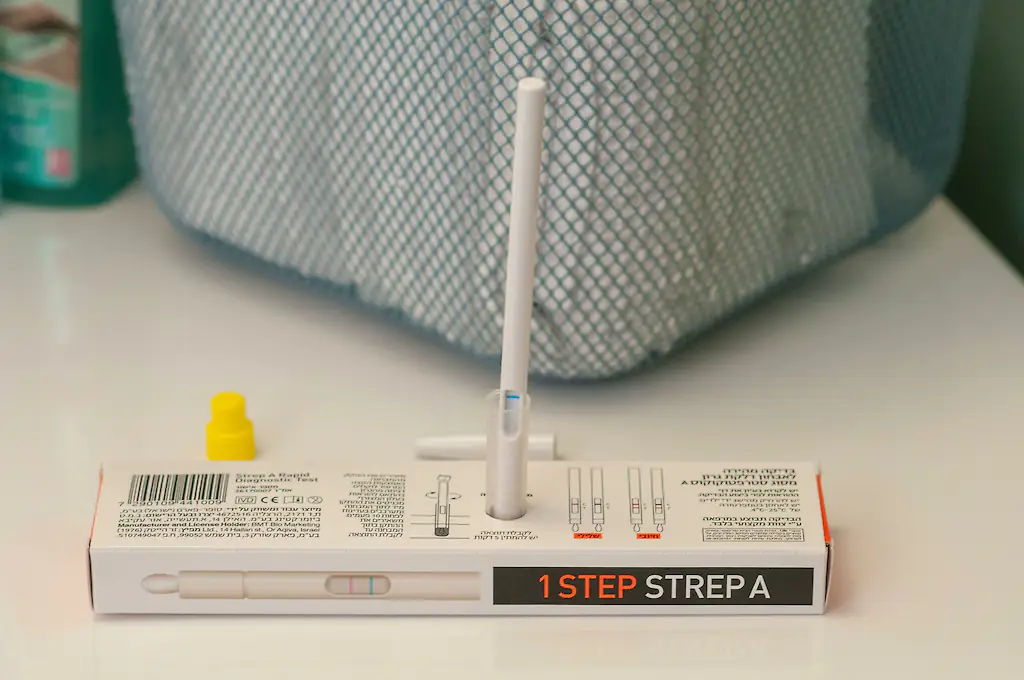
According to medical experts, Strep A refers to bacteria that can inhabit the throat, skin, and anogenital tract. It causes a diverse range of skin, soft tissue, and respiratory tract infections.
For some people like Lewis, his infection was more than a sore throat and led him to experience toxic shock syndrome and septicemia - which is the clinical name for blood poisoning by bacteria, per Hopkins Medicine.
After Lewis contracted the infection, he had to go through months of surgeries that left him with no options but to amputate his arms and legs. He also underwent facial reconstruction as the severe illness destroyed his face and mouth as well.
Despite all that, the father managed to fight through the treatment and managed to prevail despite having been given such a harsh prognosis by doctors.
Lewis - who lives in Stockbridge with his wife Lucy Townsend and nearly 12-year-old son Sam - is now sharing his story after seeing so many children die of the same infection.
Speaking to the Daily Echo, the father reflected on the tragic story of a five-year-old girl who became severely ill last week and was treated at the Royal Belfast Hospital for Sick Children. According to BBC News, she had been moved to intensive care before she sadly passed away.
The UK Health Security Agency (UKHSA) confirmed that five children under the age of five have died in England after contracting the infection, per Gov.UK.
lifestyle1 min(s) read
Are you currently suffering from a worse cold than any of your coworkers? Well, look down, because you may find the reason why...
That's right, a study of over 400 women published in the medical journal of Archives of Sexual Behaviour, found that those with larger breasts can suffer with colds and respiratory illnesses for up to twice as long as women with smaller busts.
The study found that women with F-cup sized breasts suffered colds, coughs, and flu for an average of 8.3 days, which is more than twice as long as women with AA-sized chests, who were sick for an average of just 3.8 days.
Now, this all may sound like nonsense, but there's actually some science to back it up...
In the study, the 400+ subjects were asked about how much they had suffered from colds and flu over the last three years. After collating the responses, the researchers concluded that "breast size was positively related to respiratory infections".
The scientific logic behind the findings is that the fat found in the breasts actually weakens the individual's immune system - making it harder for them to fight respiratory infections.
I wonder how this woman gets on when winter rolls around:
[[jwplayerwidget||https://content.jwplatform.com/videos/488DmM3o-Q0L14jDU.mp4||488DmM3o]]
In addition, as a result of leptin - a hormone found in fat cells in the breasts that can reduce the body's ability to fight off illnesses - women with larger cup sizes will also be struck down by the common cold more frequently than those with a smaller bust.
Put simply, leptin is produced from fat cells, and the amount produced directly correlates to a person's overall body fat percentage. Leptin is also responsible for signaling to the brain when to stop eating, helping the brain to control an individual's appetite and regulate their energy consumption throughout the day.
Per The Sun, another study also found that those with bigger breasts were also a staggering 56X more likely to finish their prescribed course of antibiotics.
So, if you're fuller in the chest department, it could be worth stocking up on cold & flu medication this winter.
uk3 min(s) read
A man tragically died just days after telling his family he felt unwell with a cold, it has been reported.
Lucas Martin, from the Isle of Man, was an International Business Student at the University of Liverpool and graduated in the summer of 2023, as reported by Liverpool Echo.
After the 21-year-old 's academic success, he traveled back home to the island where he worked several part-time jobs such as working for his uncle's car business and selling reusable water bottles.
Martin's parents, Brett and Nicola, revealed to the outlet that they were on holiday in the Midlands when their son called to say that he "had been feeling a bit under the weather," and told them "not to worry" as he'll just sleep it off.
However, as the phone call had worried them, Brett and Nicola later asked a friend to check on Lucas and found his condition had worsened.
"She found him delirious and got him into the hospital," they told the publication. "It turned out to be bacterial meningitis. He passed away within days."
According to Hopkins Medicine, Meningitis is an infection of the membranes (meninges) that shield the spinal cord and brain. When the membranes become infected, they protrude and press on the spinal cord or brain, and this can cause life-threatening problems.
Feeling confused or sleepy is a symptom of bacterial meningitis, and this can lead to brain damage, paralysis, or stroke. Unfortunately, in some cases, it can be fatal as death occurs in a few hours.
Four months later, Lucas' heartbroken family is still struggling to process his death.
The father described his son as a "force of nature" with lots of "enthusiasm and determination," adding: "It was a terrible shock for us and continues to be so. Nothing can take away the grief, it’s biblical in proportions.
"He was such a life force to lose, he was such a presence around the house. Life is in greyscale rather than in color these days."
Brett and Nicola have since formed a charity called Looky’s Aid, which is committed to giving opportunities to young people from disadvantaged backgrounds. The funds are raised through projects such as marathons, football matches, and merchandise.
"Our strapline is unlocking young people’s potential. We’re looking for kids in disadvantaged positions. Maybe they’ve suffered bereavement or parental bereavement," Brett said. "Maybe mum and dad don't have a lot of money or maybe they have a physical disability. We can use charity funding to help them. The idea is to focus on a small number of people and make a big difference in their lives."
Brett feels Looky's Aid is a reflection of his son's generosity as the family found out after Lucas' death that he signed up for organ donation. "After he passed, we talked to the doctors about organ donation. He said, 'No need to worry about that, he's already registered,'" he said.
"He had encouraged his friends to do so too. His liver and kidneys were taken," he continued. "That's saved at least one life and improved the condition of two other lives as far as we know. That's the mark of the man. He didn't need our permission."
Our thoughts remain with Lucas's family and friends as his legacy continues to make a difference.
uncategorised3 min(s) read