Uncategorised2 min(s) read
lifestyle2 min(s) read
Explaining what it is like to have dyslexia is no simple task, but one therapist has taken to TikTok to do just that - and it's sparking a real conversation on the video-sharing app.
Lindsay Fleming, a licensed children's and teenagers' therapist recently uploaded a video featuring a page of text with jumbled up words.
"Have you ever wondered what it’s like for someone who's dyslexic to read in the classroom?" she asks in the video.
The text, which is barely legible, is supposed to simulate what it is like to read as someone who has dyslexia.
Take a look at the educational video posted by Lindsay, who has known she was dyslexic since the age of six:
[[tiktokwidget||https://www.tiktok.com/@lindsay.fleminglpc/video/6873912931298331910]]
In the short post, Lindsay also encouraged people to "duet" her video and partake in the challenge by attempting to read the text.
In any case, many people have since taken to the comments to share their thoughts on the thought-provoking experiment:
One user named Georgia said: "Me [realizing] I might have dyslexia because this is normal to me unless I'm concentrating really hard
Another shared: "I can read it but probably only because I'm an elementary school teacher. The letters moving around is a great visual, I didn't realize that!"
A third person thanked Lindsay for "sharing this and giving me a better understanding! It's important for people to see things from others' perspectives"
According to the Mayo Clinic website:
"There's no known way to correct the underlying brain abnormality that causes dyslexia - dyslexia is a lifelong problem.
"However, early detection and evaluation to determine specific needs and appropriate treatment can improve success."
[[tiktokwidget||https://www.tiktok.com/@lindsay.fleminglpc/video/6878375244491508997]]
Mayo Clinic also explains that dyslexia is treated using "specific educational approaches and techniques" and that the "sooner the intervention begins, the better".
It continues:
"Teachers may use techniques involving hearing, vision and touch to improve reading skills.
"Helping a child use several senses to learn — for example, listening to a taped lesson and tracing with a finger the shape of the letters used and the words spoken — can help in processing the information."
How did you do in Linday's challenge? Let us know in the comments section!
uncategorised4 min(s) read
us2 min(s) read
A young girl was left brain-damaged after someone kissed her on the mouth when she was just two days old.
Breelyn, 8, was born a healthy baby but suffered a traumatic brain injury after being kissed by a person who had a cold sore.
As her immune system wasn't developed at the time, the infant started experiencing seizures and contracted an infection called HSV encephalitis, which went on to cause brain damage.
The virus is "a rare neurological disorder characterized by inflammation of the brain (encephalitis)," and common symptoms include "headaches, fevers, drowsiness, hyperactivity, and/or general weakness," according to the National Organization of Rare Disorders.
The illness is extremely rare and only affects one in 500,000 individuals per year.
Per the medical report, affected individuals may develop speech problems after the initial symptoms of HSV encephalitis appear. These are a struggle to communicate by speech, writing, and/or signs (aphasia), loss of the sense of smell, as well as memory loss.
In addition to this, in some cases, behavioral changes can occur, such as hyperactivity or psychotic episodes.
Breelyn's mom opened up about her daughter's devastating condition during an interview on the Special Books by Special Kids' YouTube channel.
She began by explaining what happened to her beloved child, sharing: "[Breelyn] was born healthy. She was fine. And at two days old, somebody was so excited to see her that they kissed her on the mouth, and two weeks later we started having seizures."
The interviewer then asked how the kiss caused Breelyn's brain injury, to which her mom said: "The infection got into her brain fluid and it attacked her brain."
"It attacks the left side of her brain mostly. It had just started moving over to the right side when we caught it," she continued. "More or less, the encephalitis ate away at her brain tissue."
The mom disclosed that 60 percent of her daughter's left part of the young girl's brain was damaged, while 10 percent of the right side was.
Elsewhere in the interview, the mom revealed that she decided to forgive the person who kissed her child.
"You know, it was an accident and they didn't truly mean it," she disclosed. "I'm gonna let it go because she's at least here with us and that's all I can really ask for."
Breelyn is coping well despite the extent of her severe life-changing injuries. However, doctors don't know if she will live into adulthood.
That's why her loving parents are making sure that she has "the best journey" in life.
health3 min(s) read
An eight-year-old boy has gone permanently blind after his parents made a common mistake regarding his diet.
The incident unfolded in Malaysia, but it's a story that will resonate with many parents across the world.
Kids can be notoriously picky eaters and sometimes it feels easier to give in to their demands just to get them to eat something.
Sadly, this can lead to serious consequences.
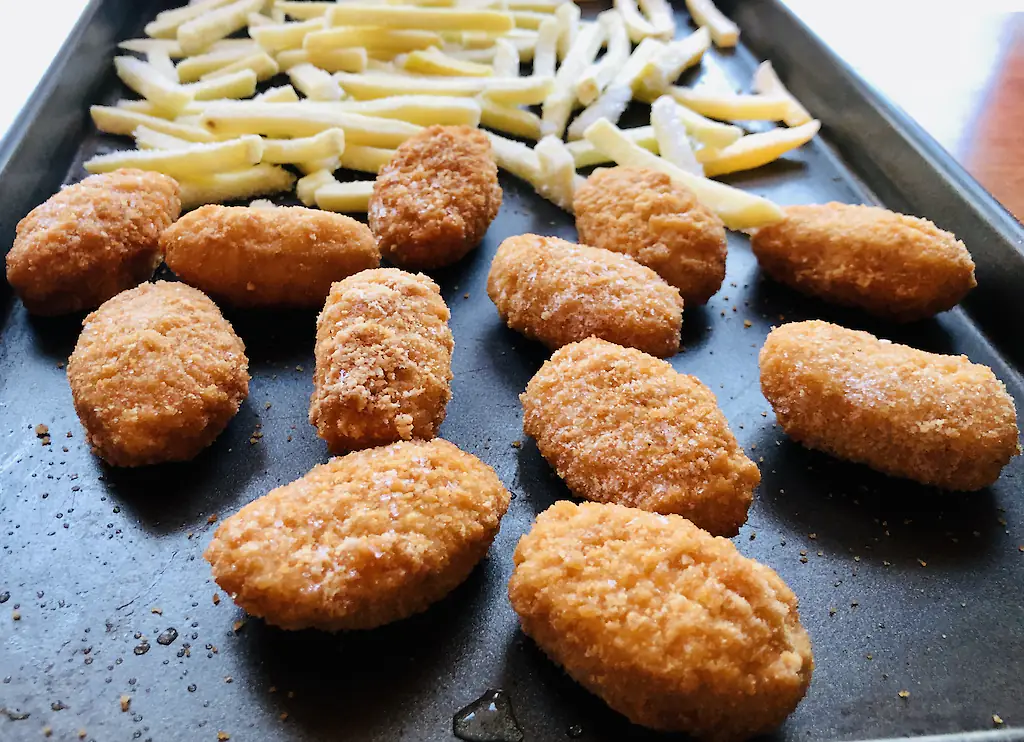
The child, who had subsisted on just chicken nuggets, sausages, and cookies since infancy, suffered from severe vitamin A deficiency, which ultimately damaged his optical nerves, per the Sun.
The boy's ordeal came to light during a second-grade class in Kuala Lumpur, when he suddenly cried out: “Teacher, why can’t I see anything?”
He was rushed to the hospital, where doctors confirmed the extent of the damage caused by his poor diet.
Vitamin A is essential for the production of rhodopsin, a light-sensitive protein crucial for vision in low-light conditions.
A deficiency can lead to optic atrophy, where cells in the optic nerve waste away over time, causing irreversible blindness.
Dr. Erna Nadia, a popular doctor and social media influencer in Malaysia, shared the case in a Facebook post.
“As a mother… we can’t always cook because we are busy… pity for the parents of this student… it is not easy for them to accept,” she wrote.
She urged parents to watch for symptoms of vitamin A deficiency, which include dry eyes, gray spots on the whites of the eyes, night blindness, or difficulty producing tears.
Foods rich in vitamin A, such as spinach, carrots, mangoes, eggs, and sweet potatoes, can help prevent such deficiencies.
This case mirrors other incidents of severe nutrient deficiencies in children globally, including in the United States.
Last year, a 12-year-old boy from Massachusetts went blind due to a similar diet-related condition, as reported by the Daily Mail.
The boy, who had autism and a severe aversion to certain food textures, reportedly survived on a diet of plain burgers, fries with ranch dressing, donuts, and juice boxes.
Doctors found he was severely deficient in multiple nutrients, including vitamins A, C, and D, as well as copper and zinc.
While cases of severe nutrient deficiency remain rare in developed nations, they are increasing.
Approximately one in 100 American children are deficient in vitamin A, while up to 70% of children under 11 are believed to lack adequate vitamin D. Meanwhile, one in five U.S. children doesn’t get enough vitamin C, a deficiency that can lead to scurvy.
Scurvy, a condition historically associated with sailors lacking fresh food, has made a surprising resurgence in the U.S., particularly among children in food deserts - areas with limited access to healthy, fresh food.
Between 2016 and 2020, cases of scurvy tripled, rising from eight per 100,000 children to nearly 27 per 100,000.
uncategorised3 min(s) read