Uncategorised3 min(s) read
uncategorised3 min(s) read
uncategorised5 min(s) read
us3 min(s) read
In America, 33 states have legalized cannabis for medical use, and 10 states have legalized it for recreational use. It's hard to believe this took so long, since alcohol and cigarettes are arguably much more harmful. (According to Politifact, no death from marijuana overdose has ever been recorded.) After years of fear-mongering propaganda, like the ridiculous 1936 film Reefer Madness, Americans shifted their opinion on sticky-icky, realizing it wasn't so dangerous, and actually had medical benefits. (Also, it inspired a lot of great music.)
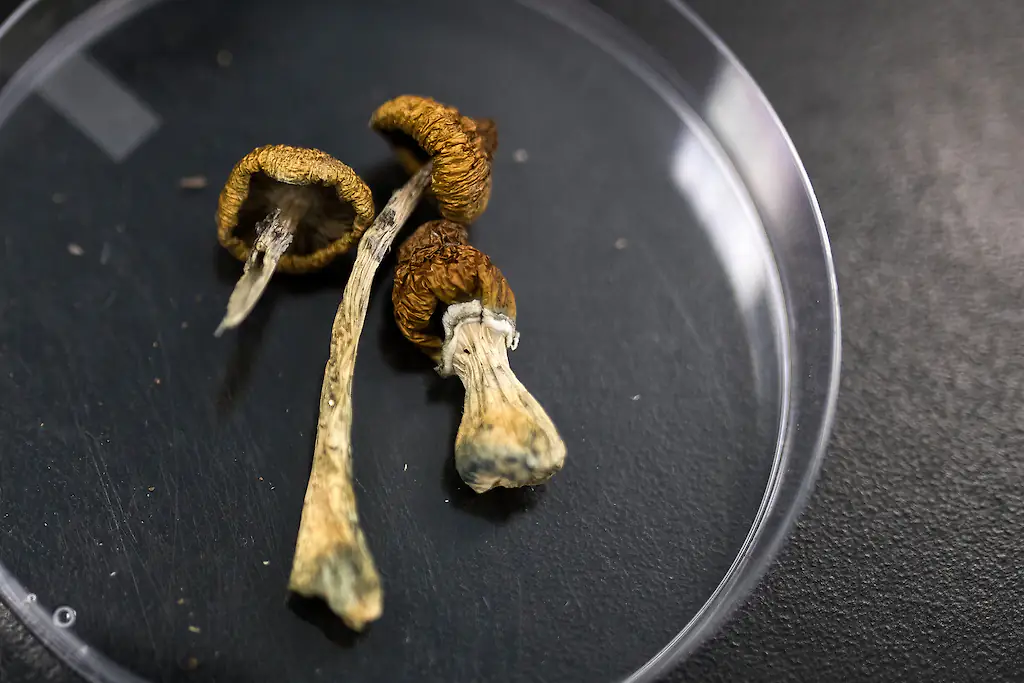
But forget about weed - Oregon's Secretary of State just approved language for a possible ballot initiative that would legalize psychedelic mushrooms. According to CNN, if organizers can get 117,578 signatures, Oregonians could vote on the initiative in the 2020 general election. It would decriminalize psilocybins - aka magic mushrooms - and allow their licensed manufacturing and administration. Currently, possessing shrooms is considered a felony nationwide.
Psilocybins are a naturally occurring psychedelic prodrug compound found in psychedelic mushrooms. Recently scientists discovered that psilocybin may have health benefits, such as treating anxiety in people with cancer and providing a "miracle cure" for depression. In a paper published in the medical journal Scientific Reports, Dr. Robin Carhart-Harris described how shrooms can 'reset' the brain:
"We have shown for the first time clear changes in brain activity in depressed people treated with psilocybin after failing to respond to conventional treatments Several of our patients described feeling ‘reset’ after the treatment and often used computer analogies. For example, one said he felt like his brain had been ‘defragged’ like a computer hard drive, and another said he felt ‘rebooted'. Psilocybin may be giving these individuals the temporary ‘kick start’ they need to break out of their depressive states and these imaging results do tentatively support a ‘reset’ analogy."
Currently psilocybin is classified as a Schedule I drug, a category for substances "with no currently accepted medical use and a high potential for abuse." More scientific studies may change that classification. Last October, researchers in the medial journal Neuropharmacology argued that the Food and Drug Administration should label psilocybin a Schedule IV drug, a category for substances "with a currently accepted medical use" and "low potential for abuse." (Like Xanax, Darvacet, Valium, etc.)
The writers note that reclassification of psilocybin would take at least five years, because it has to clear extensive tests. Also, they warn that use of magic mushrooms should be strictly controlled, because taking too heavy a dose can be a health risk, especially for those with psychotic disorders.
Well, it'll be interesting to see if legal shrooms become a thing in Oregon. Tom and Sheri Eckert, the leaders of the initiative in Oregon, stress the health benefits of psilocybins on their campaign's website,: "The intent of the 2020 Psilocybin Service Initiative of Oregon is to advance a breakthrough therapeutic model currently being perfected in research settings at top universities around the world... We envision a community-based framework, where licensed providers, along with licensed producers of psilocybin mushrooms, blaze trails in Oregon in accordance with evolving practice standards."
weird3 min(s) read
A 37-year-old Austrian man amputated his own penis with an axe after consuming a large dose of psychedelic mushrooms, according to a medical report.
The man, who was at his holiday home, had consumed a large quantity of psilocybin-containing mushrooms before performing the self-amputation with a blunt axe, per the New York Post.
According to reports, the man ingested four to five mushrooms before attempting the drastic procedure.
He used the blunt axe to quarter his penis into four parts, after which he panicked.
He placed the severed parts in a jar filled with soil and snow and tried to stop the bleeding by covering the wound with a cloth.
Bleeding heavily, the man sought help and eventually found a passer-by who guided him to a nearby village.
There, he was met by an ambulance, approximately five hours after the ordeal began.
Fortunately, doctors in Austria were able to successfully reattach the severed organ.
This disturbing incident, now detailed in the Mega Journal of Surgery, marks the first documented case of its kind, according to PsyPost.org.
Psilocybin, the active compound in "magic" mushrooms, is known for its ability to induce hallucinatory states by affecting serotonin receptors in the brain.
While it has been used historically by indigenous cultures in spiritual rituals, recent studies have highlighted its potential for treating psychological conditions such as depression, anxiety, addiction, and post-traumatic stress disorder (PTSD).
The incident was also documented in the Open Journal of Urology, which noted that while psilocybin therapy has shown positive results for patients with major depressive disorder, high doses can lead to severe side effects.
The journal study stated: “Psilocybin therapy has been tested successfully in patients with major depressive disorder. However, aside from its therapeutic effects, in patients consuming high doses of psilocybin, experiences of fear and paranoia have been reported in up to 31 percent and 17 percent, respectively.”
However, in this case, the man did not find relief, instead suffering a severe psychotic episode after using the substance without supervision to manage his mental health.
The patient has no memory of the event, according to the medical report. Following the surgery, he was placed under psychiatric care as he continued to experience psychotic episodes for about a week.
Once stabilized, he moved to the hospital's urology department for further recovery.
Complications arose during the man’s recovery, including necrosis (tissue death), but the condition healed over time.
Within a few months of the surgery, he had regained both erectile and urinary functions.
us3 min(s) read
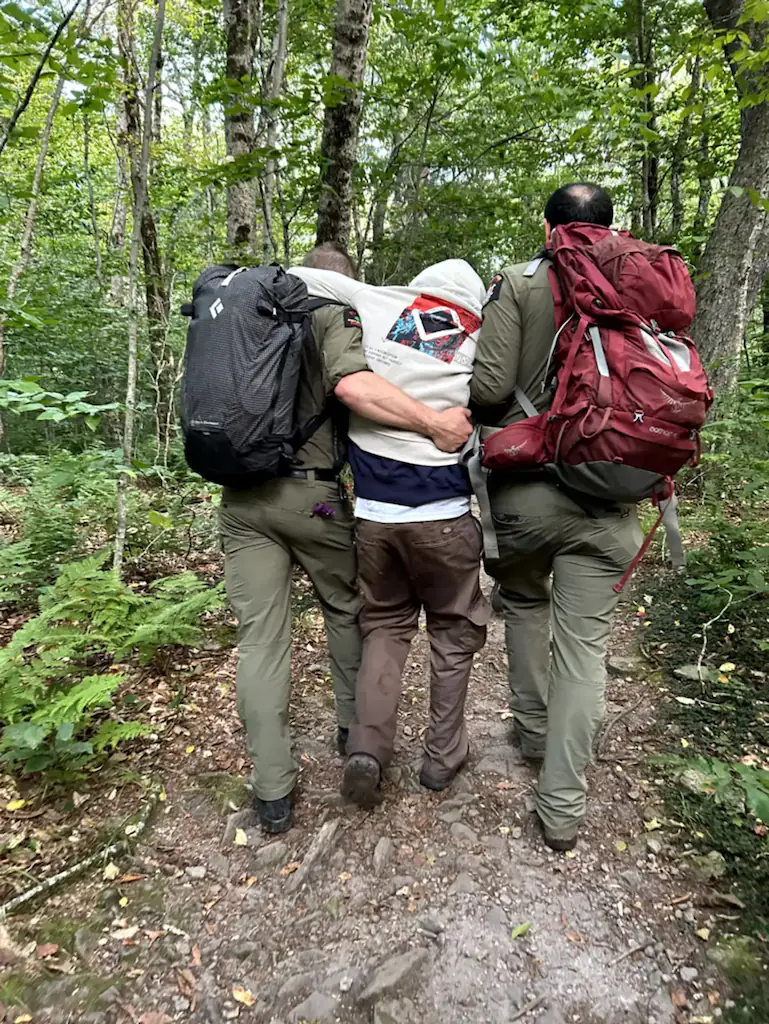
Four hikers were rescued in New York’s Catskill Mountains after getting lost “while experiencing a debilitating psychedelic mushroom high,” officials said.
The incident happened on August 29 near Giant Ledge in the Slide Mountain Wilderness, according to a press release from New York State Troopers and the Department of Environmental Conservation (DEC).
The group sent a text via satellite to Ray Brook Dispatch at around 5PM local time, reporting they were lost. They had taken shelter near Giant Ledge, described as an "interconnected trail hike ranging from 1,100 to 2,600 feet in elevation with several sheer cliffs and drops."
The caller later admitted that the group had “consumed mushrooms, and one of them was experiencing a debilitating high.”
Psilocybin mushrooms, often called magic mushrooms, contain a hallucinogenic compound that can trigger effects ranging from euphoria to hallucinations, per Medical News Today.
Eating Psilocybin, which is a Schedule I substance, can have a variety of effects, ranging from altered perception, confusion, and disorientation.
The experience varies significantly between individuals and can be influenced by factors such as a person’s mental state, personality, and immediate environment.
Per the outlet, a 2020 analysis discovered that higher doses of psilocybin increase the likelihood of negative experiences, while people with pre-existing mental health conditions may also face a greater risk.
Psychological distress is a potential adverse event after recreational use of psilocybin. This distress can take the form of extreme anxiety or short-term psychosis.
Forest Rangers located the hikers around 6:45 PM. They were assisted by the Pine Hill Fire Department and evaluated by the Shandaken Ambulance, the DEC said.
The hikers had lost their car keys during the trip, so rangers gave them a ride back to their rental lodging. The next day, Ranger Martin found the missing items under a log in tall ferns.
“This level of dedication, at the start of a busy Labor Day weekend, is representative of the commitment shared by our Forest Ranger members,” NYST spokesperson Geoff McCartney said. “The PBA of New York State is proud to highlight our Forest Rangers and all members’ continued dedication to public safety in the face of difficulty and danger.”
The DEC has conducted 139 search and rescue operations so far in 2025, following 362 missions in all of 2024.