


UK4 min(s) read
Group 'first in line' to be called for war amid WW3 fears

Military experts have revealed which group would be called up first if a major international conflict broke out.
Questions about conscription have circulated in recent years, as global tensions show little sign of calming.
Dangers from China and Russia persist, while NATO's Article 5 provision means that Western nations may need to prepare for large-scale warfare.
But if people were called up to serve in the Armed Forces, how would it work, and who would get called up first?
Experts have opened up about the prospect, and how emergency call-ups for civilians could work, and whether any of us should be looking out for a message from the army.
It's been suggested that conscription wouldn't be the military's first choice, as retired senior British Army officer Lord Dannatt told The Express: "I would expect to see the Army Reserve mobilized first, then Regular Reservists recalled to active service and then His Majesty's Government would need to consider conscription, starting with 18-24-year-olds."
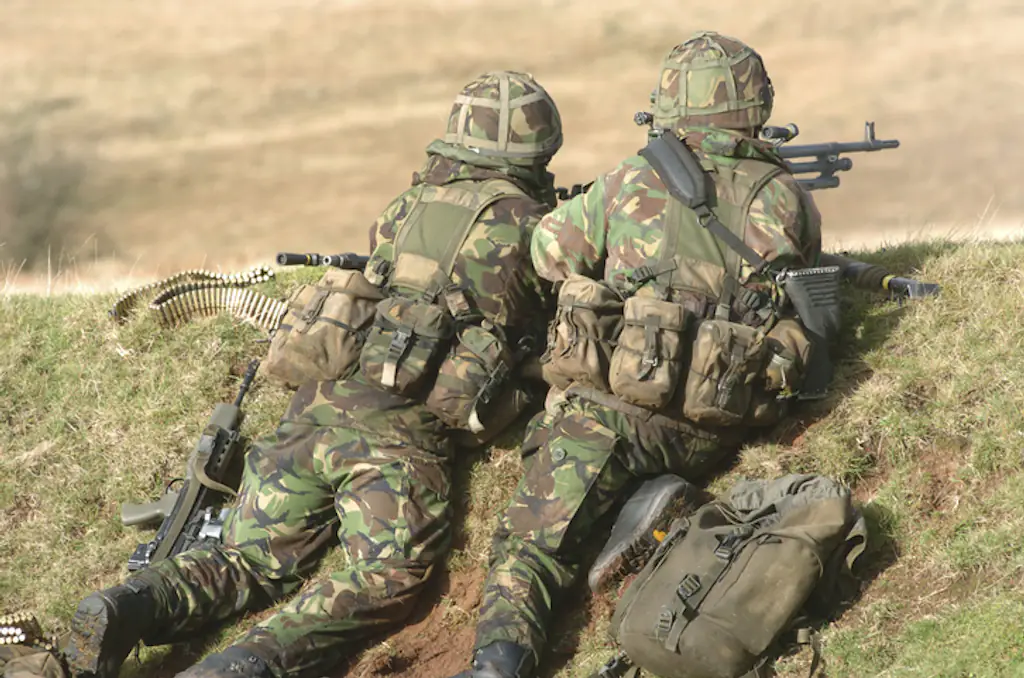
Expert speaks out about conscription
While Lord Dannatt hinted at conscription, Anthony Glees, emeritus professor at the University of Buckingham, delved into the prospect further.
He said that full conscription would follow the model utilized during the Second World War, explaining: "This would mean that all males from 18-41 would have to do military or national service.
"This was decided in September 1939 when the UK declared war on Germany but before serious fighting had started, the so-called 'Phoney War' period," he added.
Glees explained: "Previously, prior to the declaration of war in May 1939, all males aged 20-22 were required to do national service.
"In 1941, the age range was extended by ten years, so 18-51 and unmarried women were also required to do some kind of national service."
He says that the British government must start to accept the idea of national service, and this may be sped up depending on the situation in Ukraine.
Glees said that a nation that is 'ready to fight' is required, though he said it goes beyond firearms, saying: "It could mean using laptops and smartphones to push Russia back into its box."
He then claimed that the UK is already in the 'Phoney War' context, claiming: "Nothing would terrify that little coward in the Kremlin more than to see that the UK were taking the first measures to prepare for any tricks he may well have up his sleeve, especially now when Trump seems determined to let him have a win in Ukraine."
He gave credit to Ukraine, which introduced conscription for males aged 25 to 60, shortly after being attacked.
The professor admitted that those conscripted wouldn't necessarily be deployed on the front line, with many being able to cause damage from their laptops.
"We're told by IPSOS that just 11% of 18-27 year olds say they are prepared to fight for their country," he pointed out, adding: "But that's not bad, it's 154,000 brave young men. They would more than double the size of our army."
The expert wants to encourage 18-19 year olds to value national service to keep the country safe and protect against outside evils.
"I would offer all those who volunteered inducements, such as release from student loan debts, assistance with study costs, even preferential housing," he suggested, drawing comparisons to soldiers during WW2.
Former armed forces personnel would be called up first
According to the Royal United Services Institute (RUSI), reservists and ex-armed forces personnel would be the priority in any recall.
There's a challenge in finding and contacting ex-military individuals, as well as issues with wide-scale mobilization.
It is stated in a research document: "With Russian military expansion and modernization, and a growing rift between the US and European members of NATO, the risk of protracted conflict in Europe has grown.
"To deter such a conflict, or deal with the risk if deterrence fails, the UK's armed forces must be ready to mobilize and expand."
The British document added: "The latest UK government's Strategic Defence Review has already implied greater mobilization through its framing of the Russian threat, its commitment to the British Army providing a Corps to NATO, and the need to make use of the Strategic Reserve."