


UK5 min(s) read
How hundreds of infants came to be buried in 'baby graveyard' where bodies are believed to have been dumped in a septic tank
.jpg_xKEaT0?tr=cr-0.328.2730.3058,f-webp,q-70,w-100)
Here's how hundreds of infants' remains were found, buried in a mass grave located in Tuam, County Galway, in the west of Ireland.
An update was provided earlier this year, as the excavation of a former mother-and-baby home has uncovered a further 22 sets of infant remains, bringing the total discovered so far to 33.
The mass grave, which was first uncovered in 2014, represents a dark period in Irish history, as it has been reported that hundreds of babies were buried in unmarked graves at the Tuam institution.
An amateur historian uncovered evidence of a mass grave, potentially in a former sewage tank, in an area which was once where St Mary's children's home stood.
Thousands of women and children were housed here between 1925 and 1961.
Last summer, investigators moved diggers to a patch of grass next to a children's playground on a housing estate in the town, with the excavation set to last until 2027, according to the BBC.
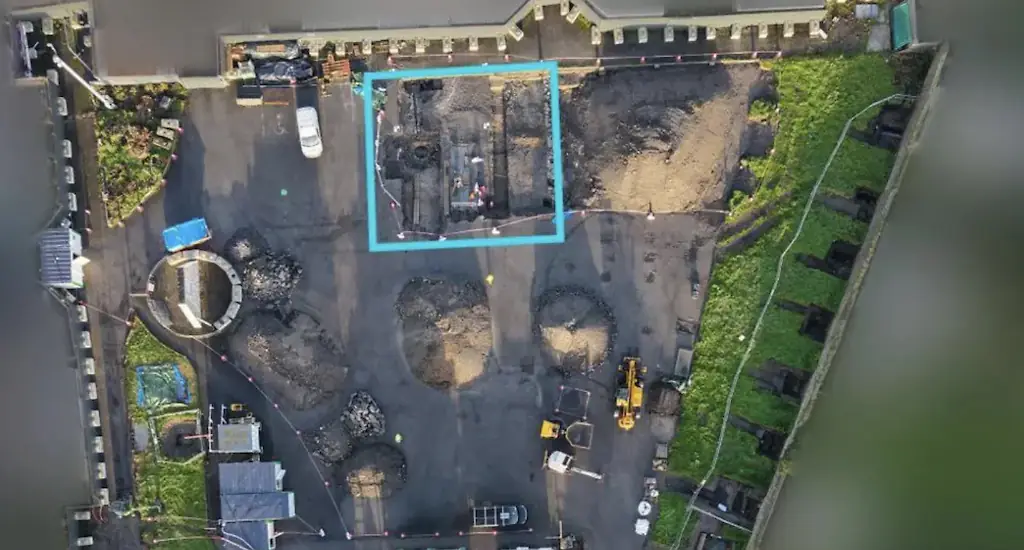
The horrifying history of Tuam's mass graveyard
Many of the women staying at the children's home had become pregnant outside of marriage and were shunned by their families, which meant they were separated from their children after giving birth.
Patrick Derrane would become the first baby to die at St Mary's in 1925, at just five months old, while Mary Carty would die at the same age in 1960, as the last baby to die on the grounds.
It is said that another 794 babies and young children are known to have died there, with former Irish prime minister Enda Kenny describing it as a "chamber of horrors."
Children who stayed at the home told the publication they remember it as a prison, and that they, as "home children," were isolated at school.
Amateur historian Catherine Corless is responsible for discovering the grave after becoming interested in her family's past.
She became intrigued with St Mary's and the "home children," admitting that she had "no idea" what she would find.
Catherine's inquiries would often be met with radio silence or suspicion, as she told the BBC that "nobody was helping, and nobody had any records."
Eventually, a conversation with a cemetery caretaker took her to the housing estate where the institution once was.
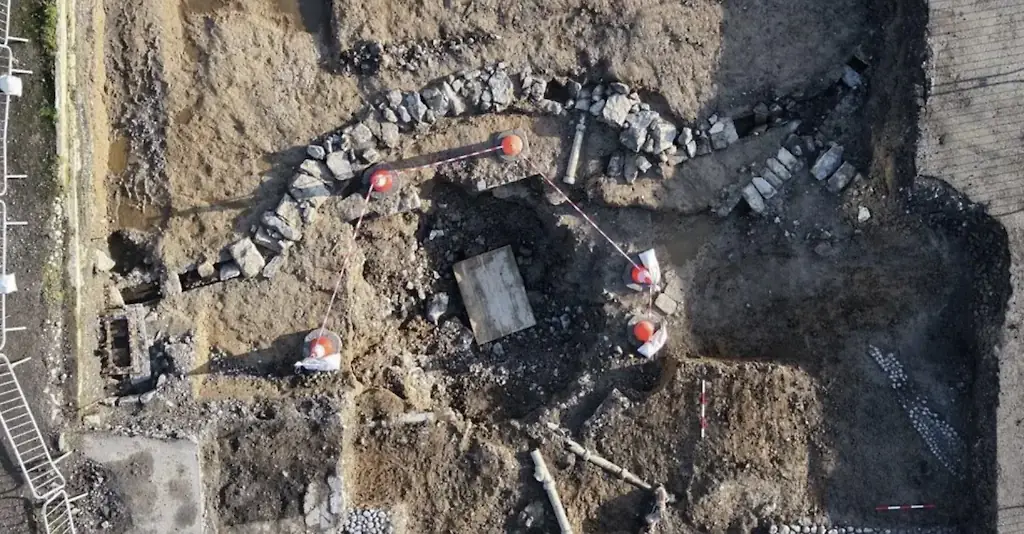
Discovery of human remains
The caretaker recalled that two boys were playing at the side of a children's playground after the home was demolished, with a broken concrete slab discovered.
When they pulled it out, they found a hole which was full of bones, and when authorities found out, the spot was covered up.
Many believed that they were from the Irish Famine in the 1840s, but Catherine was convinced that those victims were buried in a field half a mile away, as a monument marked the spot.
An old map of the old St Mary's site from 1929 labelled the area as a "sewage tank," while another from the 1970s detailed in a handwritten note that next to the area was a "burial ground."
Having called the registration office for births, deaths and marriages in Galway, Catherine asked for the names of all the children who died at the home.
A member of staff asked if she wanted them all, and revealed that there were hundreds, recording exactly 796 dead children.
Without excavation, Catherine couldn't be certain, though, believing that hundreds of children had been buried in an unmarked mass grave, perhaps in a disused sewage tank.
She recalled: "People weren't believing me."
An eyewitness saw the horror
Mary Moriarty told the news outlet that she lived in one of the houses near the site of the institution in the mid-70s.
The late Irishwoman said that she remembers two women telling her they "saw a young fella with a skull on a stick".
She went with her neighbors to ask the child where he found the skull, and he showed them some shrubbery, where Mary "fell in a hole."
Chillingly, this is where she saw "little bundles", wrapped in cloths that had gone black from rotting, and were "packed one after the other, in rows up to the ceiling".
When asked how many, she replied: "Hundreds."
After Mary gave birth to her second son in the maternity hospital in Tuam, he was brought to her by nuns in "all these bundles of cloths," reminding her of the hole, as she said: "That's when I copped on, what I had seen after I fell down that hole were babies."
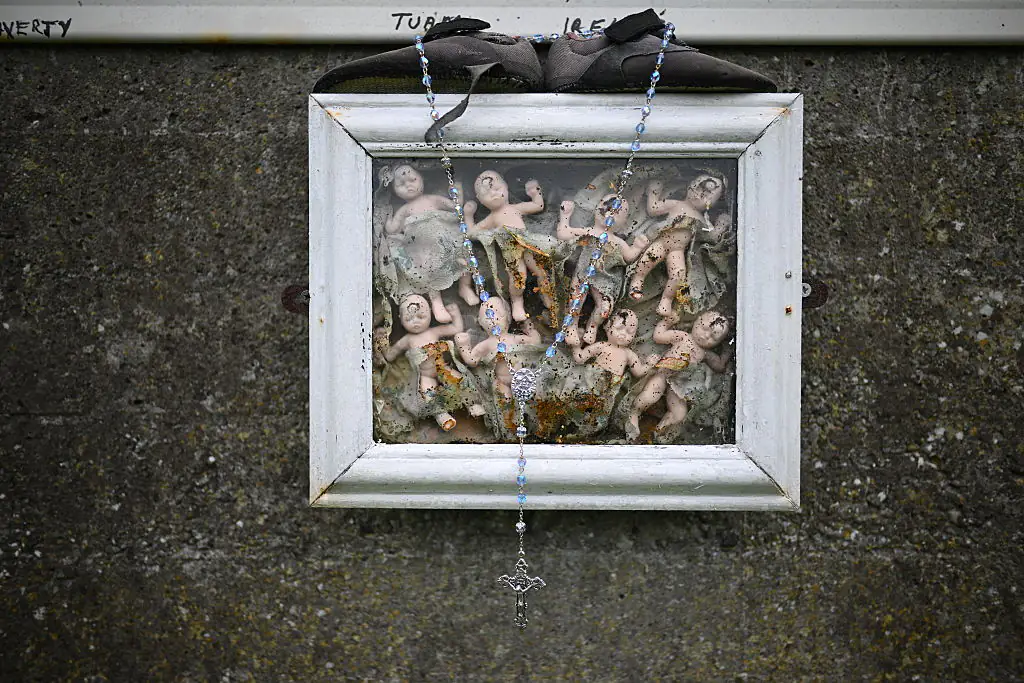
The excavation is ongoing
Catherine's findings were confirmed in 2017, as an Irish government investigation discovered that there were "significant quantities of human remains," as part of a test excavation at the site.
The "age-at-death range" of the bones was from about 35 foetal weeks to two or three years.
Daniel MacSweeney, the head of the excavation operation, said: "It's a very challenging process – really a world-first."
He has previously helped to uncover missing bodies in conflict zones such as Afghanistan.
He said that the remains would have been mixed, chillingly revealing that an infant's femur would only be the size of an adult's finger, assing: "They're absolutely tiny,
"We need to recover the remains very, very carefully – to maximise the possibility of identification."
He admitted that the difficulty of finding and identifying the remains "can't be underestimated."
While the forensic excavation may continue until 2027, further follow-up work is likely to take it beyond this point.