


US3 min(s) read
Body language expert raises concern about Mackenzie Shirilla's answer to question about 100mph car crash
.jpg_xKEaT0?tr=cr-0.328.2730.3058,f-webp,q-70,w-100)
A body language expert has revealed that more attention should be brought to one of Mackenzie Shirilla's answers in Netflix doc The Crash.
The documentary has sparked interest with viewers, as it hit the No. 1 spot on Netflix in the days following its release earlier this May.
Mackenzie, just 17 at the time, would be found guilty of killing two people, ex-boyfriend Dominic Russo, 21, and Davion Flanagan, 19, while at the wheel of a vehicle.
A judge determined that she had intentionally crashed her car into a brick wall at over 100 mph (160 km/h) in July 2022, before being convicted of murder in 2023.
It was found that she crashed the car on purpose in a premeditated murder.
Mackenzie was then convicted of 12 felony charges and sentenced to two concurrent life sentences, with the possibility of parole after 15 years.
But while many have spoken about her behavior in the doc, a body language expert has highlighted a point of concern.
Body language expert's analysis of Mackenzie's answers
YouTube channel Behavioral Arts, known for its in-depth analyses on subjects for the likes of Fox, NBC and Netflix, explained in a long-form video that some of Mackenzie's reactions were peculiar.
He looked at her response to the question: "How does a medical emergency account for the control of the car?"
She said in the doc: "I'm unsure, cause I have no recollection of that morning, but I know nothing about it was intentional cause that's not my character."
The body language expert explained that it was a great question to ask, adding: "I've been kind of hinting at this so far, but it's very important in interrogation or in interviews when we ask a question."
He went on: "One of the things that we focus on is, did this answer my question, and it did answer my entire question.
"So, anything that falls along the lines of redirecting, not answering the question, answering only one specific part of the question, all these things fall into the category of non-answer statements or a refusal to answer."
He highlighted: "If you really think about it, her memory has nothing to do with this specific question because he's saying, according to your theory, right, you said it's a medical emergency. According to that, how do you explain the control of the car?"
He revealed that her uncertainty and what she seemingly doesn't remember do not really account for the question.
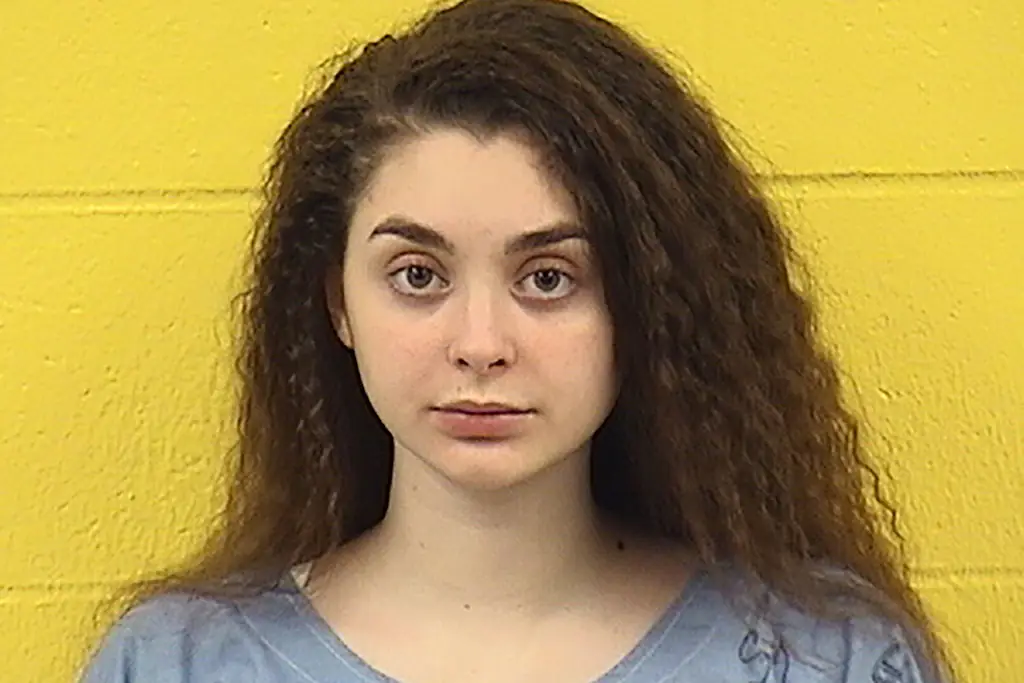
Mackenzie Shirilla "fumbles on her words"
He pointed out: "She immediately goes to a denial that was never asked. She goes, 'But I know nothing about it was intentional because that's not my character.' He didn't ask you if it was intentional. He said, 'How do you account for the control?'
"You'll also notice right in the beginning there's something we call speech disfluency where she goes, 'I'm unsure cause I have no recollection', She kind of fumbles on her words."
Apparently, this complicated legal answer that she provided, with just one straight line as her previous answer, with no hesitation, signals that she was later struggling to come up with an answer.
"This usually indicates an increase in cognitive load," he explained, adding: "We're thinking a lot, which kind of causes the speech to mutter a little bit, you know. So, there's a lot going on with this answer.
"A lot of redirecting speechless fluency, answering a different question, going immediately to innocence of intent."