


US5 min(s) read
Body language expert makes chilling observation about King Charles after his meeting with Trump

A body language expert has shared a chilling observation about King Charles' behavior following his meeting with Donald Trump.
The King and Queen Camilla arrived in Washington D.C on Monday (April 27) to begin a four-day state visit, where they were officially welcomed at the White House by President Trump and First Lady Melania Trump.
While the greeting appeared cordial, with Melania and Camilla embracing and the 79-year-old shaking hands with Charles, one expert believes something seemed off.
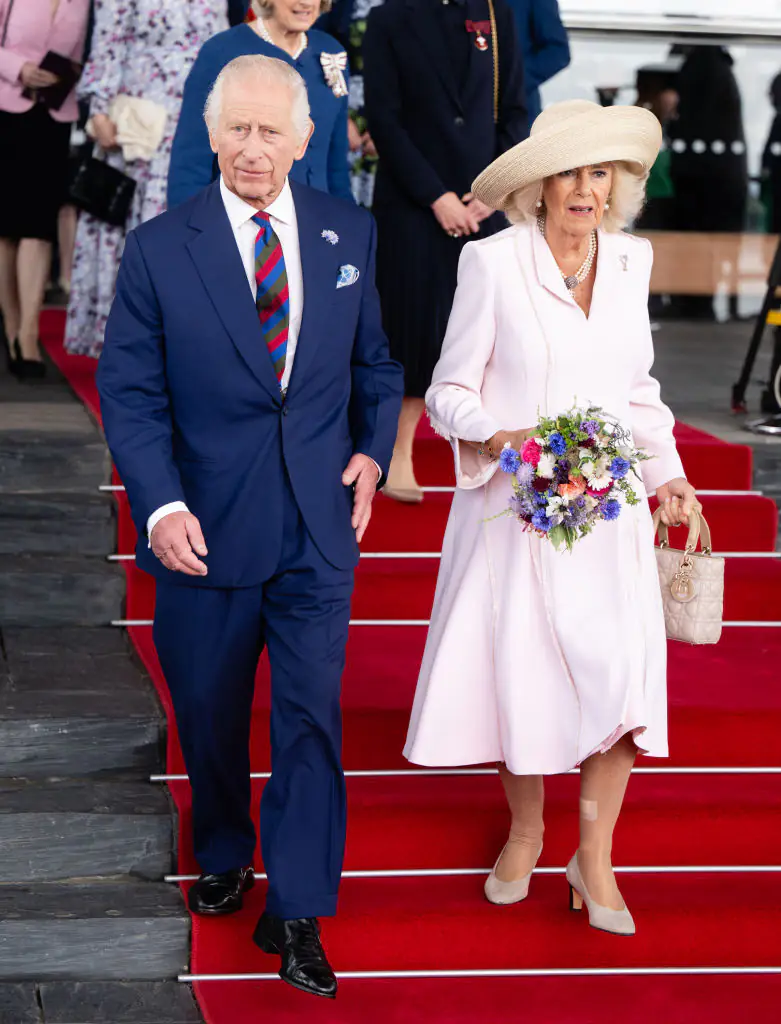
Expert says King Charles Showed Signs of Fear
According to Bruce Durham of Huddle Culture, the 77-year-old monarch looked like he was mentally preoccupied, possibly by security fears in the wake of Saturday’s attempted assassination targeting Trump.
"What’s really interesting here is there’s a deviation in King Charles’s behaviour," Bruce told The Mirror. "King Charles is ingrained in, conditioned in, and brought up in formal displays of royal behaviour."
"Protocol, etiquette - call it what you want. It has been King Charles’s full life of how to behave, how to act, when to speak, and when to be silent."
But Bruce said Charles briefly seemed less composed than people are used to seeing.
"What we see here is that Charles, on a number of occasions, is showing signs of not being fully focused on the task at hand," he said.
He pointed to one moment in particular: "Just after he arrives, what you see is what we call the tortoise effect. Now, Charles has been in thousands of engagements like this. He knows what to do. He knows where to stand. He would have been briefed by his staff. Yet when Camilla comes across to engage and greet Donald Trump, Charles puts his head down."
The expert claimed that the gesture can mean fear or uncertainty.
"This is the tortoise effect. This is exactly what we do when we have either fear, doubt, or a lack of self-confidence," he explained. "There is no reason for Charles to put his head down. He has been in this engagement many times before."
"What this is, is an activation of what we call the sympathetic nervous system - the amygdala, the fight-or-flight response firing. In that particular moment, Charles is physically present, but his mind is absent somewhere else," he added.
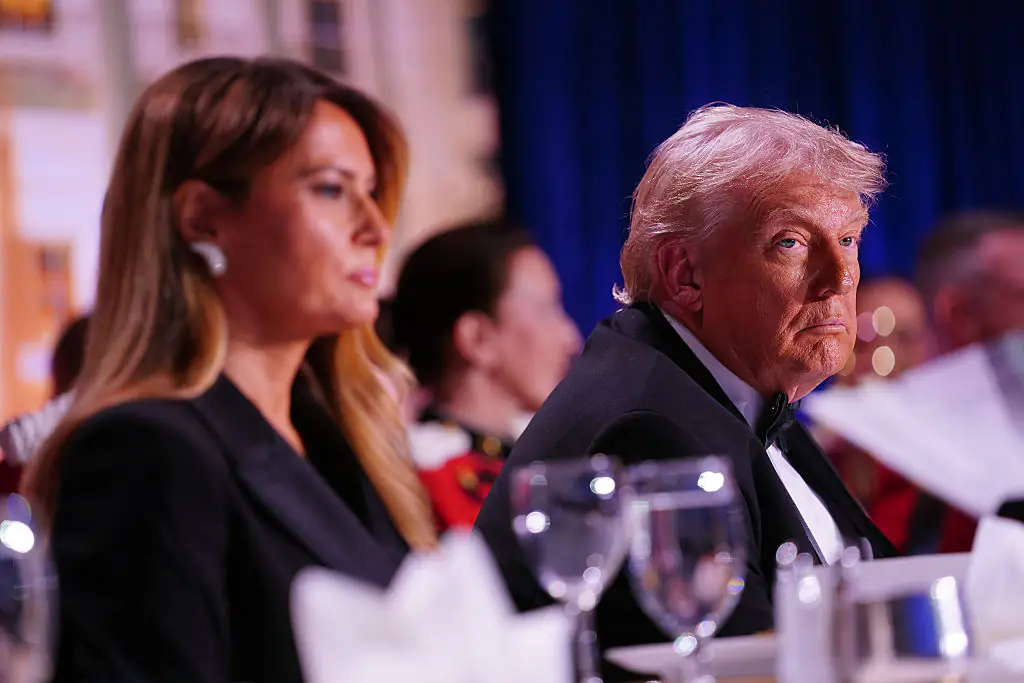
Shooting May Have Been On The King’s Mind
Durham suggested the shooting at the White House Correspondents’ Dinner may have influenced the King's behavior.
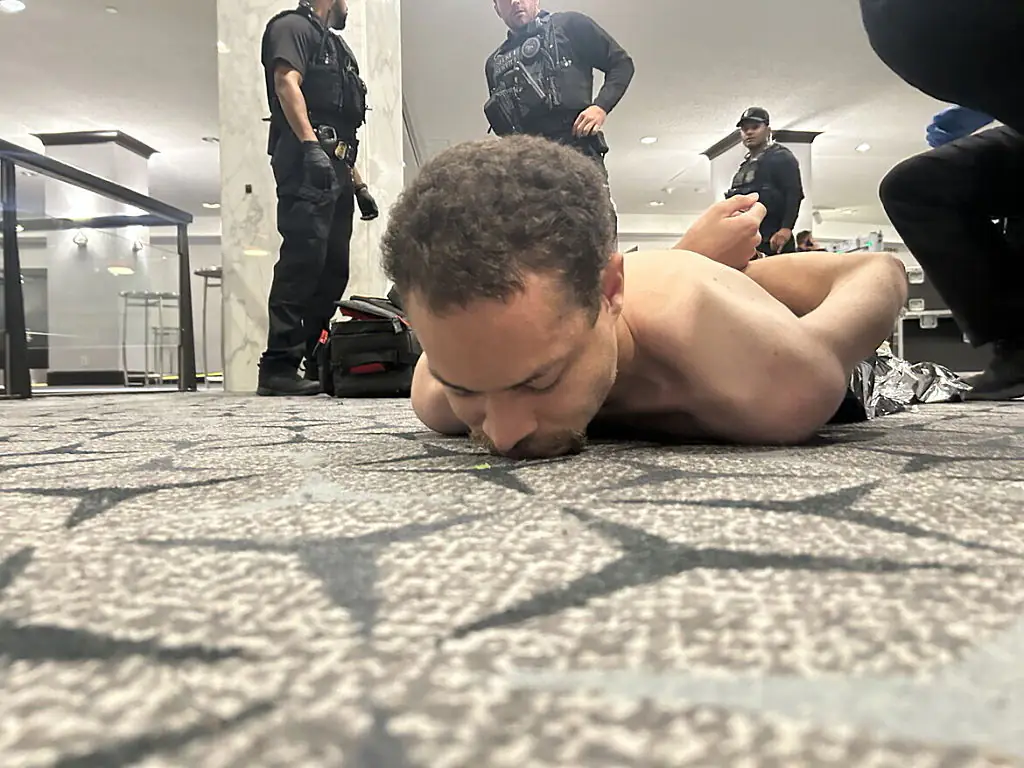
On Saturday (April 25), 31-year-old suspected gunman Cole Tomas Allen allegedly rushed a security checkpoint outside the annual dinner armed with two firearms and knives, opening fire inside the Washington Hilton ballroom.
The shooting sparked a frantic Secret Service response as Trump, JD Vance, and other officials were rushed to safety.
The president later revealed in an interview on 60 Minutes that he initially resisted evacuation.
"Well, what happened is, it was a little bit me...I wanted to see what was happening, and I wasn’t making it that easy for them," he said.
"I wanted to see what was going on. And by that time, we started to realize maybe it was a bad problem, a different kind of problem, a bad one."
The president added: "I said, 'Wait a minute, wait a minute. Let me see, wait a minute.'"
A Secret Service officer was struck during the exchange of gunfire but survived thanks to body armor.
The body language expert believes the king may have been hyperaware of danger, adding: "He may be uncomfortable, perhaps thinking - logically - that there could be a shooter in the crowd."
"Shortly after this, you see Charles perform a self-soothe with his left hand on his thigh. That is to tell himself that he’s OK," he continued. "Whatever is going on in his mind, he is telling himself it’s OK, it will be fine, calm down - you’re OK right now."
Bruce said Charles then seemed to regain composure: "That’s when you then see the self-soothe with his left hand, and then immediately he puts both hands behind his back, as if he has remembered what to do."
"Then, when they are just about to turn and walk into the White House, you see Charles start to become more like the King Charles that we know and are familiar with," he added. "What this is, is an activation of the parasympathetic nervous system."
The expert stressed that Charles' early nerves were unusual: "He displays a behaviour in my world where we say 'his mind is not where his feet are' but this - at the start, without doubt, he is physically present, but mentally he is thinking of something else."
"It would be logical to think of the recent shooting. His baseline behaviour had changed. Charles has done this thousands of times, so the change? The answer could be fear," he added.