ADVERT
US3 min(s) read
Published 13:59 07 Jul 2026 GMT
A former CIA official has revealed the subtle body language habit she says can instantly identify Americans when they're overseas.
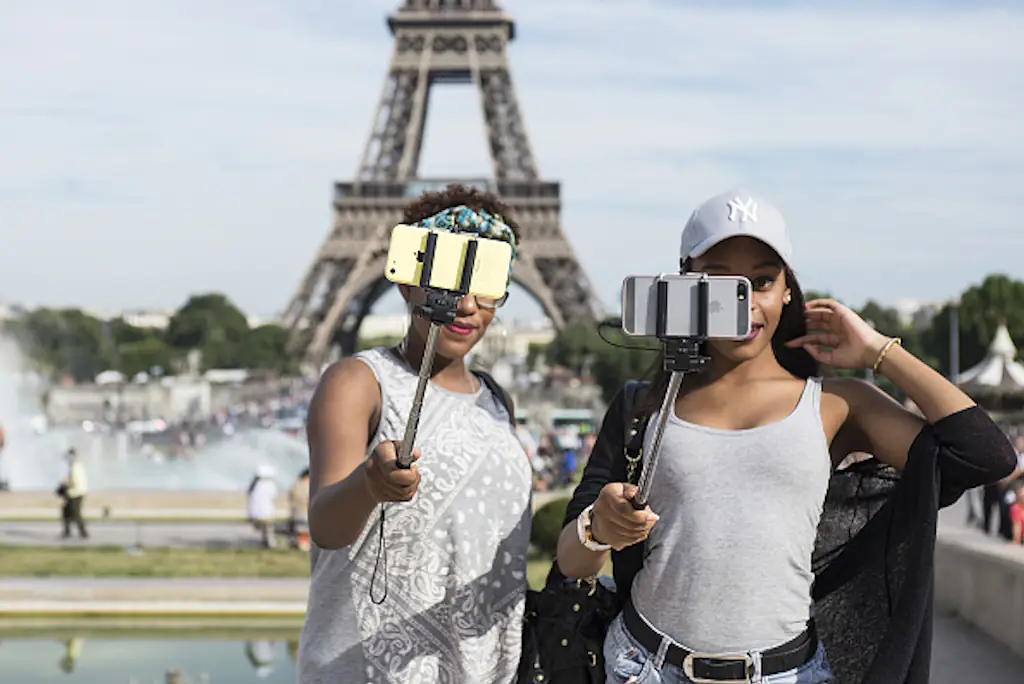
While you may think you could identify a tourist from the US by picking up on the stereotypical mannerisms and appearances often associated with the country's travelers, such as socks and sandals, colorful, yet clashing outfits, and of course, the unmistakable accents, there is one more revealing trait.
According to Jonna Mendez, one of the biggest giveaways is something many people do without thinking, and that is leaning against walls, railings or doorways.
The former intelligence officer explained that CIA operatives were trained to avoid the relaxed posture while working undercover abroad because it could immediately reveal where they were from.
Mendez said agents had to be "de-Americanized" to help them blend into local environments without attracting attention.
She explained that Americans are often seen as more casual and laid-back than people in many other countries, with their tendency to lean becoming such a recognizable trait that it's earned the nickname the "American lean."
She said locals can sometimes identify Americans simply by how they carry themselves, noting that in many countries people generally stand more upright and are less likely to rest against nearby objects.
She said they're often perceived as dressing more casually than other nationalities and speaking much louder in public.
She joked that it's easy to spot a group of American tourists outside a tourist information office because of the amount of noise they're making.
"We are not disparaged everywhere," Mendez said, "but we do tend to stand out."
The so-called "American lean" became such a well-known giveaway that the CIA reportedly instructed undercover officers to avoid doing it while stationed overseas.
While resting against a wall or railing may feel completely natural to many Americans, intelligence officials believed the casual stance could instantly draw attention in places where people are more likely to stand upright, particularly in crowded public spaces where taking up extra room is considered impolite.
Mendez said body language can reveal someone's background long before they speak, which is why CIA officers were trained to copy local mannerisms, from the way they stood to how they moved through the streets.
For most tourists, the habit is harmless. But for undercover spies, she suggested that something as simple as leaning against a wall could be enough to compromise their cover.
Speaking in a 2019 interview with NPR, which was later highlighted by Upworthy, Mendez also pointed to other, far more subtle cultural differences that can give Americans away to her.
She noted that wedding rings are worn on different hands depending on the country.
While people in the UK, France, Italy, Sweden and the Czech Republic traditionally wear wedding bands on the left-hand ring finger, following the ancient Roman belief in the vena amoris, or "vein of love", many countries across Central and Eastern Europe, including Germany, Poland, Austria, Russia and Ukraine, wear them on the right hand instead.
That tradition is often linked to Eastern Orthodox Christianity and cultures where the right hand symbolizes honor, strength and fidelity.
Mendez also said dining habits can be another giveaway.
"And in a restaurant... They eat differently than we do. They don't shuttle that fork back and forth," she said.
relationships3 min(s) read
us3 min(s) read
health2 min(s) read
lifestyle2 min(s) read
Published 14:04 05 Jun 2018 GMT
entertainment news2 min(s) read
Published 14:19 24 Nov 2025 GMT
A former CIA spy has opened up about a simple trick to making just about anyone trust you.
Have you ever met a person and instantly felt at ease in their presence? Some people have a seemingly God-given ability to get people to open up to them and spill their darkest secrets within minutes of meeting.
You may have assumed that charisma is a trait they were born with - or they might be employing a CIA-backed trick to building up your trust without your knowledge.
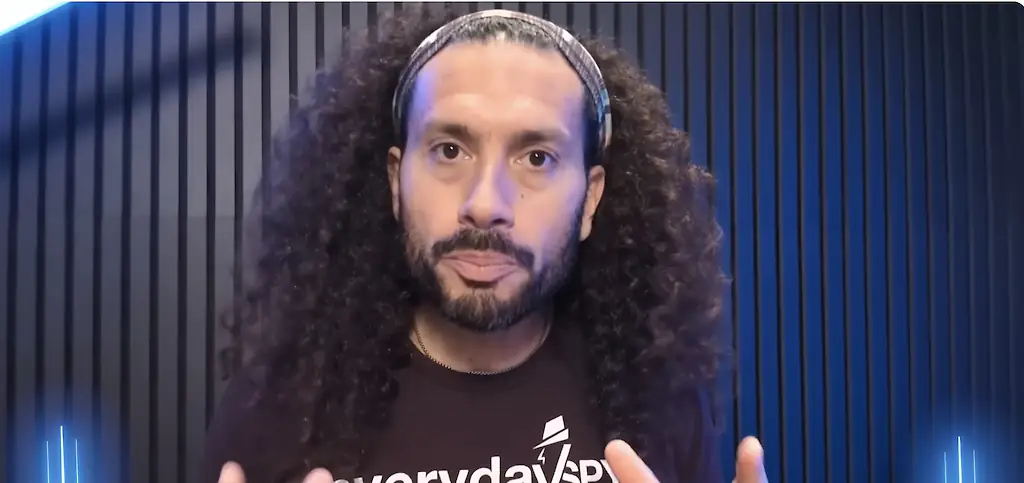
Andrew Bustamante, a former CIA agent, entrepreneur, and author, has revealed there may be a way to become the person that everyone feels comfortable opening up to.
He revealed that there is a “scary but simple” rule the CIA operates by: “You are either in control or under control - there is no other option.”
Bustamante was 27 years old when he was recruited by the CIA, and says that prior to joining, he’d always thought he was good with women, but soon realized he was a “dumba**” because “I spent most of my time talking about me, my history, my experience, my qualifications, my ideas.”
Revealing the key thing he learned to making people trust you, Bustamante explained: “The CIA taught me that there’s a very simple process to rapidly build trust and influence in other people and that process involves asking two questions and then making one validating statement.
“After that validating statement, you repeat the same cycle again. And that the process of asking questions and validating other people’s ideas subconsciously makes the other person think that you are like them and it makes them feel like they are interesting and they are important and they are relevant, and then they have a dopamine rush that makes them feel good being around you.”
He revealed that he usually starts off with questions that are relatable to the person he is speaking to, in order to build up an instant rapport and make the person feel seen and understood by asking follow-up questions.
While he might use this for picking up women, there can be many other instances where this could be seriously useful.
And he also revealed that by using the method, he manages to learn all about the other person while giving away far less about himself by steering the conversation toward delving deeper into questions about them instead.
So if you ever find yourself divulging more than you usually do to a stranger at a bar, and wondering why and how they made you comfortable enough to do so, they might just be using CIA-approved techniques to get you to open up.
Published 15:21 27 Apr 2026 GMT
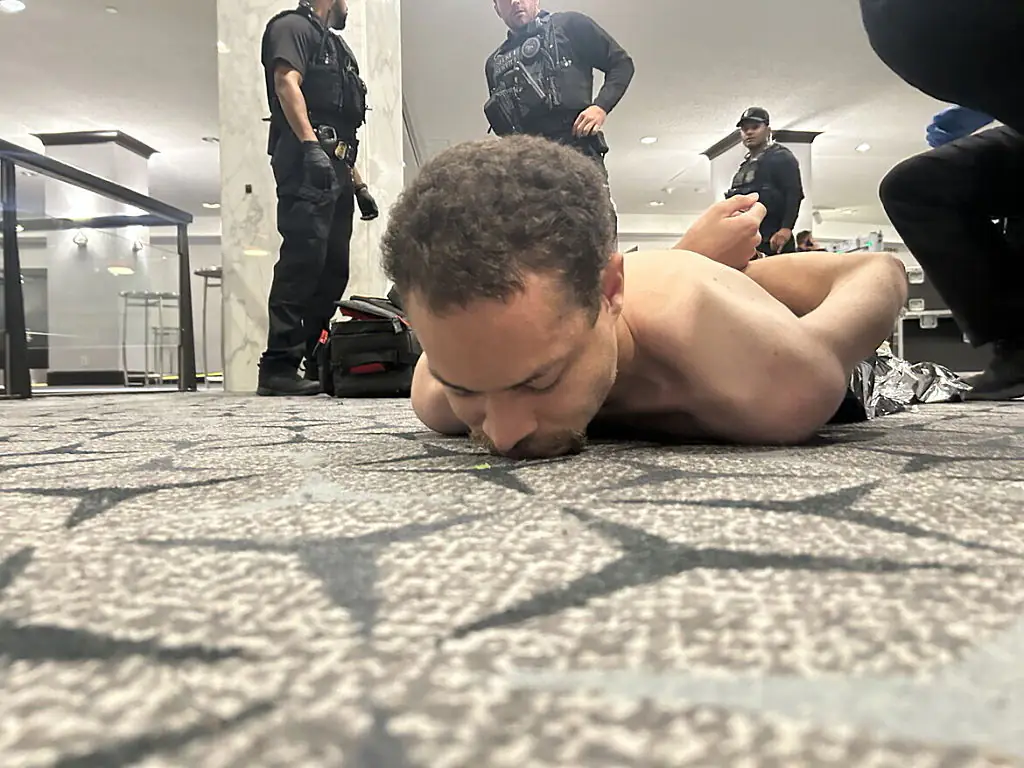
As details continue to emerge following the attempted shooting at the White House Correspondents’ Dinner, attention has turned to a resurfaced interview clip of the suspected gunman, and one body language expert says a seemingly ordinary moment may be more disturbing than it first appears.
The suspect, Cole Tomas Allen, has been described in reports as a teacher, or at least a part-time educator, who also reportedly had ambitions of becoming a video game developer.
Now, a short clip from a 2017 interview is being widely shared online. In the footage, Allen calmly explains a technical detail, saying: “The wheelchair brakes tend to lock the wheels, but don't actually lock the chair to the ground.”
On its own, it’s a brief and seemingly harmless exchange, but analysts have begun re-examining it in light of later events.
A body language expert, Dr. G, reviewing the clip stressed that it would be wrong to over-interpret just a few seconds of footage, saying: “We can't draw any major conclusions from that five seconds of interview.”
However, he also noted that even short moments can sometimes offer a glimpse into someone’s interpersonal presentation, how they come across, how they speak, and how they hold themselves under observation.
The expert also pointed to alleged statements attributed to Allen in a so-called manifesto, where he reportedly wrote that he “walked in with multiple weapons and not a single person there considered the possibility that he could be a threat.”
He also criticized security at the event, writing that “the security of the event is all outside focused on protesters and current arrivals,” adding that “this level of incompetence is insane.”
In another passage, he allegedly suggested that if he had been an “Iranian agent instead of an American citizen,” he could have brought in far more dangerous weaponry without detection.
What stood out to Dr G. wasn’t just the content, but the way it was written. He described the writing as “coherent, with punctuation, structure, and clear sentence formation," something that suggests the individual is not “fully disorganised,” even if their worldview may be distorted.
Coherent writing, he noted, doesn’t rule out psychological disturbance, but it does suggest a level of functioning that’s often underestimated in cases involving lone-actor violence.
Some of the most concerning passages appear to show detailed planning. In one section, Allen reportedly claimed he would use buckshot “to minimise casualties” due to “less penetration through walls,” while still acknowledging he would go through others if necessary to reach his intended target.
According to the expert, this reflects someone who has “given this a tremendous amount of thought,” constructing a personal logic system that attempts to justify harm through controlled reasoning.
The writings also include broader ideological statements, including: “Turning the other cheek when someone else is oppressed is not Christian behavior. It is complicity in the oppressor's crimes.”
He says this reflects a perspective increasingly seen in online spaces, where neutrality is reframed as guilt, and individuals feel pressured to take an active stance or be considered complicit.
In this pertinent framing, the suspect appears to construct a role for himself where action is not just justified, but required.
And for the body language expert, that gap between appearance and ideology is what makes the footage so unsettling in hindsight.
Published 14:23 28 Dec 2024 GMT
Narcissists sound a lot more sinister than they actually are. Maybe it's because the word sounds a bit like sinister, the idea of someone being a narcissist seems pretty threatening, if not a little frightening. However, a lot of the time, narcissism just refers to someone absolutely loving themselves. Kim Kardashian is presumably a narcissist, Simon Cowell almost definitely is, as, I imagine, is Donald Trump.
But, while it's easy to label narcissists as simply self-loving and vain people, they do have a dark undertone to their character. They often make good first impressions, appearing to be likeable and charming, but they also exhibit self-centred and selfish behaviour. Narcissists, as a rule, often have a grandiose view of their own abilities or appearance.
However, while spotting a narcissist is easy to do once you get talking to them, it can pretty hard to identify them off of appearance alone... until now.
Apparently, if you're looking for a way to weed out the narcissists from the good guys, simply take a look at their eyebrows.
A team of researchers came to this surprising conclusion after they photographed around 40 undergrad students with neutral expressions. They then got participants to carry out a psychological test known as the Narcissistic Personality Inventory to test the strength of any narcissistic traits. The researchers then showed the photographs to other students and asked them to guess how narcissistic each person was based on their appearance.
At first, the results showed that people were particularly good at making an estimation of someone's narcissism based on their eyebrows. In particular, the eyebrow thickness and a high density of hair were most likely to be used to judge the narcissistic tendencies.
They expanded on this by measuring the extent of how the perceptions changed once they swapped the narcissists and non-narcissists eyebrows. Suddenly, participants rated narcissists’ faces as less narcissistic when they donned non-narcissists’ eyebrows and vice versa.
The researchers concluded that this shows "distinctive eyebrows reveal narcissists’ personality to others," as well as strongly influencing whether people view you as narcissistic from the get-go.
But why eyebrows? Will, researchers didn't look for an exact reason to explain the link but they did note how eyebrows are highly important for social functions and nonverbal communication. Furthermore, the researchers stated that eyebrows can be used to as a microcosm of a person's wider personality and identity.
Narcissists seek to be admired so maintain a high level of grooming. "Individuals reporting high levels of narcissism tend to wear more fashionable, stylish, and expensive clothing; have a neater, more organized appearance; and look more attractive," the study authors wrote.
Not only do eyebrows reveal your narcissistic tendencies, but they are also very important for facial recognition and mate selection (in both females and males), and a pair of meticulously well-kept eyebrows suggest the owner knows this.
So, I guess that Cara Delevingne is the queen of all narcissists then?
Published 18:52 04 Jan 2025 GMT