


US4 min(s) read
Disaster expert analyzes all Florida jet crash videos and is led to theory about what caused it

A disaster expert has offered a theory on what may have caused the deadly Florida jet crash that killed nine people on board.
The Learjet 60 was travelling to the Bahamas after departing from Austin-Bergstrom International Airport in Texas when it crashed in a residential neighborhood near Cresthaven at 12:50PM on Sunday (November 1).
US Transportation Secretary Sean Duffy described the incident as a "horrific tragedy" and confirmed that all nine people aboard the jet were killed.
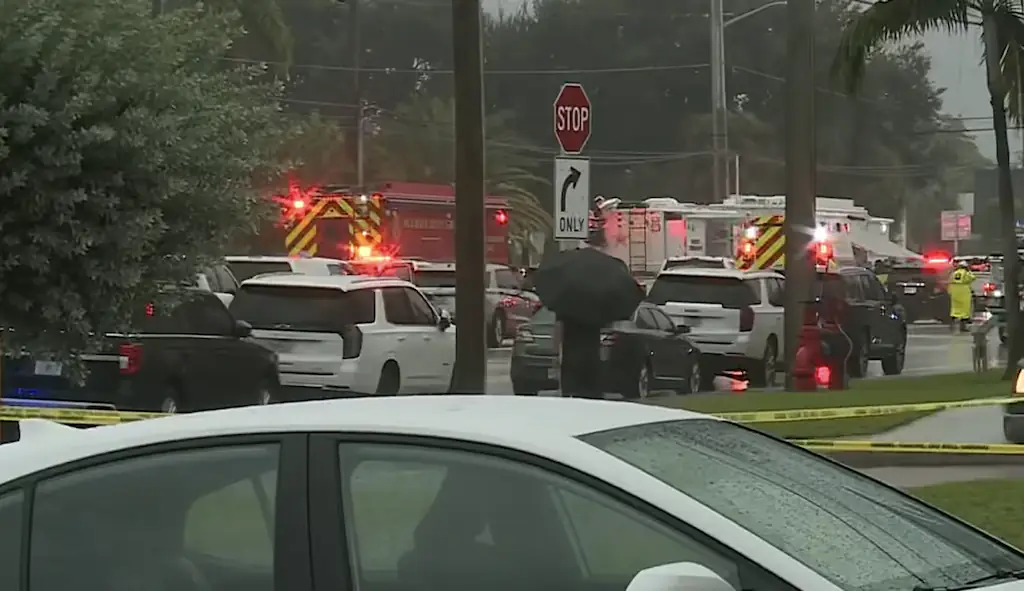
Florida Governor Ron DeSantis said that there were no immediate reports of anyone on the ground injured or killed.
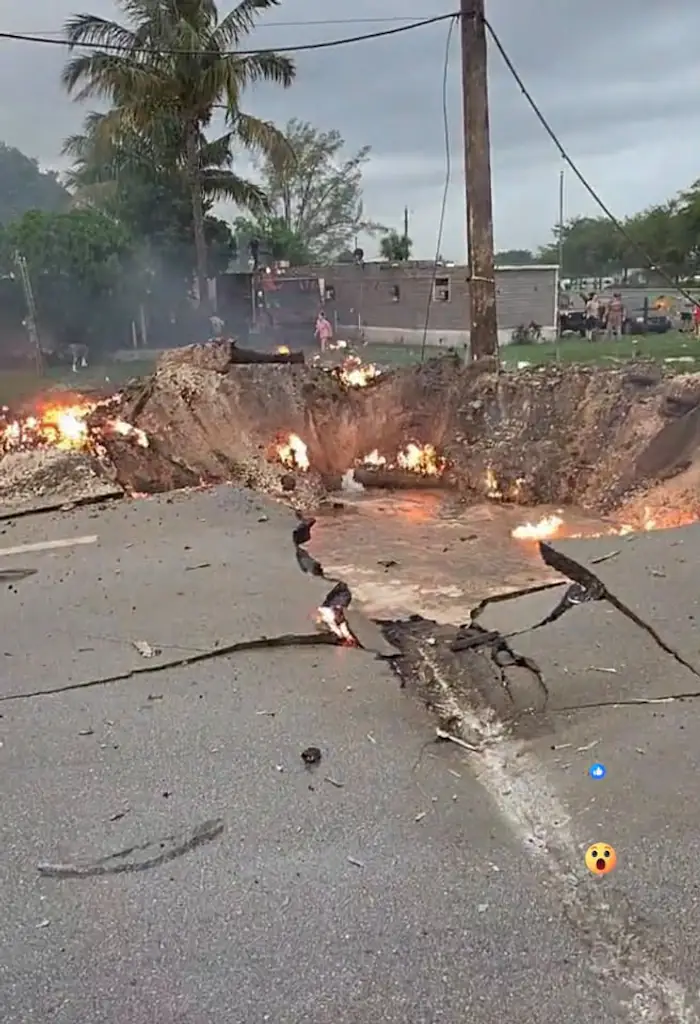
"It was a cataclysmic plane crash," he said.
"It looked like a missile going down and left a big crater on the side of the road."
The crash site is located roughly eight miles from President Donald Trump’s Mar-a-Lago estate.
The 80-year-old was in Iowa for a midterm election rally around the time of the incident.
Pilot reported dangerous weather conditions before the crash
According to air traffic control recordings captured by LiveATC.net, the pilot reported encountering ice and moderate turbulence while flying at approximately 35,000 feet.
"We have light, clear ice that is manageable and moderate turbulence," the pilot said.
However, the situation quickly deteriorated when the plane encountered precipitation, prompting the crew to request permission to climb another 2,000 feet.
Moments later, the aircraft entered a steep descent, which led to the pilot declaring an emergency.
"We’re descending 8,000 – mayday, mayday we’re descending 10,000 feet per minute," the pilot radioed.
"We are in an overspeed condition descending 20,000 feet per minute," they said, before delivering a chilling final warning of what was about to happen: "We’re going to crash into the ground."

Expert explains why pilots may have tried to climb higher
Disaster analyst Jeff Ostroff, who reviewed crash videos and listened to air traffic control recordings, suggested the crew's decision to climb may have been an attempt to escape the conditions causing the ice buildup.
"Now they're seeing rain droplets. And now they have to take off, and they want to go up to 37,000 ft from 35,000 ft," he said.
He acknowledged that the decision might seem unusual, particularly when the temperature would be colder at higher altitudes.
"Now I know what you're thinking: 'This is counterintuitive. Isn't it? Here we are in Florida. I didn't even know we have ice, right?' But we do have ice," he continued.
Ostroff explained that plane icing requires freezing temperatures and moisture. This means pilots may sometimes try to climb above an area of precipitation rather than descend into heavier conditions.
"It's actually safer to get more distance to go up where it's actually much colder," he continued. "So remember, icing on your wings requires two things: freezing temperatures, which they had up there, and it requires precipitation. If you can rob the icing off either one of those two conditions, you win."
He suggested that climbing above the precipitation could have been the crew's intended strategy.
Expert suggests ice buildup may have caused the aircraft to lose lift
The expert also offered a possible theory for why the plane suddenly entered a near-vertical dive.
He suggested that ice on the wings may have disrupted the airflow needed to lift, and this may have caused an "aerodynamic stall".
"Well, the problem here is that once you have ice on your wings, you lose lift. You're stalling. The engine's not stalling. The wing is stalling. It's an aerodynamic stall," he said.
He also raised spoke about asymmetric icing - which takes place when ice builds up unevenly across an aircraft's wings and can affect its handling.
"We don't know which wing got how much ice or anything at this point," he added.
He then pointed to the pilot's report that the aircraft was banking at a 60-degree angle, suggesting that the extreme maneuver could imply the crew had lost control.
"So she did mention that they were banking at a 60° angle, which is way too high," he said. "They should never go more than 20 to 25°. So it just sounds to me like at this point they had no control over the planes."
"They're just sitting there in the plane, just waiting to crash at that point. And so that's why it came straight down," he theorized.
Following the tragedy, Palm Beach County Sheriff's Office confirmed Military Trail had been closed in both directions between Cresthaven Boulevard and 10th Avenue North while emergency crews responded.
The Federal Aviation Administration is sending a team to support the National Transportation Safety Board's investigation.