


US4 min(s) read
Court filing reveals injuries 'inflicted on Christa Pike's body' during two lethal doses
.webp_SmgFsc?tr=cr-292.0.1244.952,f-webp,q-70,w-100)
Attorneys representing Christa Pike filed an emergency motion in Davidson County Chancery Court following a failed execution attempt in Tennessee. The legal filing describes her arms as "swollen, burned and blistered" when she was brought to a hospital after the procedure.
According to her legal team, problems with establishing and maintaining IV access caused the lethal injection drug to leak into her surrounding tissue. Her attorneys are now asking a judge to order the Tennessee Department of Correction to preserve all physical, written, and electronic evidence connected to the event.
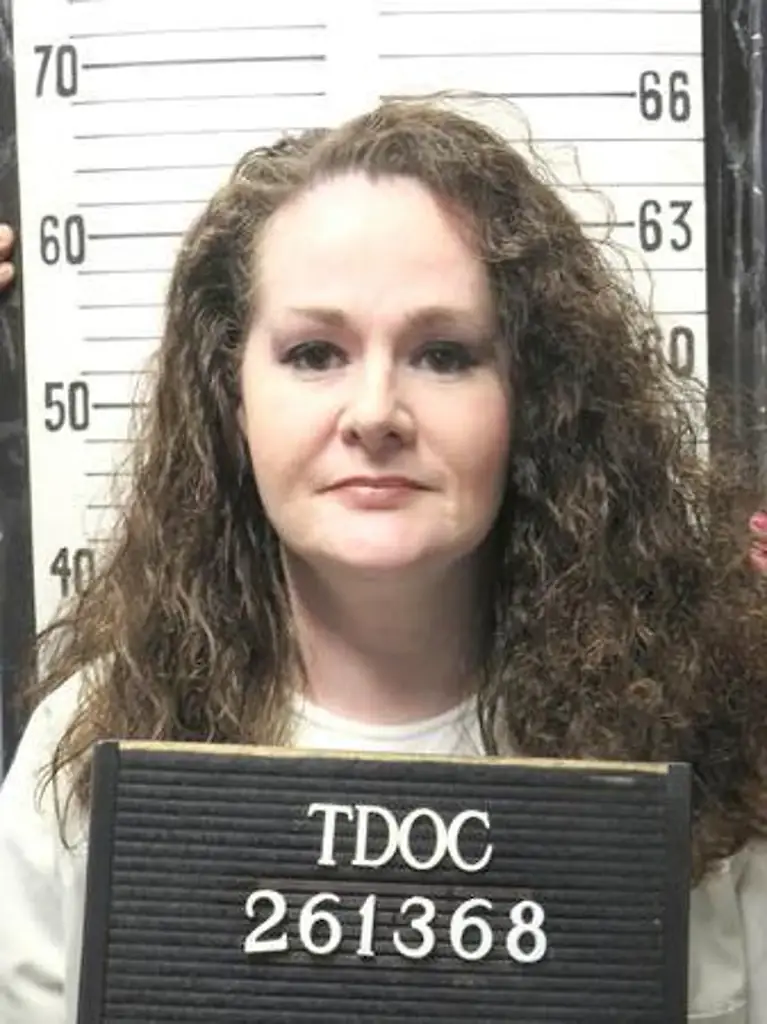
Pike, 50, remains in critical condition, unconscious, and on a ventilator at a Nashville hospital. Medical personnel are treating her for the effects of pentobarbital administered during the attempt and are attempting to flush the chemical from her body. The filing states via The New York Times that "Hospital staff are working to save Ms. Pike’s life and to clear the pentobarbital from her system."
Pike was originally sentenced to death for the 1995 murder of 19-year-old Colleen Slemmer.
The emergency motion notes that an expedited hearing has been granted to address the request for evidence preservation, though a specific date and time have not been scheduled. While her legal team argues that the execution staff failed to manage the IV lines properly and administered a second lethal dose despite the leaks, these claims have not yet been evaluated by a court ruling. The official cause of the execution failure remains under review.
Eyewitness accounts and medical warnings
During the execution attempt, the court motion indicates that Pike was crying, whimpering, and breathing heavily. At one point during the procedure, she stated that her arm felt "like it’s about to burst open".
Attorney Randy Spivey noted during a news conference that he observed workers using at least seven needles in her left arm over the span of an hour to locate a vein. Spivey also reported seeing her right arm turn purple after the second round of drugs was given, though he noted he is not a medical professional and could not explain the clinical reason for the discoloration.
Her attorneys emphasized that they had previously cautioned state officials and courts about her medical conditions. They pointed to her small veins, blood disorder, and history of difficult blood draws as factors that could jeopardize the injection process.
Attorney Stephen Ferrell stated that medical experts had warned that an unstable IV line could cause the drug to flow into tissue instead of the bloodstream.
In seeking to secure all related records, Ferrell said, "I hope that we’re given the opportunity to find out exactly what happened, that all the records are preserved, and that we’re able to get that information so that we know what happened."
Her lawyers had notified state attorneys of their obligation to retain evidence before submitting the court filing, but they received no response prior to filing.
Calls for commutation and legal background
Governor Bill Lee responded to the incident by ordering an independent investigation into the procedure and pausing all executions in Tennessee for the remainder of 2026. Pike's attorneys argue that this suspension is insufficient and are pressing for a full commutation of her sentence.
Spivey stated, "The governor must commute Christa’s sentence now". Robin Maher, executive director of the Death Penalty Information Center, stressed that the findings of the investigation must be made public so the citizens of Tennessee can understand what happened.
Maher added that attempting to execute Pike a second time could raise constitutional questions under the prohibition against cruel and unusual punishment, a matter that would ultimately require judicial resolution.
At the same time, Pike's legal appeal remains pending before the U.S. Court of Appeals for the Sixth Circuit. Although the U.S. Supreme Court lifted a stay of execution prior to the attempt, that decision did not resolve her underlying legal appeal.
Her legal team is examining additional legal claims that may stem from the failed execution attempt. Ferrell noted that her attorneys hope she recovers enough to assist in making decisions about her defense, stating, "We want to make sure that Christa recovers and has some input in what she wants".
For now, the granted expedited hearing focuses strictly on securing evidence rather than deciding whether her sentence will be commuted or if another execution date will be set.