


US3 min(s) read
Donald Trump makes huge two-word claim that could spell the end of the war in Iran
.webp_SmgFsc?tr=cr-292.0.1244.952,f-webp,q-70,w-100)
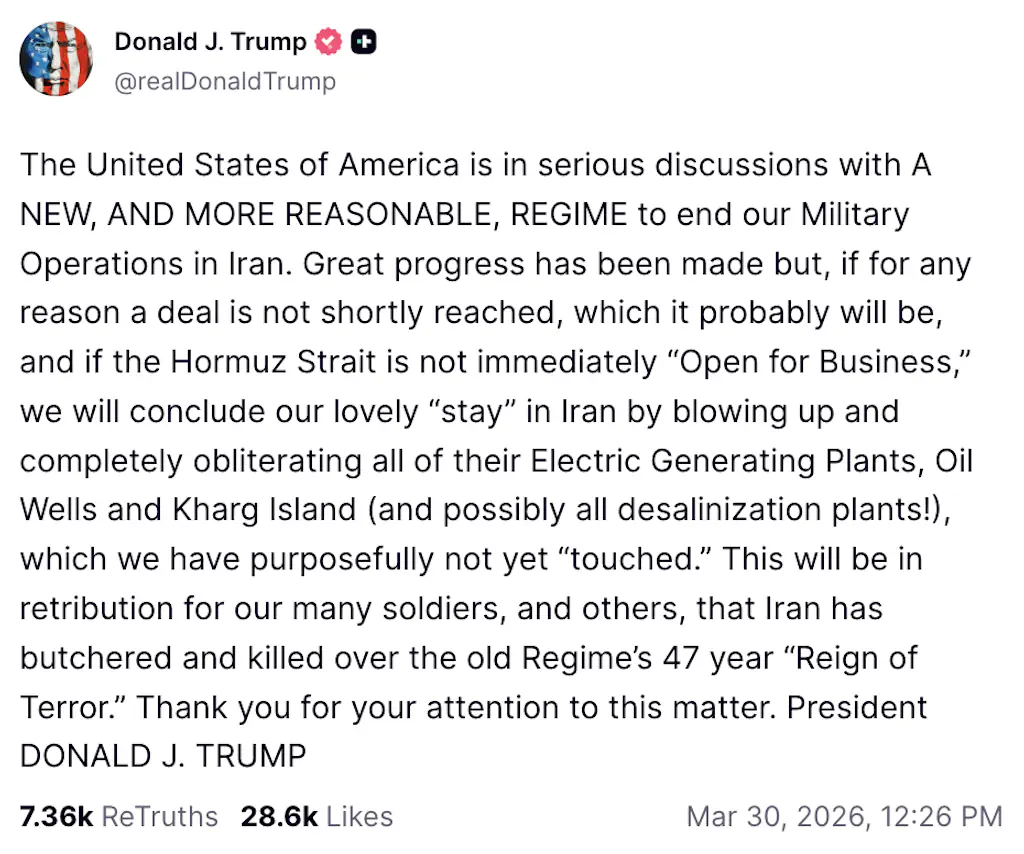
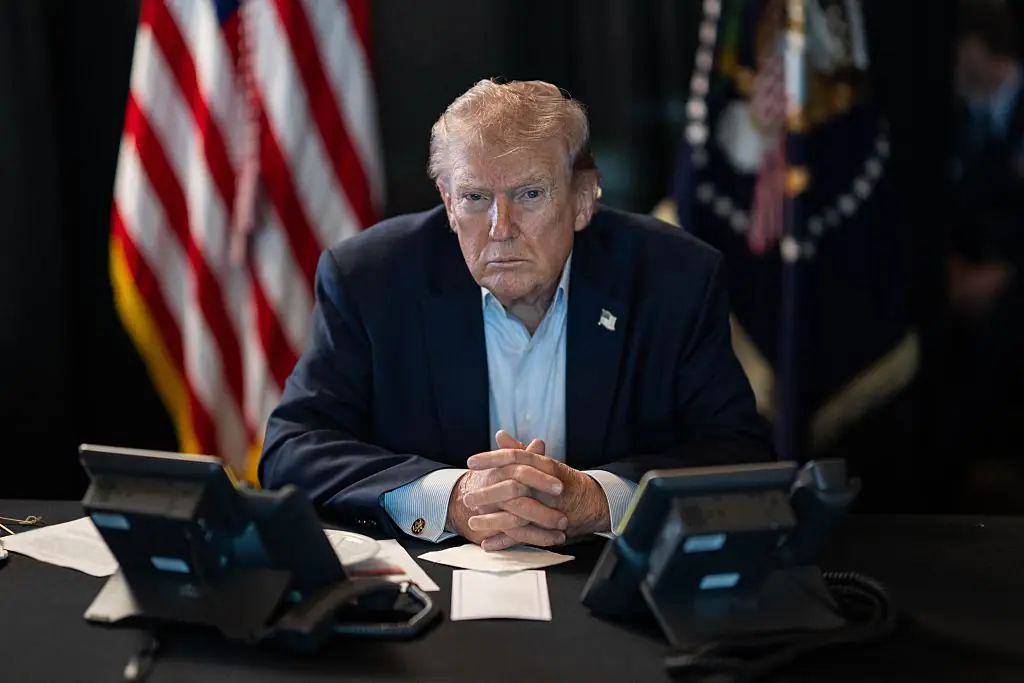
US President Donald Trump recently stated that he had achieved a regime change in Iran, expressing confidence that a deal to end the ongoing war would be struck soon.
On March 29, 2026, Trump said, “I think we’ll make a deal with them, pretty sure… but we’ve had regime change. We’re dealing with different people than anybody’s dealt with before. It’s a whole different group of people. So I would consider that regime change.”
This statement came as Trump faces significant pressure to bring the costly war to an end. The conflict, which has strained the United States and its Gulf allies, has also led to rising oil and gas prices, causing economic challenges for American citizens ahead of the upcoming mid-term elections.
The political situation in Iran remains unchanged
Despite Trump’s assertion of regime change, Iran’s political system continues to function with little disruption. After the assassination of Supreme Leader Ayatollah Ali Khamenei, Iran appointed his son, Mojtaba Khamenei, as the new Supreme Leader.
Key government figures from the elected administration, the Islamic Revolutionary Guards Corps (IRGC), and the military have been killed, but replacements have been made, and the war, as well as diplomacy, have continued.
Mediation efforts continue between the US and Iran
Although Trump’s claim of regime change does not reflect the reality in Iran, mediation efforts to resolve the conflict are ongoing. Pakistan is leading efforts to facilitate direct talks between the US and Iran, with Egypt and Turkey also involved in the diplomatic process.
Anthony Albanese’s warning to Donald Trump
This comes as Prime Minister Albanese addressed the situation in Canberra, voicing his concern and calling for clarity from the U.S. regarding its goals in Iran. Albanese acknowledged the importance of preventing Iran from developing nuclear weapons and changing its leadership, but emphasized the need for a de-escalation of the conflict.
He stated, "I want to see more certainty in what the objectives of the war are, and I want to see a de-escalation." Albanese further commented, "A de-escalation is in the global economy's interest. I have nothing but contempt for the Iranian regime."
Despite his support for regime change in Iran, Albanese cautioned that achieving this goal through external intervention would be extremely difficult. Reflecting on the initial objectives of the war, Albanese noted, "At the beginning of the conflict the objectives were outlined as one: stopping Iran from getting a nuclear weapon, which has been clearly achieved."