


US4 min(s) read
Earthquake experts warn 'big one' is coming and the result could wipe out whole cities
.webp_QQJmGo?tr=cr-345.0.1535.1190,f-webp,q-70,w-100)
On July 29, a titanic earthquake measuring 8.8 on the Richter scale struck the remote Kamchatka Peninsula in the Russian Far East.
It was one of the 10 strongest earthquakes ever recorded, and it lasted more than four minutes as the ground “leapt. Shuddered. Warped.”
Because Kamchatka is sparsely populated with just 330,000 people across 270,000 sq km, damage and injury were minimal.
But sensors around the globe picked up the tremor within minutes — and alarm bells have been ringing ever since. The question now on many minds: Is this a sign of more “Big Ones” to come?
A history of catastrophic quakes raises fears
Earthquakes above magnitude eight are classified as “Big Ones” because they can destroy cities and alter landscapes, writes News.com.au.
When they reach magnitude nine, they become megathrust events capable of devastation across hundreds of kilometres.
2025 has already seen one quake greater than magnitude eight and 14 between seven and 7.9 so far this year.
The last time the world experienced a massive quake was in 2011, with the 9.1 Tōhoku earthquake and tsunami in Japan, a disaster that killed about 20,000 people and triggered the Fukushima nuclear crisis.
And before that, in 2004, a 9.3 quake off Sumatra unleashed a tsunami that killed 228,000 people.
Nobody died in Russia’s July 29 Kamchatka quake.
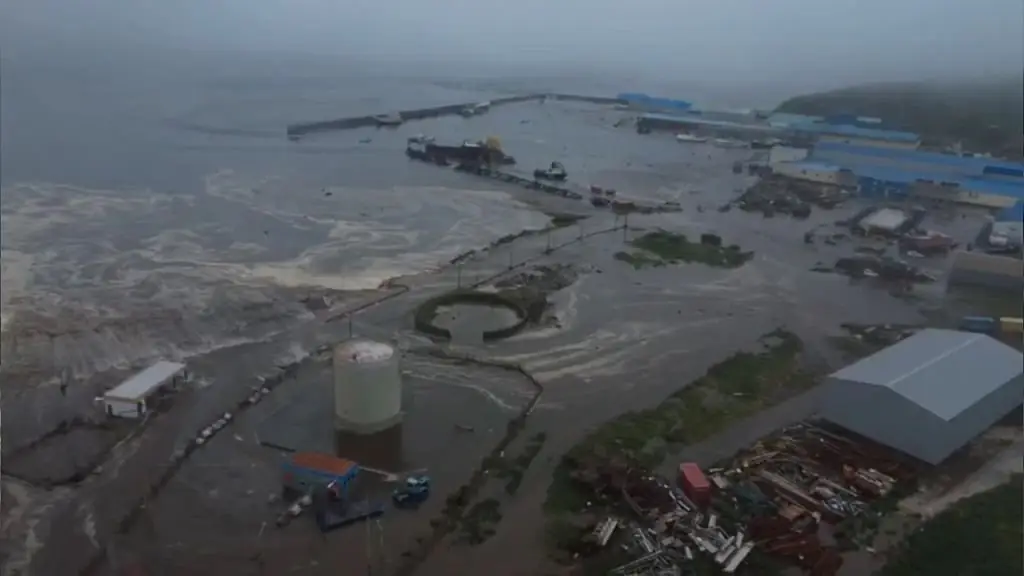
But then, on September 18, the second most severe quake of the year — a 7.8 — struck the same region with minimal impact again.
Contrast that with March 28 in Myanmar, where a 7.7 rupture killed around 5500 people, showing how differently these earthquakes can affect human populations — especially in crowded regions.
The Ring of Fire’s pulse could be rising
Scientists point to the Pacific Ring of Fire — the massive arc of seismic activity encircling the Pacific Ocean — as a key source of the world’s strongest earthquakes. A shudder in one part of the ring could impact stresses and pressures elsewhere.
Japan, living right on the Ring of Fire, is on high alert.
In July, the Akusekijima islands were hit by 60 quakes in one day and later experienced some 1700 tremors within a month. That swarm was stronger and longer than anything previously seen there.
Japan accounts for about 18 per cent of the world’s magnitude 6+ earthquakes each year because it sits at the confluence of four major tectonic plates.
Authorities are especially worried about the Nankai Trough, a 900km fault off Japan’s south coast that has historically unleashed magnitude eight and nine quakes every century or so.
Japanese seismologists are now 80 per cent certain a magnitude nine megathrust could happen again within the next 30 years.
They warn such a quake could kill 298,000, destroy 2.4 million buildings and cost US$13 trillion — with tsunami waves up to 34 metres high predicted in some worst-case scenarios. Tokyo is now boosting sea walls, building stronger structures, and erecting tsunami-proof refuges.

California’s own ticking quake hazards
Across the Pacific in California, the San Andreas Fault has long been feared as the source of America’s next devastating earthquake.
Researchers recently found an unexpected trigger point connecting it to the Cascadia Subduction Zone (CSZ) — a huge seismic rift that stretches from Canada’s Vancouver Island down to Northern California.
The CSZ last erupted in a magnitude nine megathrust 325 years ago, hurling trees and people to the ground and sending a tsunami across the Pacific. Japanese records from 1700 describe the “Orphan Tsunami” that hit without any prior felt quake — evidence of the scale of destruction these faults can unleash.
New research shows that Cascadia magnitude nine megathrusts have triggered a San Andreas response within hours or days at least three times in the past 3000 years.
Another seven big quakes “triggered” San Andreas activity within a decade. This has experts seriously debating the nightmare possibility of a synchronised quake event striking the entire US Pacific coast.
“It’s kind of hard to exaggerate what a M9 earthquake would be like in the Pacific Northwest,” Oregon State University paleoseismologist Chris Goldfinger warned. “And so the possibility that a San Andreas earthquake would follow, it’s movie territory.”