


US4 min(s) read
Anesthesiologist who evaluated Christa Pike reveals how one specific health condition she had may have saved her life during attempted execution
.jpg_xKEaT0?tr=cr-0.328.2730.3058,f-webp,q-70,w-100)
A health expert has explained how a medical condition may have saved Christa Gail Pike's life after she survived two execution attempts on Wednesday (September 30).
It was suggested by a medical professional that Pike may not be executed after two attempts at administering the lethal injection were botched.
Pike was set to become the first woman in over 200 years to be executed in Tennessee, but two attempts to administer the lethal injection failed to end her life.
Hours before the execution attempt, she was granted a stay of execution, which would be overturned by the Supreme Court.
As a result of the botched execution, the second in the state this year, Tennessee Governor Bill Lee would order a complete pause on all state executions for the remainder of the year while an independent review takes place.
The execution team had struggled to establish an IV line for over an hour during the execution.
According to Pike's attorneys, she is being treated in a hospital, while a spokesperson for the Tennessee Department of Corrections confirmed she was ’transported to an off-site medical facility'.
But how did she survive?
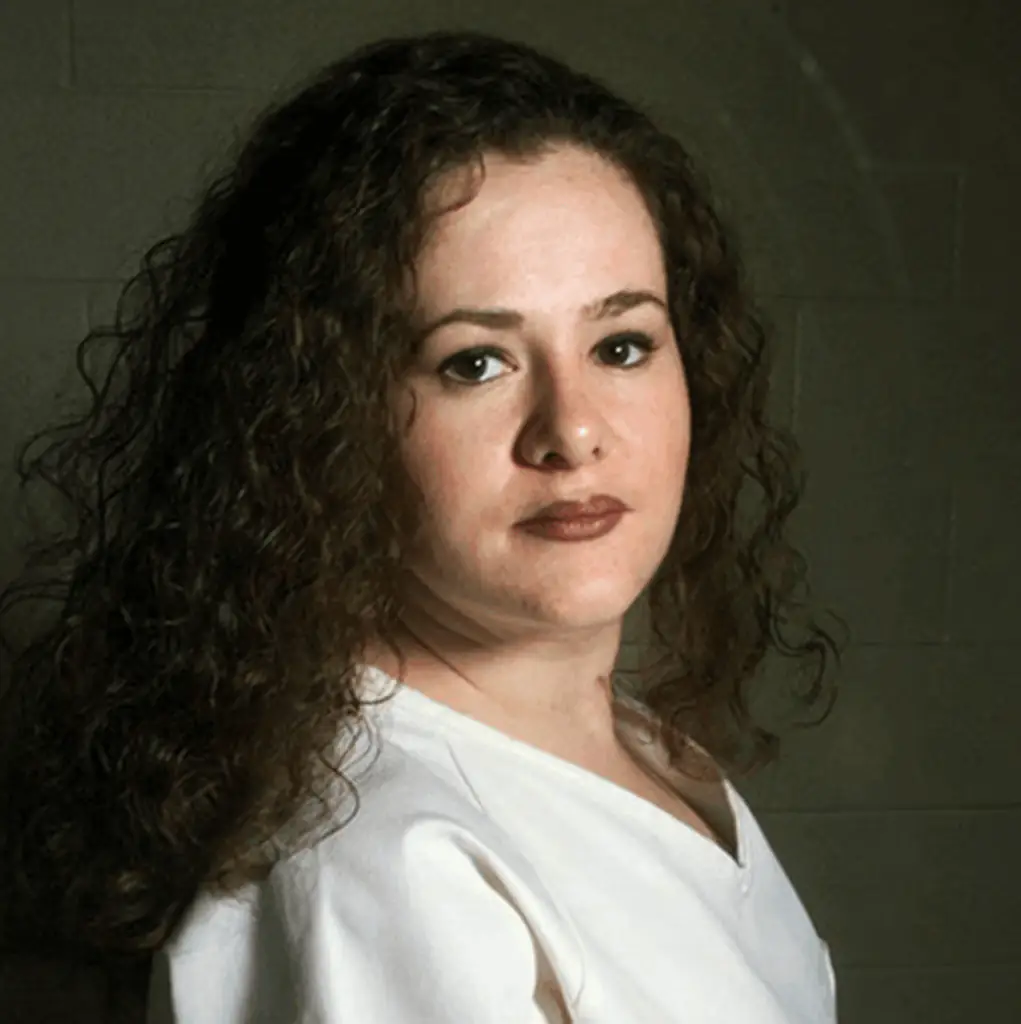
Doctor explains possible reasoning for Pike's survival
Dr Joel Zivot - who acted as a medical expert retained by Pike's defense team to evaluate what went wrong during the execution - has shared his thoughts.
Pike's lawyers updated the public yesterday, explaining that she is in a 'critically ill' state, confirming she is currently on a ventilator.
After the death row inmate was injected with two doses of pentobarbital, she was seen thrashing while strapped to the gurney, as witnesses recalled her breathing, snoring and looking around.
Her lawyers have filed court documents, detailing 'the serious complications that occurred during the execution attempt, many of which Christa and her attorneys had warned the State and the courts about months earlier.'
These warnings include PIke's thrombocytosis, which is a blood-clotting disorder.
Pike's legal team fought for months to stay the execution or change the method altogether, so Pike wouldn't need to undergo the process.
As part of TMZ's YouTube series, In The Know, Dr Zivot suggested an explanation for the failed execution.
He claimed that the clotting may have taken place shortly after the needles were inserted, blocking veins from receiving the lethal injection.
The doctor claimed that the clotting could have caused the veins targeted by the execution team to explode.
“She very likely has a significant burn on one or both arms from the pentobarbital that I expect went into the tissues,” he said, explaining that the lethal dose of pentobarbital likely affected her arm tissue instead of entering her bloodstream.

Doctor explains why Pike may not be executed
Speaking to The Sun, Dr Zivot explained that the incident was avoidable, describing the outcome as 'predictable'.
“These things were predictable. I knew that they would happen. I called that they would happen and they happened," he claimed.
Dr Zivot went on: “I can tell you that all the things that I warn about - that I’ve written in the past - have all come to fruition in the case of Christa Pike.”
The medical professional explained that you need to insert an intravenous catheter (IV) when administering the lethal injection.
This is a particularly technical procedure that must be performed by trained healthcare professionals.
However, as doctors and nurses abstain from being involved in capital punishment due to medical ethics, untrained non-medical staff must carry out the procedure.
“Placing an intravenous catheter is a specific technical skill that is practised by people in healthcare. It’s not something that translates into the execution chamber,” he explained.
Dr. Zivot added: “So if Christa Pike’s health should be such a thing that it can never be restored to some degree… then she may not face [execution] again.
“If the death penalty goes wrong, which it has done in this case, it becomes the duty of the state to restore the prisoner to health. So they’re bound to do it,” he pointed out.