


US4 min(s) read
Flights resume after nationwide FAA grounding leaves thousands stranded: Here's what to know about passenger refunds

After thousands of passengers were left stranded across the United States due to a nationwide grounding of flights, many have now been left trying to ascertain how they can claim a refund.
The Federal Aviation Administration (FAA) issued an immediate and urgent ground stop on Friday afternoon following a communications failure affecting all of the country's regional air traffic control centers.
In its original statement, the FAA cited “extraordinary circumstances” and safety concerns as the reason for the unprecedented ground halt, despite the exact cause of the failure remaining under investigation.
Following the measure that has been imposed just once since the 9/11 terror attacks, Transportation Secretary Sean Duffy confirmed that FAA technicians were investigating the widespread technical problem, while Homeland Security Secretary Markwayne Mullin insisted there was no evidence of a cyberattack or threat to national security.
How can passengers get their money back?
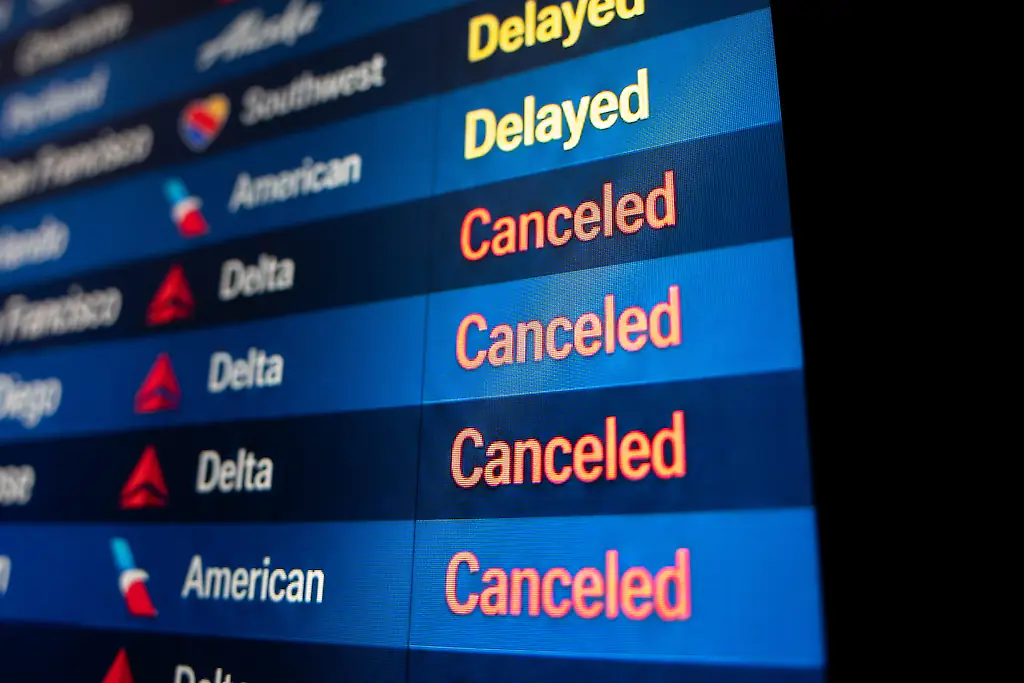
While planes have now been permitted to fly once again, thousands of passengers could still face knock-on disruption as airlines attempt to clear the backlog, with many travelers affected by cancellations and lengthy delays left wondering whether they are entitled to their money back.
Anyone due to travel should check their flight status directly through their airline's website or app, while the FAA's National Airspace System Status page can provide further information about delays and cancelations.
Moreover, passengers are also advised to keep notifications switched on and regularly check their emails and text messages for updates about departure times, cancellations, and alternative arrangements.
If a flight is cancelled or significantly delayed, travelers should contact their airline as soon as possible to discuss their options, with many airlines offering passengers the opportunity to move onto the next available service without paying an additional rebooking fee.
However, accepting an alternative flight is not the only option, and passengers may be entitled to a full refund under federal regulations.
Under the FAA Reauthorization Act of 2024, airlines are required to provide refunds when flights are cancelled or significantly changed, and passengers decide not to travel. As such, this means anyone whose flight is cancelled can request a full refund if they reject the alternative transport offered by their airline.
The definition of delays varies depending on whether a flight is domestic or international, with domestic flights typically qualifying under ‘significant delays’ if they arrive at their destination three hours after originally scheduled, while the international flight threshold is six hours after originally planned.
Travelers who opt to cancel their plans following a qualifying disruption are eligible to request their money back, instead of having to accept travel credit or vouchers, with these refunds typically issued within seven business days for credit card purchases and 20 calendar days for other payment methods.
However, passengers who accept a replacement flight and complete their journey as planned, are generally not entitled to a refund simply because their original service was delayed, and that does not necessarily mean airlines have to cover every additional expense caused by the disruption, either.
When delays and cancellations result from circumstances outside an airline's control, such as FAA air traffic restrictions, carriers are generally not required to pay for hotel accommodation, meals or other unexpected costs.
What about travelers who were left stuck on aircraft?
Separate protections apply to travelers who are stuck on an aircraft during an extended delay, with federal tarmac delay regulations stating that airlines must generally provide passengers with an opportunity to leave the aircraft before a delay reaches three hours for domestic flights or four hours for international services.
There are exceptions where safety, security, or air traffic control requirements mean it is not possible for passengers to disembark safely.
Airlines must also provide drinking water and a snack within two hours of a tarmac delay beginning, unless safety or security considerations prevent them from doing so.
However, passengers should think carefully before choosing to leave an aircraft during a prolonged delay, as airlines are not necessarily required to let them back on board, meaning they could miss the flight if it eventually departs.
Even after receiving confirmation that a flight has been delayed, travelers should avoid assuming their revised departure time is guaranteed.
Airlines can sometimes resolve operational problems earlier than expected, meaning a service could depart sooner than its updated schedule suggests.
Passengers who arrive at the airport based on an amended departure time could therefore risk missing their flight.
While the nationwide FAA ground stop may have ended, many flights are still subject to delays, with a backlog of aircraft yet to depart airports across the country.