ADVERT
US3 min(s) read
Published 12:50 16 Jul 2026 GMT
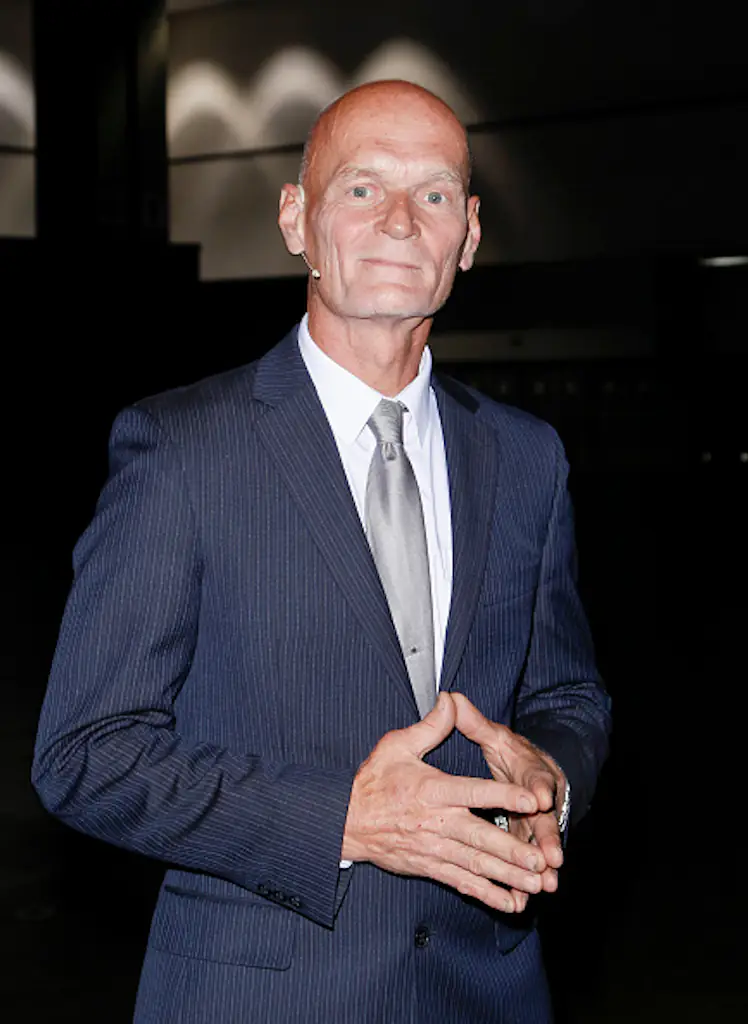
A former death row inmate who spent more than two decades behind bars has revealed what it was like sharing prison with serial killer Ted Bundy, and says another notorious murderer left him with an even darker impression.
Nick Yarris was sentenced to death in 1982 and spent 23 years in prison before DNA evidence proved his innocence, leading to his release in 2005.
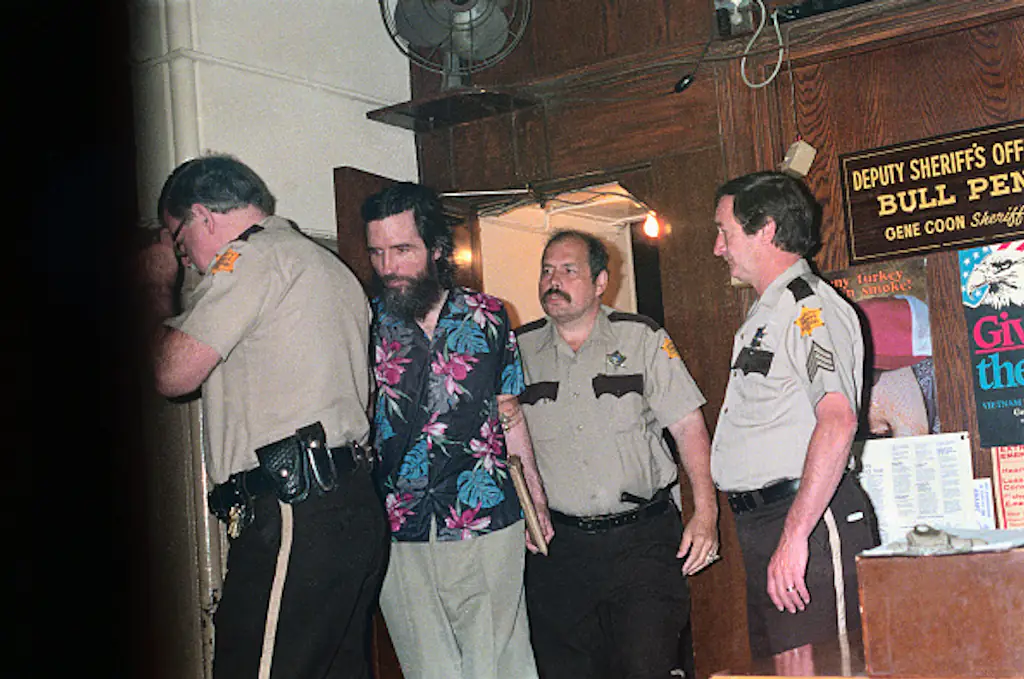
Speaking about his time behind bars exclusively to VT, Yarris explained that he was initially housed in a harsh disciplinary unit at Pennsylvania's Huntingdon State Correctional Institution before later being transferred to death row, where he crossed paths with some of America's most infamous killers, including Ted Bundy and convicted murderer Gary Heidnik.
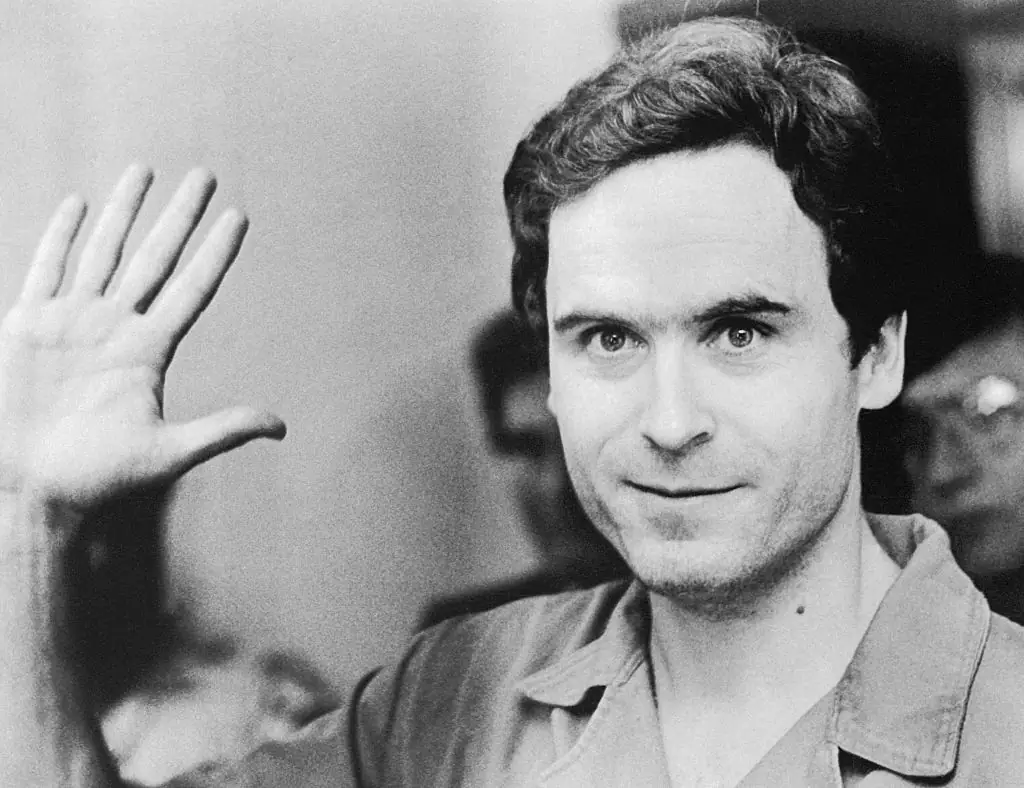
Recalling his encounters with Bundy, Yarris said the serial killer's reputation didn't match the man he saw inside prison.
"He was a little b****," Yarris said. "He was a braggadocious idiot."
According to Yarris, Bundy largely kept quiet while incarcerated because of how inmates viewed men who targeted women and children.
"He wasn't allowed to speak to anyone," Yarris recalled. "See, out on the street men who prey on children and women are monsters. Put them in prison around real men? They shut right the f**k up and know their place."
Yarris also claimed he unintentionally caused Bundy to be assaulted by other inmates during his time in prison.
He went on to describe Bundy as deeply self-absorbed, saying: "Everything had to be about him. Bundy was insane. He had something snide to say about everything. He was on this glorification mission.
"He was a megalomaniac, he made everything grandiose. He bragged about making judges stutter. He was just a self-absorbed a**hole."
Despite Bundy's notoriety, Yarris believes another death row inmate was even more unsettling.
When asked whether anyone he'd encountered was comparable to Bundy, Yarris pointed to Gary Heidnik, who was convicted of kidnapping, torturing, and murdering women in Philadelphia before being executed in 1999.
"When they walked Gary Heidnik past my cell to execute him, I physically felt evil," Yarris said.
"It was like cold blackness."
He added: "When he walked two feet from my cell I actually stepped backwards. The energy pushed me back."
Yarris also recalled what he described as a dramatic change in Heidnik's demeanor in his final moments.
"When they got him into the death chamber they showed him the daughter he'd fathered through rape. All that bravado disappeared. God broke him at the end."
After being officially exonerated in 2005, Yarris has dedicated much of his life to campaigning against capital punishment.
He has since written a play, developed a screenplay and television series based on his experiences, and spoken before the Geneva Convention, where he has argued for the abolition of the death penalty in the United States.
film & tv1 min(s) read
us2 min(s) read
film & tv3 min(s) read
film & tv2 min(s) read
Published 13:42 14 Jul 2026 GMT
Death row survivor Nick Yarris has opened up about what it was really like sharing prison space with notorious serial killer Ted Bundy.
Yarris, who was sentenced to death in 1982, spent 23 years imprisoned before being exonerated by DNA evidence.
Yarris said he wasn't immediately sent to a conventional death row unit, but instead to what he described as an especially brutal disciplinary block inside Pennsylvania's Huntington Prison, before being moved to death row at Florida State Prison.
During that time, he said he found himself incarcerated alongside some of America's most infamous killers, including Gary Heidnik and Ted Bundy.
Asked what Bundy was like, Yarris didn't hold back. ”He was a little b****," he said. "He was a braggadocious idiot."
According to Yarris, Bundy frequently boasted about his exploits, including allegedly getting "one of his groupies pregnant in the visiting room."
"He wasn't allowed to speak to anyone," Yarris recalled. "See, out on the street men who prey on children and women are monsters. Put them in prison around real men? They shut right the f*** up and know their place."
Yarris also claimed he inadvertently triggered one of Bundy's prison beatings.
He said Bundy had tried offering him legal advice and encouraging him to believe he could overturn his conviction.
"I finally told him I didn't get off on killing little girls and obsessing over my bad mommy."
According to Yarris, Bundy immediately lost his temper.
"The vein in his forehead popped out like a worm. He lost his mind."
When Bundy ignored officers' orders to calm down, Yarris said guards intervened.
"They dragged him out of the law library and beat the hell out of him."
As Bundy was taken away, Yarris remembered shouting after him: "Hey Teddy... don't forget to spit."
"He'd spat on me," he added.
Reflecting on Bundy's personality, Yarris described him as deeply narcissistic.
"Everything had to be about him. Bundy was insane. He had something snide to say about everything. He was on this glorification mission. He was a megalomaniac, he made everything grandiose. He bragged about making judges stutter. He was just a self-absorbed a**hole."
Yarris, who was officially vindicated in 2005 and released from prison, has now turned his story in a force for good, including writing a play, a screenplay, and a television series, as well as addressing the Geneva Convention about the death penalty — arguing that it should be abolished in the United States.
Published 10:30 15 Jan 2019 GMT
Three decades ago, on January 24th, 1989, Ted Bundy was electrocuted at Florida State Prison at the age of 42. His death was ordered three times in two separate trials, and his loss was mourned by very few - least of all the families of the 30+ women and girls he murdered throughout the 1970s.
Since then, he has gone down in history as one of the most notorious serial killers of all time, and has subsequently been the subject of multiple films and television shows.
Now, in 2019 - 30 years to the day of his execution - Netflix are releasing a new documentary on the infamous man, and it looks positively terrifying.
[[youtubewidget||https://www.youtube.com/watch?v=n1UJgrNRcvI]]
Titled, Conversations With a Killer: The Ted Bundy Tapes, the documentary interviews people who knew or had contact with Bundy, and attempts to delve into the psyche of a man who took the lives of so many innocent young women. At points, Bundy's own testimony and interviews are used, meaning that viewers can "Get inside the twisted mind of America's most notorious serial killer in his own words."
The series will only be four episodes long, but will give in-depth accounts of Bundy's crimes and subsequent trials. From the trailer, it is also clear that Conversations With a Killer will explore the ways in which Bundy came to be something of a pop culture sensation at the time he was on trial for murder, and the extent to which he was idolised by many women who believed he couldn't possibly have committed such heinous acts.
In fact, it is fairly well-known that Bundy got married to Carole Ann Boone while he was on trial, and she testified on his behalf when he was accused of multiple murders.
The series was directed by Emmy-winning documentarian Joe Berlinger, who also recently directed Extremely Wicked, Shockingly Evil and Vile. This feature-length film is also about Bundy, but focuses more on the killer's relationship with his girlfriend, Elizabeth Kloepfer, a divorcée from Utah.
Kloepfer and Bundy met in 1969, and dated before the serial killer struck for the first time. Kloepfer always maintained that she thought Bundy was normal at first (and, indeed, the new docuseries shows that many women fawned over him and seriously believed he was innocent), but she eventually discovered his secret. Nevertheless, she stayed with him during his killing spree, and remained loyal to him during the first part of his imprisonment.
Extremely Wicked, Shockingly Evil and Vile stars Zac Efron as the killer.
It is not confirmed yet, but the title of the new Netflix series suggests that the subscription service might be planning on investigating other serial killers or criminals using the same format - if this Ted Bundy feature is a success, of course.
Check out the series when it airs on the 24th... but maybe consider sleeping with the hallway light on afterwards.
Published 12:21 29 Jan 2019 GMT
During the 1970s, Theodore 'Ted' Bundy went on a killing spree that ended the lives of at least 30 female victims - one of whom was just a child. He was arrested multiple times for his crimes, but twice managed to escape from jail and continue his rampage. Finally, in 1978, he was recaptured, and eventually faced the death penalty for three of the slayings in 1989.
Even so, his notoriety has lived on, and now, thanks to a Netflix documentary and an upcoming film starring Zac Efron, interest in the serial killer has spiked again. Unfortunately, this has not been easy to deal with for the families of the women Bundy killed, nor for the few victims who were fortunate enough to survive their ordeals at his hand.
Kathy Kleiner is one of these victims. When she was 20 years old, Bundy broke into her sorority house at Florida State University. He killed two of her roommates, and attempted to murder one other - but both Kleiner and her friend, Karen Chandler, survived the ordeal.
It's been more than 41 years since that night, yet Kleiner still remembers it vividly.
According to Kleiner, who was just 20 at the time of the attack, she had slept through the murder of her sorority sisters, and was only awoken when Bundy fell over a trunk in the room she shared with Chandler.
"I remember the noise of the trip and something falling off the trunk, and that woke me up," she told Rolling Stone in a recent interview.
"The room was dark, and I didn’t have my glasses on, but I remember seeing a black mass. I couldn’t even see that it was a person. I saw the club, saw him lift it over his head, and slam it on me.
"The first time, it didn’t hurt. It was pressure, like someone pressing on your arm. And then he hit me again. And I think that’s where he hit me in the face and broke my jaw in three places and I passed out. But that’s what I remember the most: him lifting the club and bringing it down on me."
Bundy almost certainly would have killed Kleiner and Chandler, but the young women were saved when another member of the sorority, Nina Neary, pulled up outside in her boyfriend's car. The headlamps shone through the women's room (the curtains were never drawn), startling Bundy and prompting him to flee the scene.
"I saw the light, it was like God’s light," said Kleiner. "I remember thinking, ‘Oh my God, something cleared the room.’"
Neary then saw Bundy make his escape, and was the only eye-witness to ever testify against him in a murder trial.
It took several months for Kleiner to heal from her physical injuries but, after a week, she was permitted to leave the hospital and return to the scene of the attack in order to assist police with any additional information she could provide. Her room had not been cleared up in that time, and looked every bit like a TV-style murder scene.
"There was blood splattered all over the wall. All over," she recalled. "And my green and white bedspread was covered. My beautiful bedspread I had just gotten a few weeks earlier, that my mom and I had spent so much time picking out. The blood was everywhere. Everywhere. On the walls, and everything. That really stays in my mind. I can see it right now."
For a long time, Kleiner was unable to talk about what happened, but she is in a better place now. She even plans to see the new Zac Efron movie when it comes out. "Hopefully they’ll have one of the Kardashians play me," she joked.
Now in her sixties, Kleiner knows how lucky she was to have survived that night. Only a handful of others can say the same about their encounters with Bundy: a man who will go down in history as being one of the most evil individuals to have ever lived.
Published 03:18 26 Jan 2019 GMT
When you imagine a serial killer, you picture someone ugly and socially awkward. You don't picture someone handsome and charismatic, like Ted Bundy, who confessed to murdering thirty women in the 1970's. Perhaps his charm was exaggerated over the years, as he became a mythic figure. But there's no doubt that he was persuasive, convincing young women to get into his tan Volkswagen Beetle so he could drive them to their deaths in a secluded location.
January 24, 2019 was the thirtieth anniversary of Ted Bundy's execution. Authorities captured him in 1976, only for him to escape by jumping out the second-story building of a courthouse library. Six days later, they captured him again, only for him to escape again, by losing enough enough weight to squeeze into the crawlspace in the ceiling. A month and a half later, they recaptured him again in Florida, after he had committed further assaults and homicides. Bundy was executed by electric chair in 1989.
This week Netflix released Conversations with a Killer: The Ted Bundy Tapes, a four-part docuseries about the notorious killer and the media frenzy surrounding his trial. The show includes never-before-heard tapes from 100 hours of interviews with Bundy while he was on Death Row. And in the midst of this resurgent fascination with his story, a spine-tingling photo has resurfaced, showing Bundy in a police lineup.
Here's the story behind that chilling image: In November 1974, Bundy approached 18-year-old Carol DaRonch at the mall in Murray, Utah. He told her that he was a police officer, and someone tried to break into her car, so she needed to fill out a report at the police station. Skeptical, she asked him for identification, and he showed her a badge in his wallet.
When DaRonch got into his car, Bundy snapped handcuffs on one of her wrists and she began to panic. On Conversations with a Killer, DaRonch she recalled the attack:
"He headed down a side street and then he suddenly pulled over up on the side of a curb up by an elementary school and that's when I just started freaking out: 'What are we doing?' And he grabbed my arm and he got one handcuff on one wrist and he didn't get the other one on and the one was just dangling. I had never been so frightened in my entire life.
"I thought, 'My God, my parents are never going to know what happened to me.' My whole life went before my eyes. The next thing I knew, he had pulled out a gun and said, 'I'll blow your head off.'"
DaRonch managed to open the door, and jumped out of the car. Bundy also exited the car and chased her with a crowbar, trying to beat her over the head. "I just fought with all my life, thrashing with him and fighting," she recalled. "My fingers were all broken. I just remember his beady, lifeless eyes." Luckily a car approached from the other direction, and DaRonch was able to jump inside. Four hours later, Bundy murdered another woman.
However, in October 1975, that botched abduction caught up with him. Utah police officers called DaRonch to the station to pick Bundy out of a police lineup. She did so, despite Bundy's effort to disguise his appearance by getting a new haircut. In the black-and-white photo, Bundy is the second man to the right, standing rigidly in a white roll-neck jumper and very high pants.
DaRonch went on to testify against Bundy in court, which led to his first conviction for aggravated kidnapping. A judge sentenced him to 15 years in prison, but of course, that didn't go smoothly. In 1976, he extradited to Colorado for be tried for murder, where he pulled off his first escape.
If you can't get enough Bundy, today the first trailer dropped for the biopic, Extremely Wicked, Shockingly Evil And Vile, starring Zac Efron.
Published 02:43 30 Jan 2019 GMT
If an attractive, charming young man approached you in a public area and asked you to help him unload his sailboat, would you say yes? What if his arm was in a plastic cast, and he asked for help packing boxes into his car? How about if he claimed he was a police officer, showed you a badge, and said you had to come down the station and fill out a report?
Due to Ted Bundy's amiable appearance, he was able to con college educated young women to accompany him to secluded locations. Once they arrived, he sexually assaulted them, murdered them, committed necrophilia and mutilated their corpses. If he was ugly and acted like a jerk, he probably wouldn't have been such a successful serial killer.
[[youtubewidget||https://www.youtube.com/watch?v=-lW6Z38HHJw]]
Thirty years after Ted Bundy was executed, his story has become almost mythic. Between 1974 and 1978, he murdered at least thirty young women in at least seven states. He escaped from prison twice, represented himself at his murder trial and claimed he was innocent up until the very end. Days before he fried in the electric chair, he finally confessed to his crimes, but was hardly repentant.
In the upcoming biopic, Extremely Wicked, Shockingly Evil and Vile, Hollywood heartthrob Zac Efron plays the notorious serial killer. Last weekend, the movie premiered at the Sundance Film Festival, and critics raved about Efron's performance, a departure from his roles in lighthearted fare like Neighbors, Baywatch and High School Musical. However, the film also sparked a serious discussion: Is Efron's portrayal glamorizing Bundy?
On January 15, 1978, 20-year-old Kathy Kleiner Rubin was attacked by Ted Bundy in her Florida State University dorm room, and survived. In a comprehensive interview with Rolling Stone, she described how the monster sneaked into her bedroom at 3am and brutalized her and her roommate with a club. But before he could rain down the death blows, a passing car flooded the room with light, scaring him away.
[[youtubewidget||https://www.youtube.com/watch?v=V2vQjJ51ABQ]]
So, how does a Ted Bundy survivor feel about Zac Efron's portrayal? "I don't have a problem with people looking at it, and as long as they understand that what they're watching wasn't a normal person," Rubin told TMZ. "I believe that in order to show him exactly the way he was, it's not really glorifying him, but it's showing him, and when they do say positive and wonderful things about him... that's what they saw, that's what Bundy wanted you to see."
She continued, "Hopefully it will make women more aware of their surroundings and be cautious. He had different tactics that he used for people to help him get in cars or do things, and in your gut you just feel that something doesn't feel right."
It's easy to say that Ted Bundy looks creepy now, but you might not have thought that in the 1970's. If there's a lesson to be learned from this true crime story, it's that you should never judge a book by its cover - even if it looks like Zac Efron.