ADVERT
US2 min(s) read
Published 13:13 24 Dec 2021 GMT
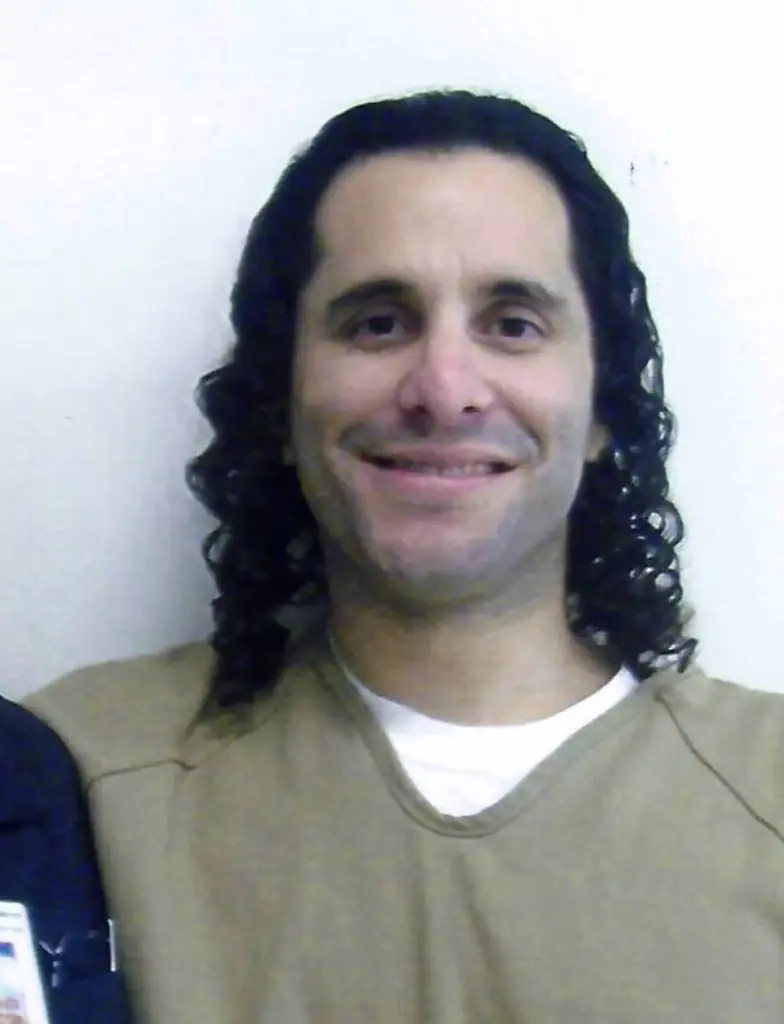
A Georgia man who spent 23 years behind bars for a 1998 murder has finally been exonerated and freed.
Devonia Inman, now 43, was serving a life without parole sentence for a 1998 robbery and murder of a Taco Bell manager in southern Georgia. However, according to his advocates, the Georgia Innocence Project, DNA evidence linked another person to the crime.
The Georgia Innocence Project states that no physical evidence tied Inman to the case, and three of the four witnesses in his trial later recounted their testimonies saying they had been pressured or coerced by police.
During the 1998 murder, the manager of a Taco Bell restaurant in Adel, Georgia, was robbed and shot dead in the parking lot of the establishment. The killer took $1,700 and the victim's car - which was later found abandoned nearby by police, with a handmade ski mask inside.
Per the New York Post, further DNA testing later concluded that Hercules Brown, a convicted killer, was the rightful suspect in the case.
Brown's DNA was found on the ski mask inside the victim's car. The judge in the retrial also concluded last month that prosecutors had originally withheld evidence connecting Hercules Brown to the crime, according to the Georgia Innocence Project.
As Inman spent two years awaiting trial, Brown went one to kill two other people. He is currently in prison for those crimes.
Inman was finally set free after 23 years after the local DA reportedly dismissed all charges, with state officials opting not to appeal the ruling. He walked free from the Augusta State Medical Prison on Monday.
Following his freedom, Inman said: "It took a really long time to fix, even though it was so clear I wasn't guilty."
"I'm glad I get to finally go home, and I'm grateful to everyone who helped make that possible," he added.
In a statement to the Georgia Innocence Project, Inman's legal team from Troutman Pepper said: "We are elated to see Devonia and his family finally obtain the justice that so many have fought for so long to secure."
"We are privileged to have played a part in his long-overdue exoneration, and to work at a firm committed to critically important pro bono matters like this," the lawyers added.
Due to the fact that Georgia is one of 13 states that does not currently have a statutory compensation law to assist those wrongfully convicted, the GIP has set up a fundraiser to help Inman and his family. As of this writing, over $12,000 has been raised.
us4 min(s) read
us3 min(s) read
Published 14:07 18 Oct 2023 GMT
us3 min(s) read
world1 min(s) read
Published 16:48 11 Mar 2020 GMT
Published 15:16 28 Sep 2023 GMT
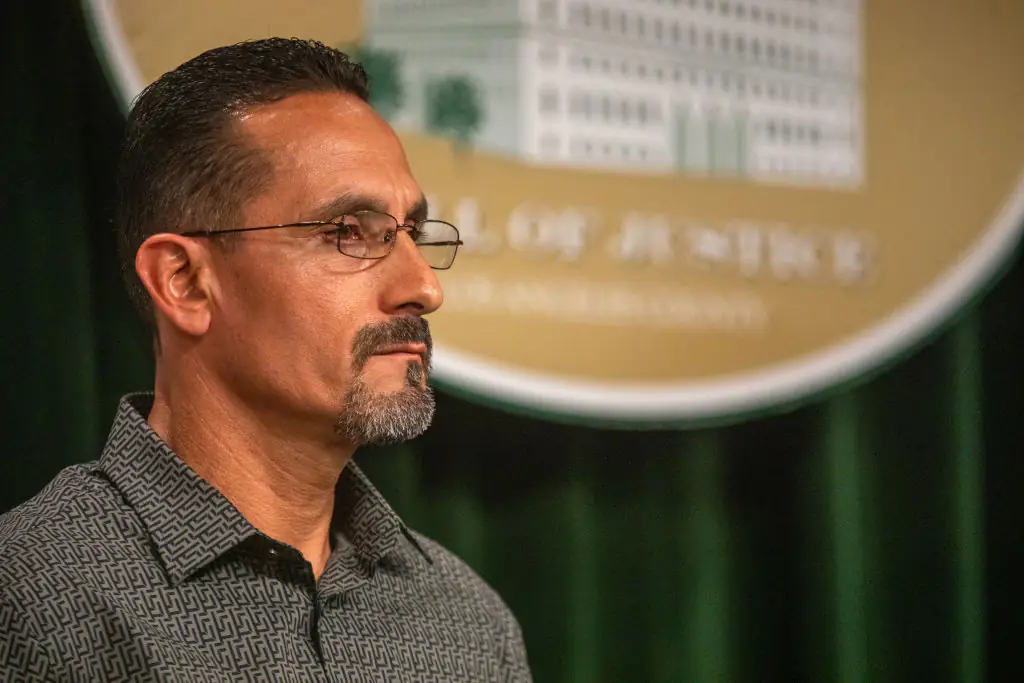
A man from California has been freed from prison after a new investigation cleared him of rape and kidnapping.
When he was just 18 years old, Gerardo Cabanillas was charged with fourteen felony counts, including robbery, kidnapping, carjacking, and rape.
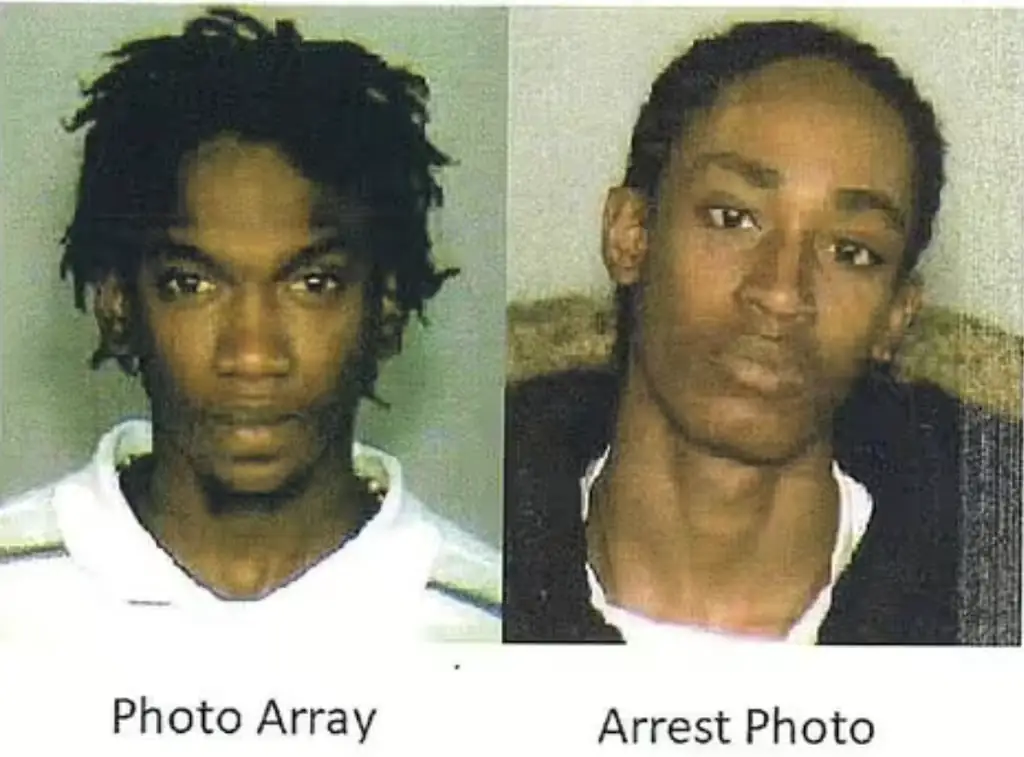
As per the California Innocence Project, which collaborated with The Innocence Center on Cabanillas' case, police failed to find any physical evidence tying him to the 1996 crimes and it was reported that some of the victims had serious doubts about their identifications of Cabanillas’s photo from a six-pack lineup.
While being interrogated, Cabanillas was told that if he pleaded guilty to the crimes, he'd only get probation.
Despite this, Cabanillas was later sentenced to a total of 15 years to life in prison in addition to a fixed term of 72 years and four months.
He has already served 28 of those years.
However, that all changed last week when a new investigation into the case saw DNA evidence exonerate the wrongfully convicted man from the crimes he was initially charged with.
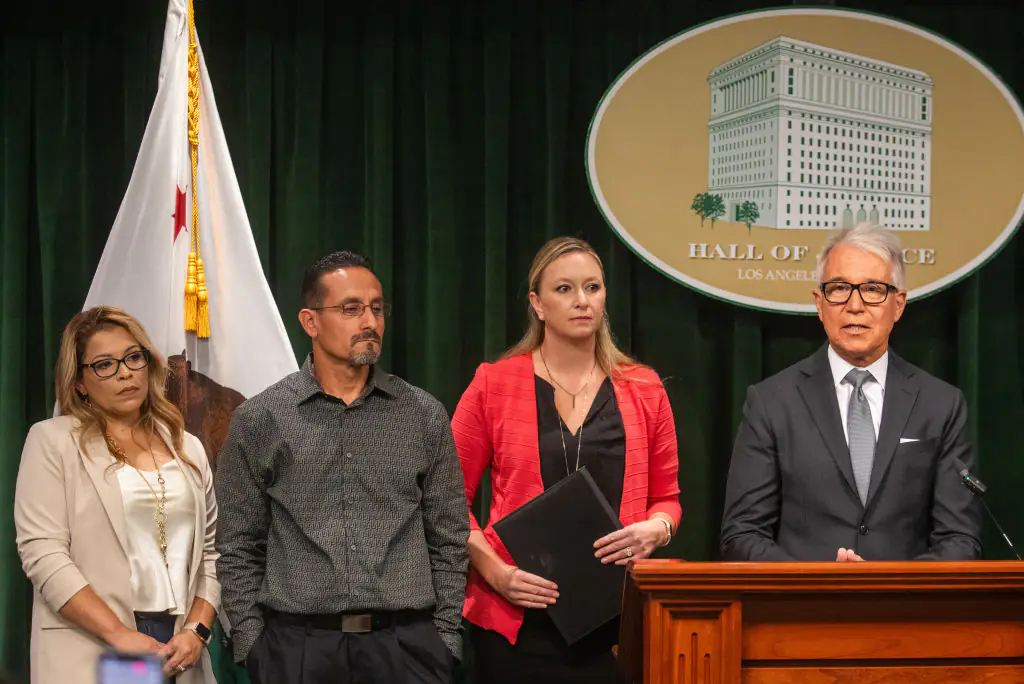
In a statement, Los Angeles County District Attorney George Gascón said that Cabanillas was wrongfully convicted of kidnapping, robbery, and sexual assault.
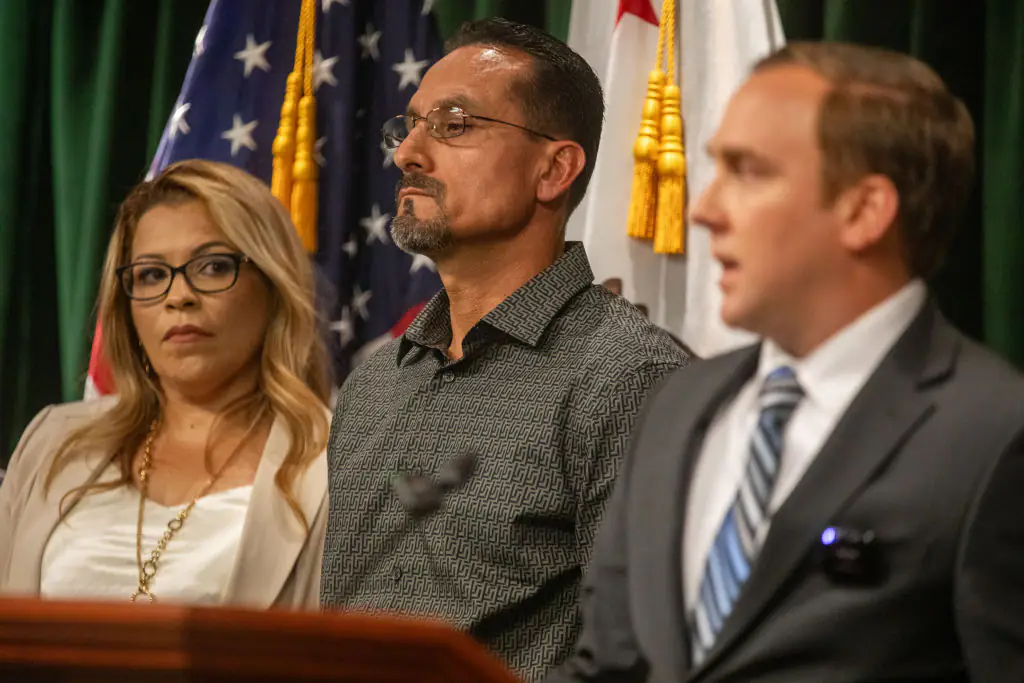
"Today, we acknowledge a grave injustice that has resulted in the unjust, more-than-28-year incarceration of Mr. Cabanillas," Gascón said on Tuesday during a news conference while standing next to Cabanillas and his wife.
"Upon thorough reexamination of the evidence and a comprehensive review of the case by my office’s Conviction Integrity Unit, it has become abundantly clear that a serious error was made," he continued. "I extend my deepest apologies to Mr. Cabanillas for the miscarriage of justice and the failure of our criminal legal system."
Gascón noted it was "imperative that we reflect upon this case as a stark reminder that our criminal legal system is not infallible," before adding that "we must collectively commit to doing better, to continuously improving our procedures, and to ensuring that every person who enters our legal system is afforded a fair and just process."
At the same conference, Alissa Bjerkhoel, the Interim Director of the California Innocence Project at California Western School of Law, also stated that "false confessions are one of the leading causes of wrongful convictions in the United States."
"Police are permitted to lie to suspects, including promises of leniency if the person confesses," she continued. "That is exactly what happened here and, if it was not for the DNA evidence, Gerardo would have spent the rest of his life in prison."
One of the victims who testified that both perpetrators had ejaculated inside of her when they committed the assault underwent DNA testing which found that Cabanillas' was innocent, with none of the evidence linking to him.
The California Innocence Project stated: "Post-conviction DNA testing on the sexual assault examination kit has revealed two contributors of sperm found on [the victim], neither of which are Cabanillas.
"In addition, an expert on false confessions has determined Cabanillas’s confession has a 'high probability' of being false. It was inconsistent with the facts and was primarily the product of police feeding him information and Cabanillas merely confirming it," the statement added.
Our thoughts are with Cabanillas and his loved ones during this period and we hope that, despite the setbacks, he manages to live a fulfilling life now that he is free.
A man who was freed after being wrongfully imprisoned for 16 years has been shot dead by a police officer after he was pulled over.
Leonard Allen Cure, 53, met a tragic end on Monday as events took a turn during a routine traffic stop along Interstate 95 near the Georgia-Florida line, according to Sky News.
Cure's life had taken a detour back in 2003 when he was sentenced to life in prison for the armed robbery of a drug store in Florida.
His prior convictions for robbery and other offenses compounded his situation. However, he was granted his freedom in April 2020 when a judge ruled that solid alibis in his case had been disregarded, and there was an absence of physical evidence or strong witness testimony connecting him to the crime scene.
The Georgia Bureau of Investigation (GBI) disclosed that the fatal incident unfolded at approximately 7:30AM on Monday.
Cure had complied with the deputy's commands after being pulled over but things took a turn for the worse after he was informed that he was under arrest.
The situation escalated as the deputy deployed a taser, which was followed by an altercation. Subsequently, the deputy used the taser again, coupled with a baton. As Cure still failed to comply, the deputy resorted to using his firearm.
Emergency services arrived promptly and provided medical attention to Cure, but regrettably, he succumbed to his injuries.
The details surrounding why he was initially pulled over have not yet been released.
Advocacy and legal groups have rallied around this deeply troubling case, with The Innocence Project of Florida having represented Cure during his exoneration process.
Seth Miller, the executive director of the organization, expressed his sympathy for the Cure family, stating: "I can only imagine what it's like to know your son is innocent and watch him be sentenced to life in prison, to be exonerated and... then be told that once he's been freed, he's been shot dead."
Earlier this year, Cure, who resided in a suburb of Atlanta, was awarded $817,000 in compensation for the years he unjustly spent behind bars.
Broward State Attorney Harold F. Pryor, who described Cure as "smart, funny, and kind," emphasized: "No amount of money will get those years back for Mr. Cure or give him peace, but it is a small gesture that recognizes Mr. Cure was wronged and that we, in the State of Florida and in the justice system, will help him and compensate him."
Pryor added that Cure had visited prosecutors at their office after his release and had even participated in training to ensure fair and thorough practices in the legal system.
Arielle Demby Berger, an assistant state attorney in Broward, shared her sentiments about Cure's aspirations, saying: "Lenny has shared with me that his dream was one day to work in a cubicle instead of doing manual labor. Now, Lenny can go to college and surpass his dreams."
The GBI has launched an independent investigation into the fatal shooting.
Published 11:49 25 Feb 2025 GMT
A man who was freed from prison after spending 30 years behind bars for a crime he didn't commit has given his thoughts on the modern world.
Gordon Cordeiro was convicted back in 1994 in connection to the shooting death of Timothy Blaisdell.
The crime happened during a drug deal robbery on the island of Maui, and Cordeiro was later found guilty of robbery, attempted murder, and murder.
He was sentenced to life in prison - without the possibility of parole, per Sky News.
From day one, he denied any involvement. But it wasn’t until the Hawaii Innocence Project took up his case that things started to change.
Earlier this month, a hearing was held where the legal team argued that not only had Cordeiro’s previous attorney been ineffective, but there had also been prosecutorial misconduct.
Then came the game-changer: new DNA evidence.
The Hawaii Innocence Project revealed that fresh testing on physical evidence from the crime scene completely excluded Cordeiro as a match.
Instead, they found an unidentified person’s DNA on Blaisdell’s body and other key evidence.
That revelation was enough for the judge to vacate Cordeiro’s convictions and order for him to be set free.
After spending 30 years locked away, stepping back into society was surreal.
And for Cordeiro, it wasn’t the towering buildings, electric cars, or even the internet that hit him first - it was the fact that no one seemed to look up from their phones.
"I’m not staring at it yet. It keeps beeping and messages coming in, and it’s different," he told the Associated Press.
Still, despite that slightly depressing realization, he had to give credit where it was due - technology was also the reason he was finally free.
"Thank God for new DNA. Technology is awesome," he said.
The moment Cordeiro was finally released wasn’t just life-changing for him—it was deeply emotional for everyone who fought for his freedom.
Kenneth Lawson, co-director of the Hawaii Innocence Project, described the scene in court: “He cried, we all cried. He believed that he was going to be exonerated ... but having gone through two trials you lose faith in the justice system. To finally hear a judge say ‘I’m vacating your convictions,’ that’s when it hit him.”
After his release, Cordeiro wasted no time in making up for lost moments.
His first stops included visiting his mother’s gravesite, sitting down for a long-overdue steak dinner, and celebrating with his family.
Let's hope Cordeiro enjoys his newfound freedom and doesn't get addicted to his phone like the rest of us!
Published 11:14 12 Mar 2023 GMT
A man wrongly convicted of murdering a teenager was freed from prison on Thursday after nearly two decades behind bars following a botched identification.
Sheldon Thomas, who was found guilty of the murder of a 14-year-old boy on Christmas Eve 2004 in New York City, had his guilty verdict overturned and the indictment vacated, CNN reports.
This comes years after a witness wrongly named the now-35-year-old as the killer when detectives gave her a photo of the wrong Sheldon Thomas, according to a statement from Brooklyn District Attorney Eric Gonzales.
Thomas was one of three alleged gang members accused of ending the life of 14-year-old Anderson Bercy and injuring another person, prosecutors said in a statement.
"The evidence indicated that two guns were used and that the shooters were inside a white car. A witness initially identified two men she knew, who did not include defendant Thomas, as being in the car," the statement said, per NBC News.
Thomas "was arrested based on a witness identification of a different person with the same name — a mistake that was first concealed and then explained away during the proceedings."
The freed man's lawyers had tried to get the case thrown out after arguing that their client had been wrongly identified but this was rejected by the judge, who said there was still probable cause to believe the right person had been charged.
But nearly 19 years later, the Brooklyn DA's Conviction Reversal Unit has been able to secure Thomas' exoneration.
District Attorney Eric Gonzales said the case "was compromised from the very start by grave errors and lack of probable cause to arrest Mr Thomas," per CBS News.
Gonzales continued: "He was further deprived of his due process rights when the prosecution proceeded even after the erroneous identification came to light, making his conviction fundamentally unfair."
"I would think of this moment and replay conversations I would have with myself," Thomas - who was just 17 years old when he was charged with murder - said in court on Thursday. "Right now, I'm speechless."
He added: "I forgive them. Just like I've made mistakes in my life and people have forgiven me, and people have shown mercy on me, I will do the same."
"I would also like to extend my condolences to the victim’s family," he went on to say. "I believe that since my incarceration, they have been under the impression that they were given justice for their son and come to find out today, and all this time, they really had the wrong person that was convicted for killing their son. ... And it’s not just my life that was ripped apart by … the miscarriage of justice. It was them, as well."
Prosecutors have confirmed that the case will not be retried.
A man has been freed from death row after 29 years, after new DNA evidence exonerated him of the crime he was originally accused of committing.
According to a statement by the Innocence Project, Paul Hildwin was originally sentenced to death in 1985 for the murder of Vronzettie Cox. He spent a total of 35 years incarcerated for the crime, surviving three separate attempts by the state to execute him, and a further four bouts of cancer, before his innocence was finally proven in court.
Watch Paul walk free after 29 years on death row:
[[jwplayerwidget||https://content.jwplatform.com/videos/cGeDZFBs-dkXnENEs.mp4||cGeDZFBs]]
Hildwin was originally found guilty after Cox's stolen property was found in his possession. He told investigators that he'd hitched a ride with the victim and her boyfriend earlier and, had stolen from them, but had neither assaulted nor murdered Cox.
He was charged with homicide, and at his trial serology expert alleged that bodily fluids found on two pieces of crime scene evidence matched Hildwin. However, extensive testing and a court-ordered search of the national DNA database proved that Cox's boyfriend was the true culprit all along.
Commenting on the case, Innocence Project Senior Litigation Counsel Nina Morrison stated: "Paul Hildwin’s unwavering determination to one day walk free enabled him to survive three and a half decades behind bars."
Morrison added: "It is outrageous that Paul was held in jail for five more years after the Florida Supreme Court ruled that the new DNA would likely lead to his acquittal. And while we hoped that he would be fully exonerated, we are thrilled that Paul will not spend another day behind bars or face another death penalty trial."
The Innocence Project later uploaded a video of Paul enjoying one of the small pleasures that incarceration had denied him for so long: walking on the grass in his bare feet.