


US4 min(s) read
Judge in Lindsay Clancy trial explains why one juror remains unwilling to agree with the rest

The judge overseeing Lindsay Clancy's murder trial has explained why they did not remove a juror who was accused of holding up deliberations.
Clancy is facing three counts of murder on suspicion of killing her three children, Cora, five, Dawson, three, and eight-month-old Callan, at the family’s Duxbury, Massachusetts, home in January 2023.
She does not deny killing her children, but her defense argues that she should not be held criminally responsible because she was suffering from severe postpartum psychosis at the time.

Jury fails to reach unanimous verdict
After a six-week trial, the 12-person jury, made up of nine women and three men, repeatedly struggled to reach a unanimous verdict, with one juror reportedly remaining at odds with the other 11.
On Friday (September 4), Judge William Sullivan announced that he "does not feel he has any choice but to declare a mistrial," per BBC News.
The prosecution agreed that the case should go to a mistrial, while Clancy’s lawyer, Kevin Reddington, wants to appeal the decision.

Jury had been deadlocked for days
The jury had repeatedly told the court that it was struggling to reach a unanimous verdict.
Jurors first reported on Tuesday that they could not agree before sending another note on Wednesday saying they remained at an impasse.
The deadlock took a more dramatic turn on Thursday when the foreperson claimed that one juror was not following Judge William Sullivan’s instructions concerning reasonable doubt.
Sullivan privately questioned each juror before rereading his instructions on reasonable doubt and ordering them to continue deliberating.
Clancy’s attorney pushed for the disputed juror to be removed, while Plymouth County Assistant District Attorney Jennifer Sprague argued that Sullivan’s renewed instructions were sufficient. The judge ultimately declined the defense’s request.
But the issue resurfaced on Friday when Sullivan received another note through the foreperson, this time accusing the juror of acknowledging doubt but refusing to apply it to the case.
"The note indicates that the juror has acknowledged doubt but refuses to apply it," Sullivan said.
However, he explained that the note did not establish that the juror was refusing to follow his legal instructions.
"That note does not indicate that the juror refuses to follow the law," Sullivan said.
Reddington again argued that the juror was holding up proceedings and sought to have the individual removed.
However, Sprague suggested that the disagreement could instead concern the meaning of reasonable doubt "or what doubt is and how it should be applied".
"We are in no position to judge if the 11 are right or the one is right," Sprague said, per MassLive. "There is no indication that the juror is intentionally trying to mislead the court or lie to the court."
The discussion took place without the jury present.
When the jurors returned to court, Sullivan once again reminded them to follow the law as instructed before sending them back to continue deliberations.
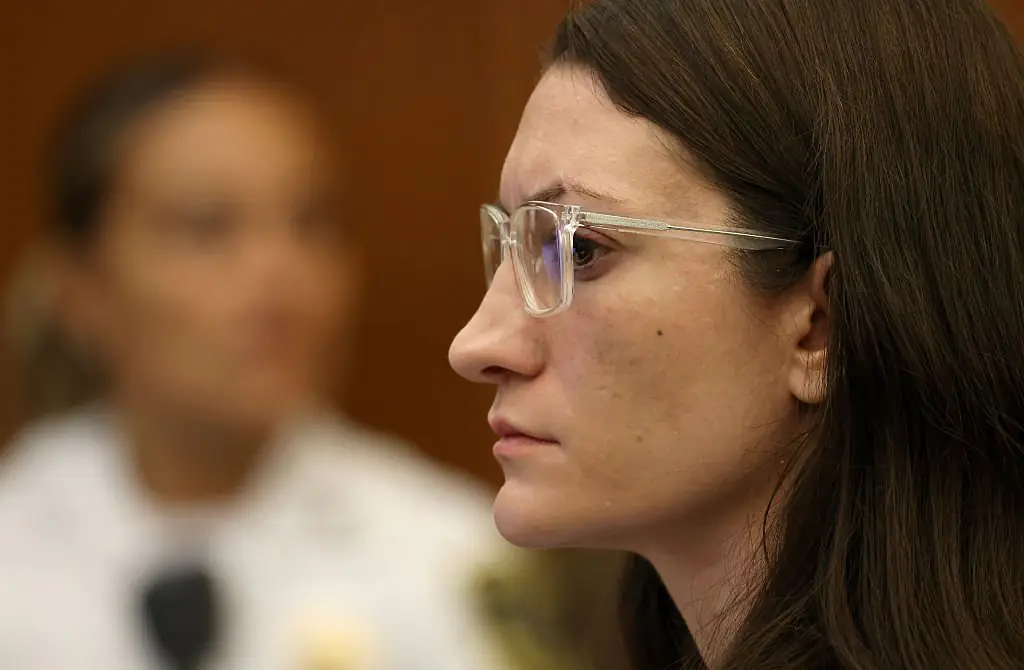
Clancy’s mental health was central to her defense
The central question at trial was not whether Clancy killed her children, but whether she should be held criminally responsible for their deaths.
Clancy’s mother, mother-in-law, sister, friends, and former co-workers testified about her mental health struggles after she gave birth to Callan.
Her former mother-in-law, Susan Clancy, testified that Clancy became anxious, paranoid, and suicidal while the psychiatric treatment she received was failing to help.
Reddington argued that Clancy had been misdiagnosed and overmedicated, strongly criticizing the psychiatric care she received before the killings.
During closing arguments, he showed jurors a photo of the Clancy family appearing happy, followed by another showing Clancy in the hospital.
"How does this turn into this?" he asked. "How? Because of the damn medicine and the lousy medical care that she got."
Prosecutor Jennifer Sprague dismissed criticism of the mental health system as "a distraction" and contended that Clancy purposely killed her children because they were preventing her from ending her own life.
"She was depressed. She was exhausted. She was done. She didn’t want to try anymore. She felt damaged," Sprague said. "But those kids, those kids were her protective factor. Those kids were keeping her from ending her misery."