


US5 min(s) read
Previous execution by firing squad 'missed' and allowed heart of inmate to keep beating as organs bled

A death row inmate may have remained alive and conscious for considerably longer than intended after a firing squad largely missed his heart, according to an autopsy.
Mikal Mahdi, a death row inmate in South Carolina, was executed by a three-person firing squad in April this year. However, the post-mortem examination reportedly identified just two wounds on his chest rather than three, with none of the bullets striking his heart directly as intended.
Instead, the shots damaged Mahdi's liver and other internal organs, allowing his heart to continue beating while he bled internally, with the execution not being instantaneous as planned.
Experts discuss the death of Mahdi who was left to 'bleed out'
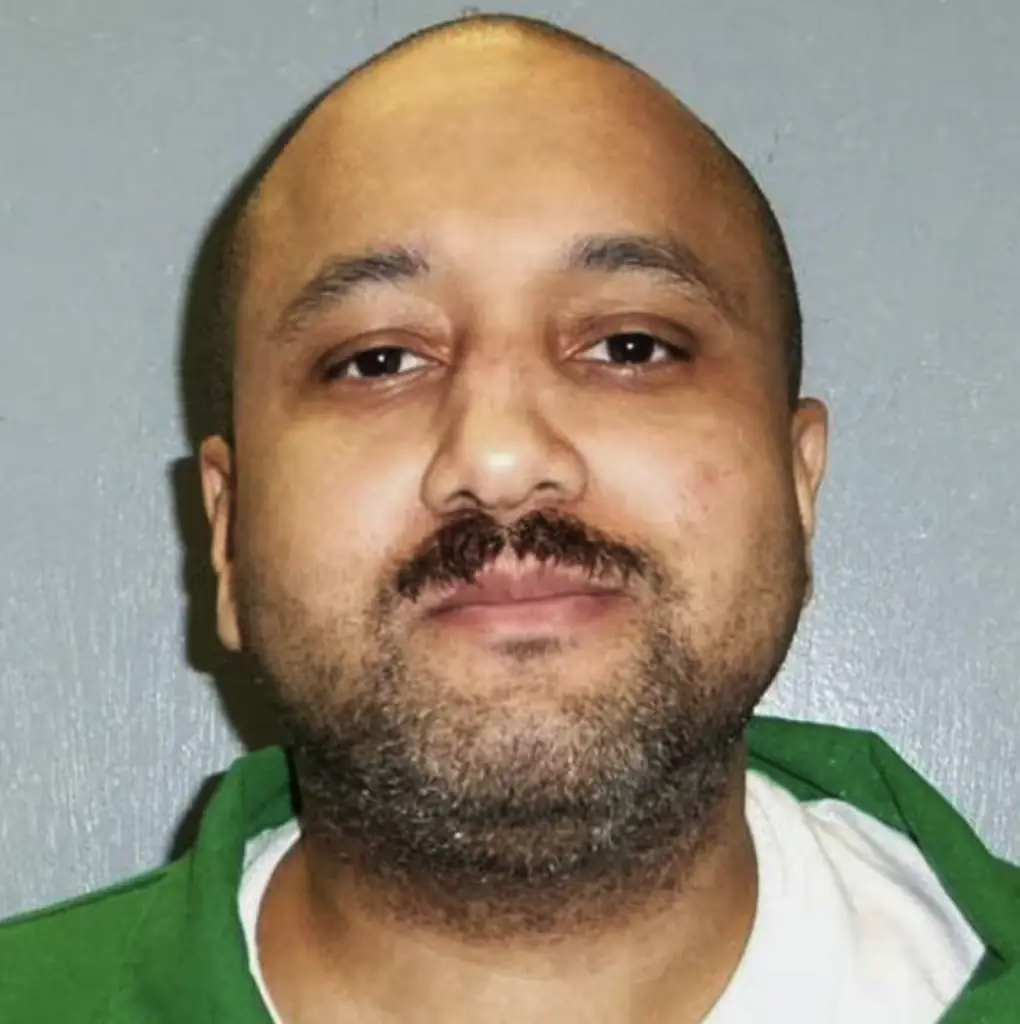
Dr Carl Wigren, a forensic pathologist who reviewed the autopsy documents for NPR, said the injuries were likely to have caused significant pain before Mahdi died.
"He's not going to die instantaneously from this," Wigren said. "I think that it took him some time to bleed out."
Mahdi's lawyers notified the South Carolina Supreme Court in May that they believed the execution had been "botched", with their filing citing both the state's autopsy and an independent analysis commissioned from forensic pathologist Dr Jonathan Arden.
Arden concluded that Mahdi may have remained conscious and experienced severe pain after the gunshots.
"Mr. Mahdi did experience excruciating conscious pain and suffering for about 30 to 60 seconds after he was shot," he wrote in his assessment of the autopsy.
South Carolina's constitution, like the US Constitution, prohibits cruel or unusual punishment, with the state introducing firing squads as an execution option in 2021, alongside the electric chair and lethal injection, but the law was subsequently challenged.
The South Carolina Supreme Court ultimately ruled in 2024 that all three execution methods were constitutional. In its ruling, the court said an inmate subjected to a firing squad should not experience prolonged suffering.
"The evidence before us convinces us - though an inmate executed via the firing squad is likely to feel pain, perhaps excruciating pain - that the pain will last only ten to fifteen seconds," the authorities wrote.
They added that this would be the case "...unless there is a massive botch of the execution in which each member of the firing squad simply misses the inmate's heart."
However, Mahdi’s lawyers argued this is exactly what unfolded: "A massive botch is exactly what happened to Mikal Mahdi," they wrote in their May filing.
Questions have also emerged over why the autopsy showed two wounds despite three members of the firing squad reportedly being involved.
A doctor wrote in the comments section of the state-commissioned autopsy that "it is believed that" two bullets passed through the same wound.
Unlike Utah, where some members of a firing squad may be given weapons containing blanks, all three rifles used in South Carolina were supposed to contain live ammunition.
The two wounds found on Mahdi's body were described as being almost identical in size, but pathologists who examined the report questioned whether two separate bullets could realistically have traveled through precisely the same small opening.
Mahdi's painful execution points to wider context of death penalty

Mahdi's execution came only one month after Brad Sigmon became the first person to be executed by firing squad in South Carolina.
Before Sigmon was put to death in March, his lawyer believed the method was preferable to lethal injection, which has faced problems in South Carolina and elsewhere in the US, including in the recent Christa Pike failed execution.
The documentation surrounding Mahdi's execution has also been questioned when compared with the records from Sigmon's death, and following an NPR review, more than 20 photographs taken during Sigmon's post-mortem examination, including X-rays, images of his clothing, internal organs and bullet fragments, as opposed to just one of Mahdi.
Moreover, the material did not include X-rays, photographs of his internal organs, images of his clothing or clear photographs of bullet fragments.
David Weiss, one of Mahdi's attorneys, said the lack of documentation has left important questions unanswered.
"It would be one thing if the previous executions had similar documentation, but they didn't," Weiss said. "It's not fully clear what happened. Did one of the gunmen not fire that one? Did their gun get jammed? Did they miss? We just have no idea at this point."
His lawyer, who witnessed Mahdi's execution, said that when the curtain to the death chamber opened, Mahdi was seated and appeared to be pushing against his restraints, having also recounted that the target placed on Mahdi's chest appeared unusually low.
After the shots were fired, Mahdi cried out and began breathing heavily. Weiss said he heard him groan several times before his body eventually became still, before a pulse check was then carried out whereby Mahdi was pronounced dead.
Associated Press reporter Jeffrey Collins, who witnessed the execution, also reported that Mahdi cried out immediately after the shots, with the white target bearing a red bull's-eye was subsequently pushed into the wound in his chest.
Collins reported that Mahdi groaned twice roughly 45 seconds after the shooting and continued breathing for another 80 seconds before appearing to take his final breath.
"Both the forensic medical evidence and the reported eyewitness observations of the execution corroborate that Mr. Mahdi was alive and reacting longer than was intended or expected," Arden concluded.
Weiss said Mahdi had authorized his legal team to make the autopsy public after his death, with his lawyers wishing the findings could lead to changes that prevent another prisoner from experiencing a similar execution.
"They largely missed our client's heart," Weiss said. "I hope we can figure out a way to ensure this doesn't have to happen to anybody else."