


US6 min(s) read
Someone has created a chillingly realistic simulation of what would happen if a nuclear weapon struck New York tomorrow
.webp_QQJmGo?tr=cr-345.0.1535.1190,f-webp,q-70,w-100)
With the rising tensions around the world - particularly in the Middle East - there are growing concerns of nuclear war.
While this remains highly unlikely, morbid curiosity can still take hold about what impact this would have.
With that being said, here's what YouTube channel Science Time has to say about a nuke hitting New York City.
The Immediate Impact of a Nuclear Explosion on Manhattan
The effects of a nuclear bomb detonating over New York would be catastrophic.
To understand the magnitude of this disaster, let’s consider a bomb similar to the "Little Boy" atomic bomb dropped on Hiroshima in 1945.
The Little Boy bomb had an explosive yield of approximately 15 kilotons of TNT, resulting in massive destruction and a devastating loss of life.
If a similar bomb were dropped on Manhattan, the damage would be on a much larger scale due to the city’s dense population and infrastructure.
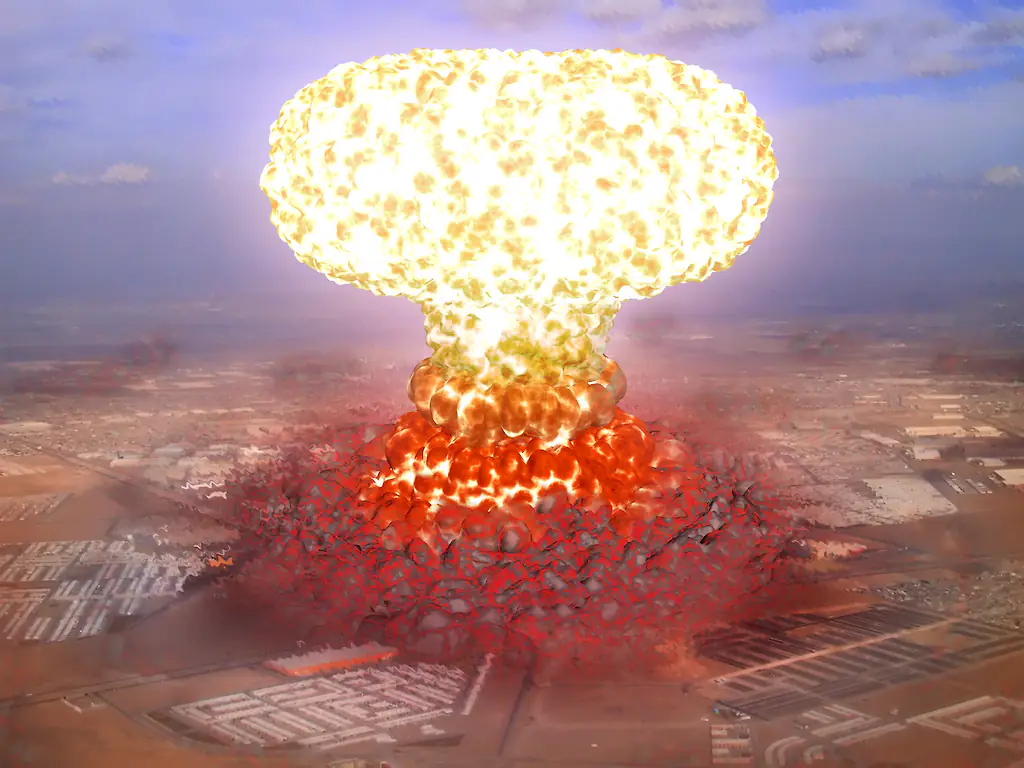
In the immediate aftermath of detonation, everything within a 650-foot radius would be vaporized. This includes buildings, skyscrapers, and people.
The blast wave would then spread outward, causing severe damage to structures up to 1,000 feet away.
Concrete buildings, even those designed to withstand significant forces, would be either severely damaged or completely demolished, with fatalities approaching 100%.
Beyond the initial blast zone, the heat generated by the explosion would ignite a firestorm, spreading fires across large portions of the city.
People within an 11-square-kilometer (4.4 square-mile) radius would suffer third-degree burns - severe injuries that destroy skin tissue and can lead to permanent disability or the need for amputations.
Radioactive Fallout and Its Far-Reaching Consequences
The aftermath of a nuclear explosion isn’t just about the immediate destruction; it also involves radioactive fallout.
The explosion would send radioactive debris into the atmosphere, carried by wind patterns. This fallout would spread over a vast area, making the environment hazardous for survivors and first responders.
The radiation would continue to contaminate the environment, affecting not only New York City but also neighboring areas.
This radioactive debris would pose long-term health risks, including cancer, genetic mutations, and other severe illnesses for anyone who survives the initial blast. The city’s infrastructure would be shattered, hospitals would be overwhelmed, and rescue operations would be nearly impossible.
The psychological toll on survivors would be immense, and the city would face an incredibly difficult path to recovery, if recovery were even possible.
The Likelihood of a Nuclear Attack on New York
While a nuclear bomb like "Little Boy" detonating over New York seems terrifying, the likelihood of such an attack is relatively low.
The bomb’s potential detonation would most likely come from a nuclear-armed state rather than a terrorist organization, which makes this scenario even more alarming.
New York City, while an iconic symbol of American power, lacks significant military targets, making it less likely to be a primary target in a nuclear conflict.
Washington, D.C., for example, holds the concentration of the country’s political and military leadership, making it a more probable target.
Similarly, U.S. nuclear silos - designed to withstand attacks - are high-priority targets in the event of a nuclear war.
However, there is a strategy called "countervalue targeting," which involves attacking densely populated civilian areas like New York City to maximize casualties and create widespread panic.
The idea is to break the enemy's will to fight by causing massive civilian and infrastructural losses.
The Power of Modern Nuclear Weapons
While the scenario of a nuclear attack on New York from a terrorist group is unlikely, nuclear-armed states continue to develop and maintain powerful arsenals.
Both the U.S. and Russia hold vast stockpiles of nuclear warheads. As of now, Russia possesses approximately 5,997 nuclear warheads, and the U.S. is close behind with 5,550.
Among the most terrifying weapons in these arsenals is Russia's RS-28 Sarmat missile, also known as the Satan 2.
This missile is designed to carry multiple warheads and can bypass missile defense systems, making it a deadly tool of destruction. A single Satan 2 missile can carry up to 15 separate warheads, each with a yield of 1 megaton of TNT, ensuring that no target is beyond its reach.
A Satan 2 Missile Strikes New York City
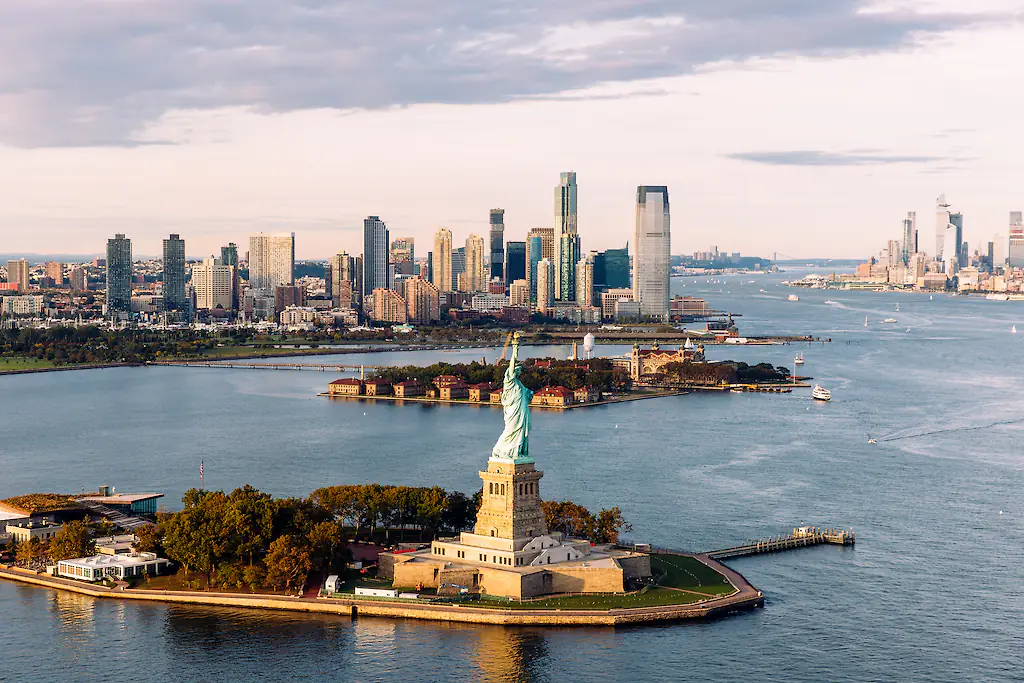
Imagine the power of a Satan 2 missile launched at New York City. With its 15 warheads, each carrying 1 megaton of TNT, the missile could deliver catastrophic destruction.
The Satan 2 missile has an enormous payload capacity of up to 50 megatons of TNT. This is a thousand times more powerful than the "Little Boy" bomb that devastated Hiroshima.
If the Satan 2 missile were to detonate over New York City, the destruction would be far beyond what any city could recover from.
The blast would create a fireball with a radius of over 2.6 miles, incinerating everything within that area. The intense heat would cause third-degree burns over a 21-mile radius, affecting most of the New York metropolitan area.
The Satan 2 missile is one of the most powerful weapons ever created. If detonated over New York, it would obliterate the city, turning it into a smoldering wasteland.
The effects would extend far beyond the city, with devastation affecting surrounding regions for miles.
The Tsar Bomb: A Hypothetical Nightmare Scenario
Let’s take it a step further. The most powerful nuclear weapon ever detonated was the Soviet Union’s Tsar Bomba, with a yield of 50 megatons of TNT.
If this bomb were to detonate over New York City, the destruction would be unimaginable.
The Tsar Bomba was so powerful that its explosion could be seen from hundreds of miles away, and the shockwave from the blast circled the Earth three times.
If a bomb of this magnitude were to strike New York, the fireball alone would incinerate everything within a 3-mile radius.
Blast damage would extend over 9 miles, covering over 250 square miles, and moderate blast damage would spread to a staggering 20-mile radius, affecting more than 1,350 square miles.
The thermal radiation would cause third-degree burns up to 37 miles away, and the heat would ignite fires across this vast area.
In short, New York would be destroyed, and the surrounding regions would suffer massive damage. The likelihood of such a scenario is extremely low, but the sheer magnitude of this bomb shows how catastrophic the use of nuclear weapons could be.

The Aftermath of a Global Nuclear War
A nuclear attack on New York City, especially from a weapon of the magnitude of the Tsar Bomba or Satan 2, would trigger immediate retaliation from other nuclear-armed states.
This retaliation would likely plunge the world into a global nuclear war, causing unimaginable destruction and loss of life on a global scale.
The consequences of such an event would be far-reaching. It would not only mark the end of New York City as we know it but could also lead to the collapse of global civilization. The world would be forever altered, and the human race would face a grim future.