


US4 min(s) read
Update on Christa Pike’s condition as she walks for the first time since failed execution
.webp_SmgFsc?tr=cr-292.0.1244.952,f-webp,q-70,w-100)
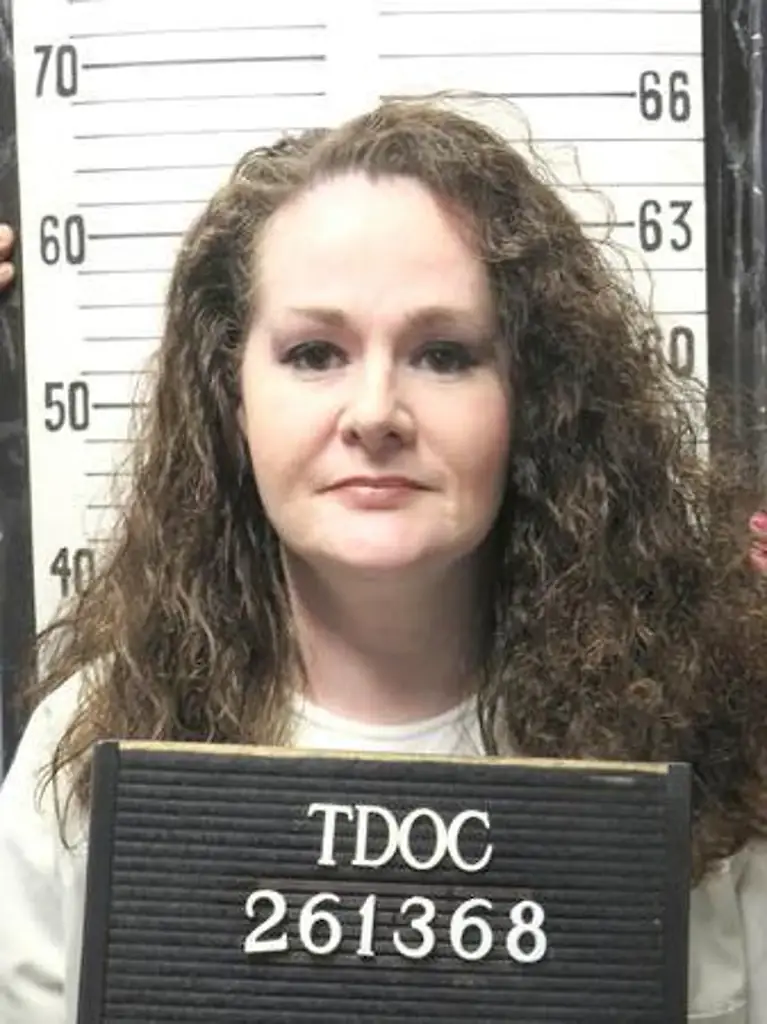
Christa Pike is making progress in her unexpected physical recovery after surviving a failed lethal injection attempt at Riverbend maximum-security prison in Nashville on September 30.
Sentenced to death for the murder of her Knoxville classmate Colleen Slemmer in January 1995, Pike, 50, was rushed to a hospital when a double dose of pentobarbital failed to take her life.
According to her legal team, Pike regained consciousness early in the week and began speaking. By Wednesday, her attorneys revealed that she suffered from memory loss regarding the incident and was experiencing significant distress regarding her situation.
On Thursday morning, attorney Stephen Farrell spoke on the radio about his client's condition. He noted that while Pike shows signs of improvement, she still faces a lengthy healing process with many unknown outcomes.
Pike's current physical state
Attorney Stephen Farrell offered specific details regarding the physical impact of the procedure on his client during a recent media appearance.
"What’s been described to me is that there’s quite a bit going on, that her arms are very injured, she’s unable to use them very much," he said to BBC Radio 4’s Today.
"She is up and walking for the first time today, just around the room, not very far. She’s back, she’s alive, we’re happy about that, but she’s not mentally fully recovered.
"She is fairly with it, but she’s also somewhat foggy and can lose her train of thought really easily and forgets where she’s going."
Attorneys recount hospital awakening
Pike gained a legal advantage on Wednesday when Chancery Court Judge I’Ashea Myles instructed the Tennessee Department of Correction to preserve all physical items present in the execution room.
The preservation order covers tape recordings, witness logs, internal emails, syringes, IV lines, drugs, and medical apparatus from the death chamber to assist potential future inquiries into the failed procedure.
Following the court session, attorney Randy Spivey shared additional background on Pike's initial moments of consciousness. He stated that she asked, "Where am I and who are you?" to the healthcare staff near her bed upon waking.
Spivey noted that the legal team originally believed Pike was brain dead as of Monday and anticipated the removal of life support. The entire defense team and attending medical staff were shocked when she woke up.

He mentioned that Pike continues to suffer from severe mental confusion, although she remains "very aware that the state tried to execute her."
Spivey detailed her medical complications by stating: "She has a blood clot in one of her arms. She has pneumonia. She is not able to swallow yet, so she is not eating.
"She cannot move either of her arms. Both of her arms and hands are tremendously swollen, and we do not know what, if any, function she will regain in her arms."
The state's response
Tennessee Governor Bill Lee suspended all remaining executions scheduled in the state for the year, describing the event as "deeply disturbing" and commissioning an independent external investigation to determine what went wrong.
Following these events, Department of Correction Commissioner Frank Strada submitted his resignation. Meanwhile, capital punishment opponents have pushed for Pike's death sentence to be commuted to life imprisonment without parole.
Medical experts advising the defense team indicate that assessing full brain function could take significant time. Dr. Joel Zivot, an anesthesiology expert assisting Pike's lawyers, explained that her general physical strength needs to return over time.
"As a simple rule of thumb, I tell patients that one day in bed is one week of recovery," he said.
"She has no doubt generalized muscle weakness... Many risks remain, and she could also decline in spite of this current improved state."