


US5 min(s) read
US involvement confirmed in killing of notorious Mexican cartel leader named 'El Mencho'
.webp_QQJmGo?tr=cr-345.0.1535.1190,f-webp,q-70,w-100)
The man long branded Mexico’s most feared cartel boss is dead.
Nemesio Oseguera Cervantes, better known as El Mencho, was killed during a high-stakes security operation in Mexico’s central-western Jalisco state, per BBC News.
The 59-year-old former police officer had risen to become the head of the powerful Jalisco New Generation Cartel (CJNG), overseeing a sprawling criminal empire that trafficked cocaine, methamphetamine, and fentanyl into the United States.
But while the operation was led by Mexican forces, the White House has now confirmed the US provided “intelligence support” — revealing just how closely the two nations were working behind the scenes.
El Mencho Killed During Military Operation In Jalisco
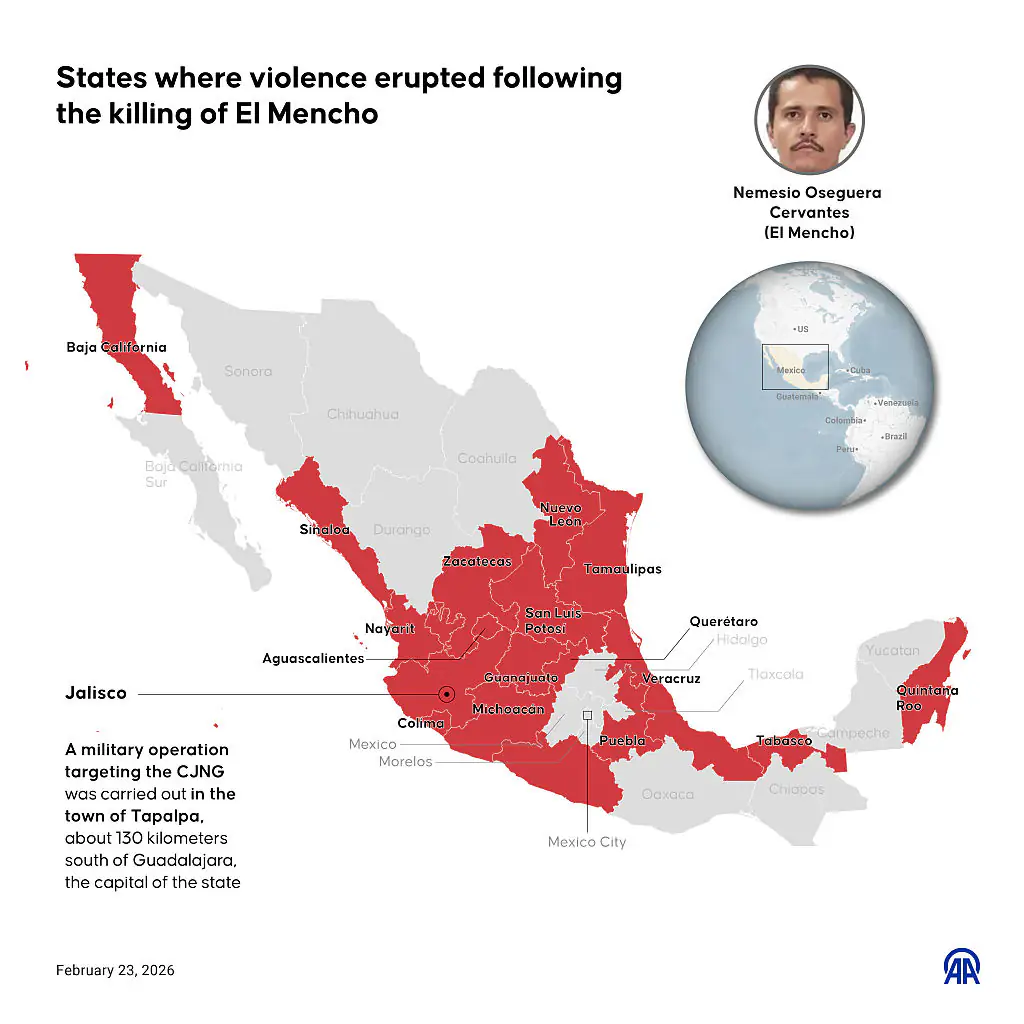
Mexican authorities said the operation unfolded in the town of Tapalpa, in Jalisco state, where special forces attempted to capture the cartel leader.
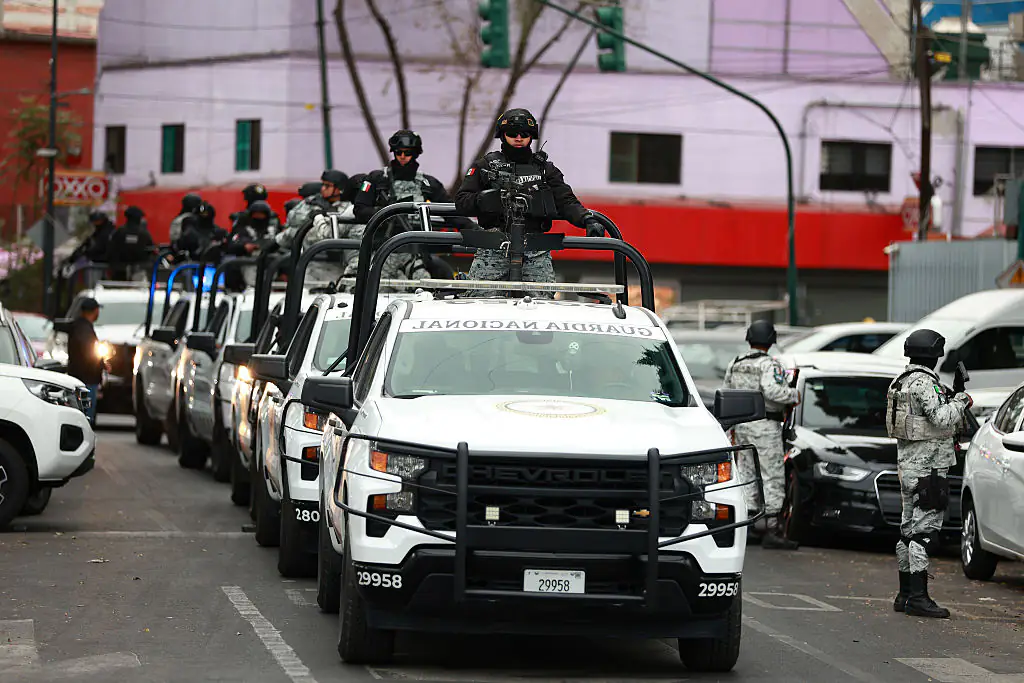
According to Mexico’s defence ministry, the operation was “planned and executed” by the country’s special forces, with aircraft from the Mexican Air Force and the National Guard deployed.
Four CJNG members were killed in Tapalpa, while three army personnel were injured. Another three cartel members died while being transported to Mexico City for emergency medical care. Two additional alleged cartel members were arrested.
El Mencho himself was seriously injured during clashes between his armed supporters and the army. He later died while being taken to Mexico City.
During the operation, security forces seized several armoured vehicles and weapons — including rocket launchers.
The US had provided Mexico with information that assisted in the operation, according to both American and Mexican officials, per the Miami Herald.
White House press secretary Karoline Leavitt described Cervantes as a “top target” for both governments and confirmed the US offered intelligence backing, though she did not elaborate further.
Mexico’s Defence Ministry stated it had received information from American authorities under bilateral agreements between the two nations.
US media also reported that a joint US-Mexico task force that frequently collaborates with the Mexican military was involved, citing anonymous US defence officials.
A $15 Million Target With A Ruthless Reputation
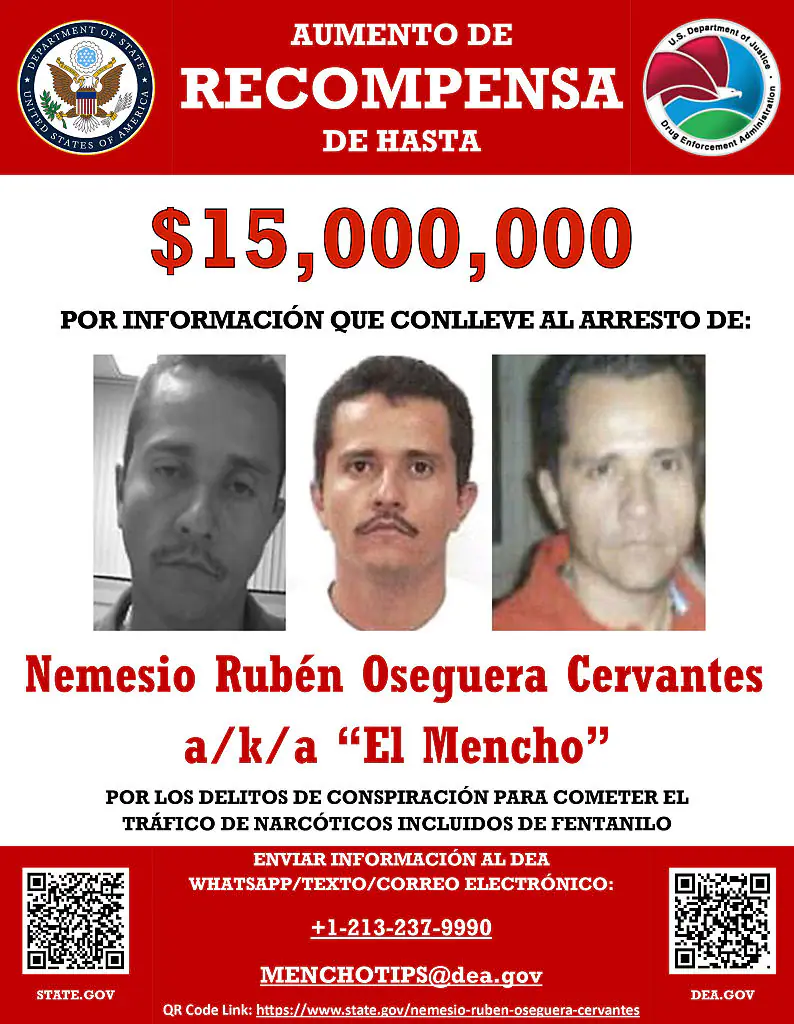
El Mencho had been one of the most wanted men in the world. The US State Department and the Drug Enforcement Administration (DEA) had offered a $15m (£11.1m) reward for information leading to his capture.
He was accused of being responsible for trafficking fentanyl into the US — a drug at the heart of America’s overdose crisis.
Former US ambassador to Mexico and Deputy Secretary of State Christopher Landau described El Mencho on social media as "one of the bloodiest and most ruthless drug kingpins".
He added that El Mencho's death was "a great development for Mexico, the US, Latin America, and the world".
Mike Vigil, former chief of international operations for the DEA, told CBS that the operation was "one of the most significant actions undertaken in the history of drug trafficking".
The CJNG, founded in 2010 with its original power base in Jalisco, has since expanded across Mexico. The DEA considers it to be rivalling the powerful Sinaloa cartel, which has a presence in all 50 US states.
The cartel has earned billions from fentanyl production and distribution. It has gained notoriety for brazen attacks — including downing an army helicopter with a rocket-propelled grenade, killing dozens of state officials, and hanging victims from bridges to intimidate rivals.
Why Was The US Involved?
El Mencho had long been in Washington’s crosshairs.
President Donald Trump has vowed to crack down on drug flows into the United States, particularly fentanyl.
His administration has reported killing at least 148 people in strikes on alleged narco smuggling boats in the Pacific Ocean and Caribbean waters since September — a campaign it says is legal, though critics argue it fails to target key fentanyl routes.
Fentanyl largely makes its way into the US from China and India via the Mexican border rather than South America.
Since October 2024, 9,200lb (4,182kg) of fentanyl has been seized in the US, according to US Customs and Border Patrol figures published in June 2025.
Almost all (96%) was intercepted at the south-west border with Mexico. Less than 1% was seized at the northern US border with Canada. The remainder came from sea routes or other US checkpoints.
Last year, the White House designated the Jalisco New Generation Cartel a foreign terrorist organization — a move that expanded the range of tools available to target the group.
The Trump administration also established the Joint Interagency Task Force-Counter Cartel under the US Northern Command, which oversees American operations in areas beyond the US, including Mexico, Canada, and Greenland.
The task force focuses on intelligence sharing to combat cartels operating across the US-Mexico border.
Cooperation between the US and Mexico on intelligence-sharing has existed for decades, built on institutional agreements, standard procedures, and close relationships between senior officials.
Observers say Mexico’s public security minister Omar García Harfuch has overseen increased intelligence sharing with the US.