


Weird5 min(s) read
Red sprites: French photographer captures rare 'electric tentacles'
.jpg_I4Ebof?tr=cr-0.338.2730.3068,f-webp,q-70,w-100)
A French photographer has captured one of the rarest atmospheric phenomena on Earth after spending an entire night on the island of Corsica waiting for the sky to do something most people will never see in their lifetime.
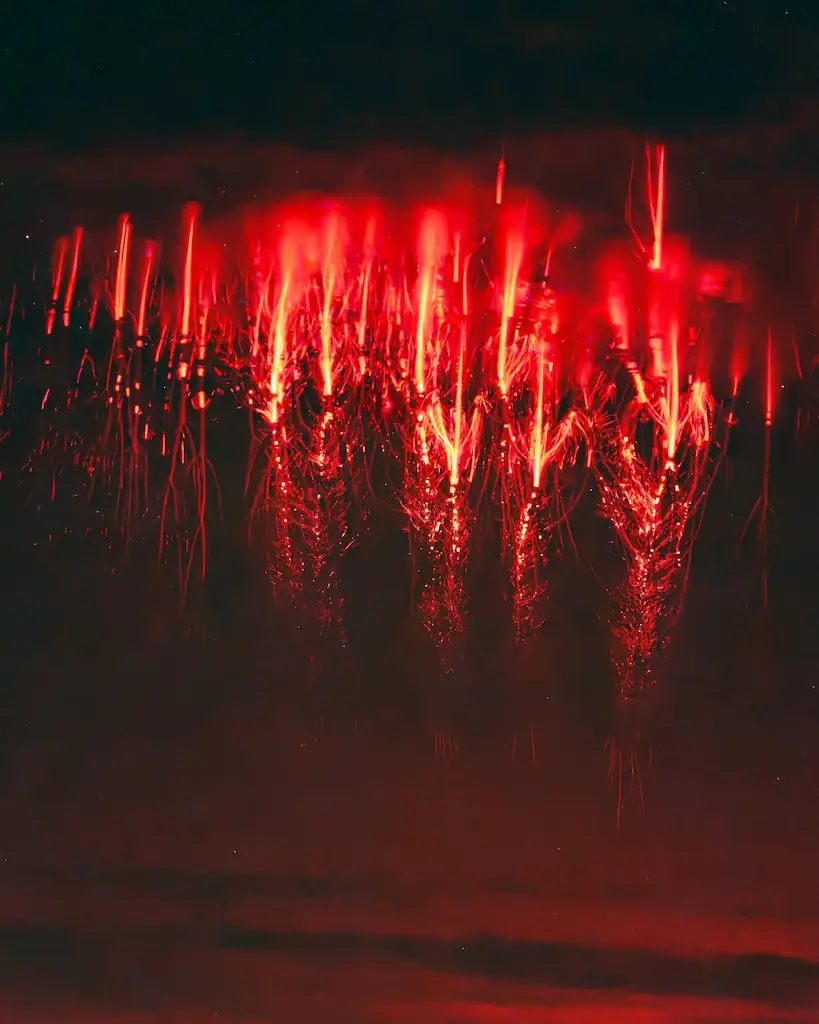
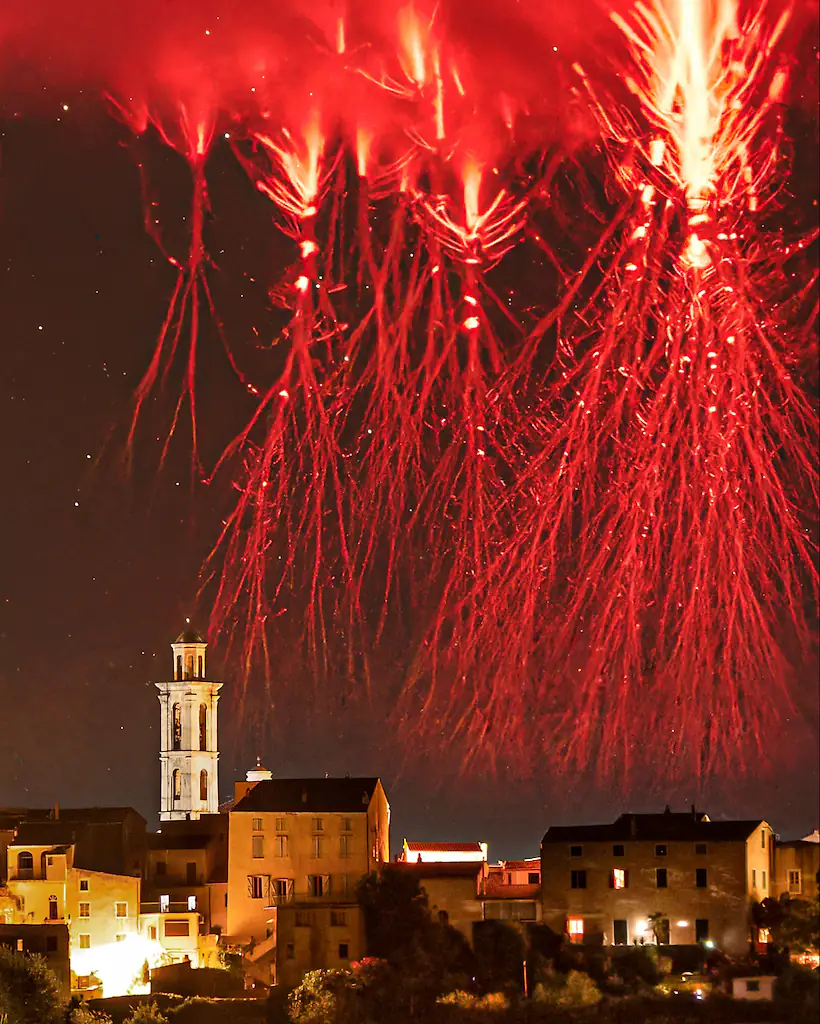
The resulting image, taken by atmospheric specialist Florian Riu, shows dozens of branching red streaks of light hanging in the night sky above the village of Montemaggiore.
They look like electric tentacles, or the roots of a tree made of fire, or something from the opening sequence of a science fiction film.
They are called red sprites. They lasted a few thousandths of a second, and the storm that produced them was happening over 804.7km away near Barcelona.
What red sprites actually are
Red sprites are electrical discharges that occur in the mesosphere, between 50 and 90 kilometers above the surface of the Earth.
That puts them far higher than commercial aircraft, far higher than weather systems, and roughly at the same altitude as the boundary between the atmosphere and space.
They belong to a class of events known as Transient Luminous Events, which is the kind of name that sounds like it was made up by someone who could not quite believe what they were looking at.
Scientists did not obtain the first confirmed photographic evidence that sprites existed until 1989.
Before that, they were treated as anecdotal reports from pilots and astronomers who had seen brief red flashes above thunderstorms and struggled to explain them.
The red color comes from nitrogen.
When a powerful positive lightning bolt strikes the ground during a thunderstorm, it changes the electric field above the storm dramatically.
Under the right conditions, that causes an electrical breakdown in the thin air of the upper mesosphere. The nitrogen molecules up there get excited, and when they settle back down, they emit light in the red part of the visible spectrum.
The whole thing is over in milliseconds. Blink and you miss it. Your eyes might register something, but your brain probably will not process it in time to understand what it saw.
How the photo was taken
Riu did not stumble across this. He planned it.
He studied thunderstorm forecasts for the coast of Spain and identified that powerful storm systems were expected to develop over the Barcelona area on the night of September 16-17.
He then chose a vantage point on Corsica, roughly 500-700 kilometers from the storms, where the sky between him and the storm cells would be clear enough to photograph anything that appeared above them.
That is the counterintuitive part.
You do not photograph sprites by standing underneath a thunderstorm.
You photograph them by standing hundreds of miles away, looking sideways across the curve of the Earth, with the storm below the horizon and the sprites reaching high enough above it to be visible against the dark sky.
You also need a camera sensitive enough to capture something that lasts for less than a hundredth of a second, set to continuous shooting or video, pointed at exactly the right part of the sky at exactly the right moment.
Riu got it. The image shows the illuminated houses of Montemaggiore in the foreground, and above them, filling the sky, a forest of red lightning firing upward from a storm that the camera cannot even see.
How red sprites compare to normal lightning
They are almost the opposite. Normal lightning occurs inside or below thunderclouds, in the troposphere, and travels downward. It is white or bluish. It lasts fractions of a second and is visible to anyone standing nearby.
Red sprites go upward. They form in the mesosphere, tens of kilometers above the top of the storm. They are red or pink. They last milliseconds, not fractions of a second. They take shapes that have been described as columns, tendrils, and jellyfish. And they are so brief and so high that most people who see one are not entirely sure they saw anything at all.
The experience of discovering that the southern lights exist was a similar revelation for a lot of people online earlier this year. There are entire categories of atmospheric phenomenon that the average person has simply never heard of, and sprites might be the most dramatic of the lot.
Why they matter beyond the photograph
NASA launched a citizen science project called Spritacular specifically to collect images of sprites from amateur photographers around the world. The agency wants to study how sprites interact with the upper atmosphere, what they tell us about the electrical systems connecting weather to space, and whether rising global temperatures are making them more frequent.
That last point is the one researchers keep coming back to. As climate change intensifies thunderstorm activity and produces more powerful lightning, the conditions that generate sprites become more common. A phenomenon that was barely documented before 1989 may become significantly more visible over the coming decades.
For now, it remains one of the hardest things in nature to photograph. A French photographer spent an entire night on a Mediterranean island, pointing a camera at a clear sky, waiting for a storm 804.7km away to produce something that would last less time than it takes to blink.
He came home with a photograph that looks like the sky is on fire. It was the atmosphere doing something it does all the time, in places nobody is usually looking, for durations too short for the human eye to process.
Red sprites have been happening above every major thunderstorm on Earth for as long as thunderstorms have existed. We just did not know about them until 35 years ago.