


Weird3 min(s) read
Scientist addresses claim that the world will end on November 13 2026
.jpg_xKEaT0?tr=cr-0.328.2730.3058,f-webp,q-70,w-100)
Over 65 years ago, a scientist made a chilling prediction about the end of the world, and the date is fast approaching.
A 20th-century physicist named Heinz von Foerster published a paper in one of the world's leading science journals, Science, back in 1960.
Together with his colleagues, they worked out that the world would end on November 13, 2026, a date which coincidentally falls on a Friday the 13th.
That's right, they claimed that human population growth would reach a point of no return, with this date expected to mark the end of humanity as we know it.
There have been several 'Doomsday' predictions over the years, but this one was made through detailed mathematical modeling - but how accurate is it, a month away from the date?
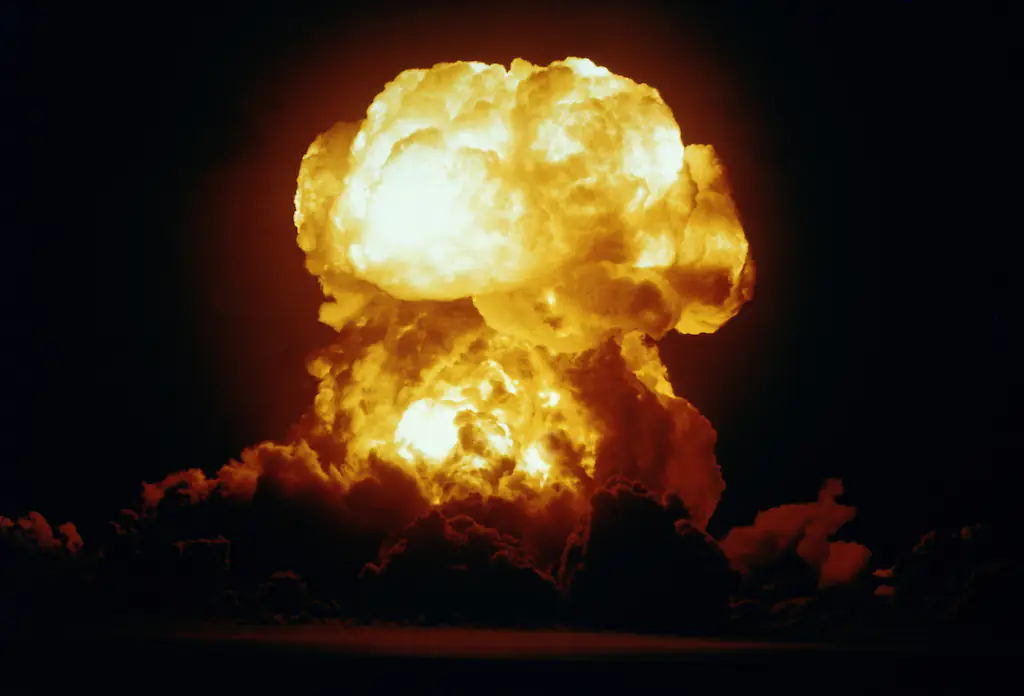
Doomsday claims from scientists
66 years ago, a study titled Doomsday: Friday, 13 November, A.D. 2026 was penned by Austrian-American professor Heinz von Foerster, alongside his students, Patricia M. Mora and Lawrence W. Amiot.
They were so sure of their findings that they claimed in the study: "Our great–great–grandchildren will not starve. They will be squeezed to death."
Analysis from Von Foerster delved into population trends, and it came to the conclusion that unchecked exponential growth could push humanity beyond our planet's carrying capacity.
This would result in collapse through environmental breakdown, resource exhaustion, and even societal conflict, as they claimed that human population will 'approach infinity', based on population growth over the previous 2,000 years.
The mathematical model further claimed that if growth kept increasing at historical rates, Earth's population would eventually reach infinity around November 2026, meaning that our kind would 'squeeze itself to death.'
Claims debunked by professor
Professor Alan MacEachern, a professor of history at Western University, wrote in The Conversation on Wednesday (September 30): "We will probably not all wake up on Friday, November 13, 'squeezed to death.'"
While the 1960 claim has been referenced in textbooks over the years, Professor MacEachern says he has found a huge hole in the theory.
The global birth rate is far lower than it was when the article was made public, meaning that the doomsday prediction is based on old figures.
He explained: "Only around 1993 did that accuracy begin to falter and the global population began falling behind the forecasts,
"Today, the global birth rate is slightly less than half the 1960 rate."
MacEachern also questioned von Foerster's credibility, pointing out that he was a stage magician at one point, claiming some tricks may have been used in the paper.
He went on: "Borrowing the classic language of stagecraft, an effective illusion relies on three parts: the setup, the extraordinary turn and the final reveal that returns the situation to normal."
"Von Foerster and his co–authors' article gained attention because it was an ordinary scientific article wrapped in an extraordinary title and conclusion," he further explained.
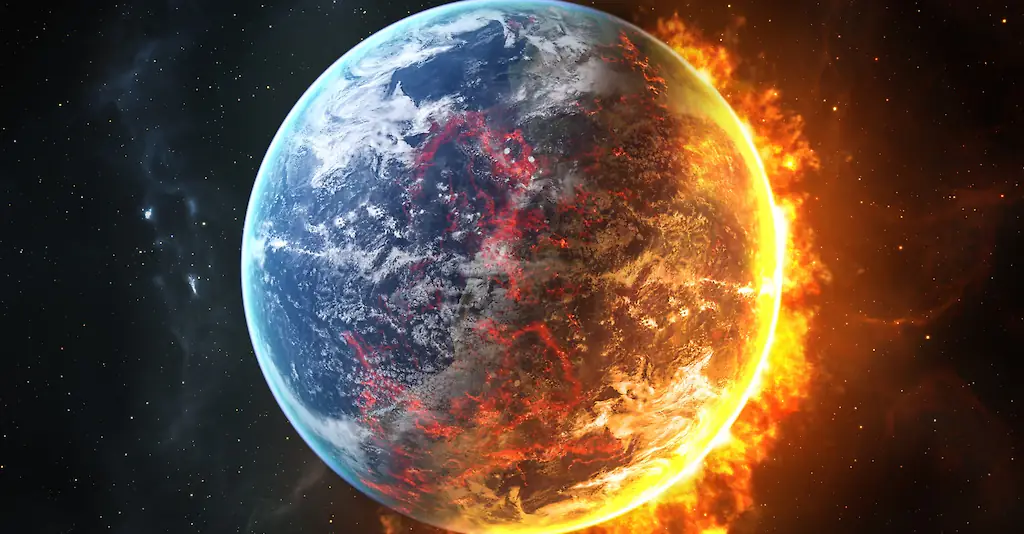
MacEachern claims we will be safe
The professor added: "It retained significance because it was firmly grounded in research and argument.
"To draw the world's attention to a serious matter by way of absurdity - that's a good trick."
Despite November 13 being on the horizon, there isn't much reason to worry, according to the expert, who stated: "We will all wake up on 13 November to an ordinary day.
"Nonetheless, this article remains exemplary, for blending rigorous science with the art of stagecraft to staggering effect."
No need to get that bomb shelter ready, then.