


World5 min(s) read
2,000-year-old box of bones with inscription ‘Brother of Jesus’ hailed as first ‘direct connection to Christ’

A burial box, said to be 2,000 years old, bearing an inscription identifying someone as the brother of Jesus, has been cited as potentially one of the most momentous archaeological discoveries ever linked to the biblical figure.
Known as the James ossuary, the limestone chest measures around 21 inches long and 10 inches wide, with its inscription, written in ancient Aramaic, translating to ‘James, son of Joseph, brother of Jesus.’
Fragments of human bone have also been recovered from inside the box, which some experts believe could provide an extraordinary link to the family of Jesus of Nazareth; the lifeblood of a religion with an estimated following of 2.5 billion worldwide from various denominations, including Catholicism and Pentecostalism.
The legitimacy of the inscription is hotly contested by experts
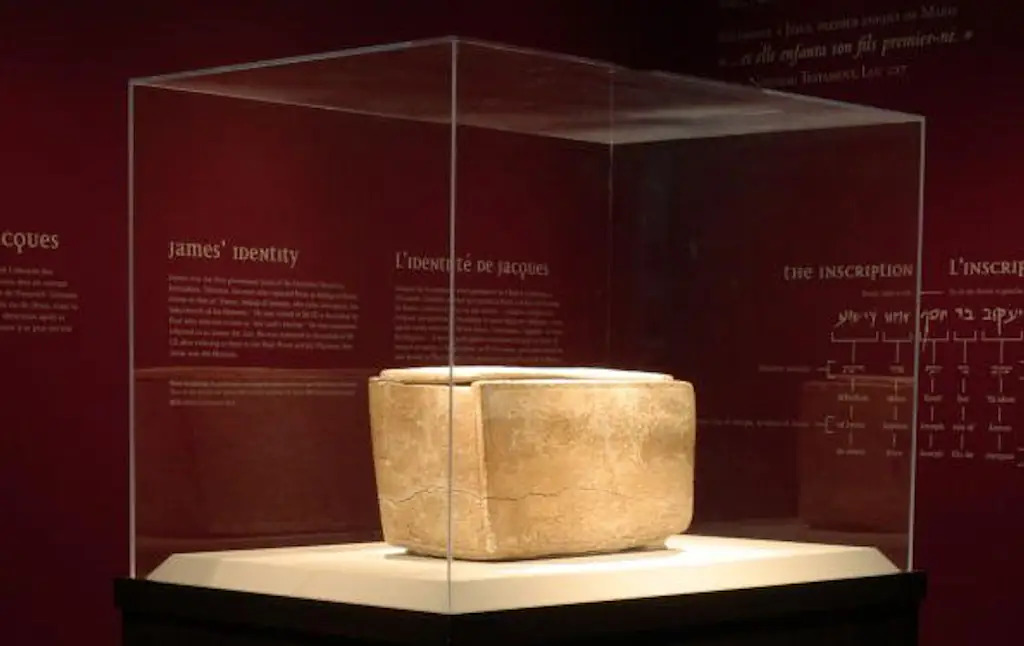
However, the artefact has been at the center of a long-running dispute over whether its inscription is genuine, with the Israel Antiquities Authority (IAA) declaring that the words ‘brother of Jesus’ had been added in modern times to an otherwise authentic ancient burial box.
Israeli antiquities collector Oded Golan, who said he acquired the ossuary during the 1970s, was accused of forging the disputed section of the inscription, but was acquitted in 2012 despite the judge making it clear that the verdict did not prove the inscription was authentic or establish a connection to the biblical Jesus.
Biblical scholar Dr Jeremiah Johnston believes, however, that the evidence supporting the inscription deserves serious consideration.
Johnston has pointed to Golan's acquittal and the backing of prominent specialists in ancient inscriptions as reasons to believe the words could be genuine.
He has also questioned the suggestion that a Christian added the inscription centuries after the box was crafted, arguing that the Jewish practice of collecting bones in limestone burial boxes had disappeared in Jerusalem following AD 70.
Johnston and a team of experts are planning to carry out DNA analysis on the bone fragments in 2027 in an attempt to learn more about their origins.
“If it is truly his, we are looking at the only known archaeological artifact directly connected to the family of Jesus of Nazareth,” Johnston told the Daily Mail.
According to reports, Golan discovered the ossuary in an antiquities shop in Silwan, near Jerusalem's Old City and the Siloam Spring. He reportedly paid just $200 for the box before asking leading expert André Lemaire to examine its inscription.
Lemaire, a specialist in ancient Hebrew and Aramaic writing, identified the words as ‘Ya'akov bar Yosef, akhui di Yeshua’, meaning ‘James, son of Joseph, brother of Jesus’.
Writing in his book The Jesus Discoveries, Johnston explained how the inscription initially appeared to Golan to identify three generations of the same family.
“Oded had always assumed it named three generations of one family. Lemaire reminded him that Jesus of Nazareth had a brother named James,” Johnston wrote.
The ossuary fits a burial tradition practised in first-century Jerusalem, according to Johnston, where, following a person's death, their body would be placed in a tomb, with relatives returning approximately a year later to collect the bones and transfer them into a limestone box.
Although James, Joseph and Jesus were all common names during the period, Johnston argues that the reference to a brother makes the inscription particularly noteworthy.
Of approximately 900 ossuaries included in the catalog he cites, only around a quarter feature inscriptions, with Johnston claiming just one other example mentions a brother, leading him to suggest that the reference could indicate Jesus was a particularly prominent figure.
He has also highlighted the writings of first-century Jewish historian Josephus, who recorded the stoning of James in AD 62 and identified him as "the brother of Jesus who was called the Christ".
"If James died in AD 62, custom says his bones were gathered about a year later, around AD 63," Johnston said. "That is precisely the window the ossuary’s style and epigraphy point to."
Early examinations by two researchers from the Geological Survey of Israel offered support for the inscription's authenticity. However, the agency later backed findings that questioned whether the mineral coating inside the disputed lettering could have formed naturally in the region, adding to the scientific disagreement surrounding the artefact.
Religious expert believes box could prove to be link to Jesus
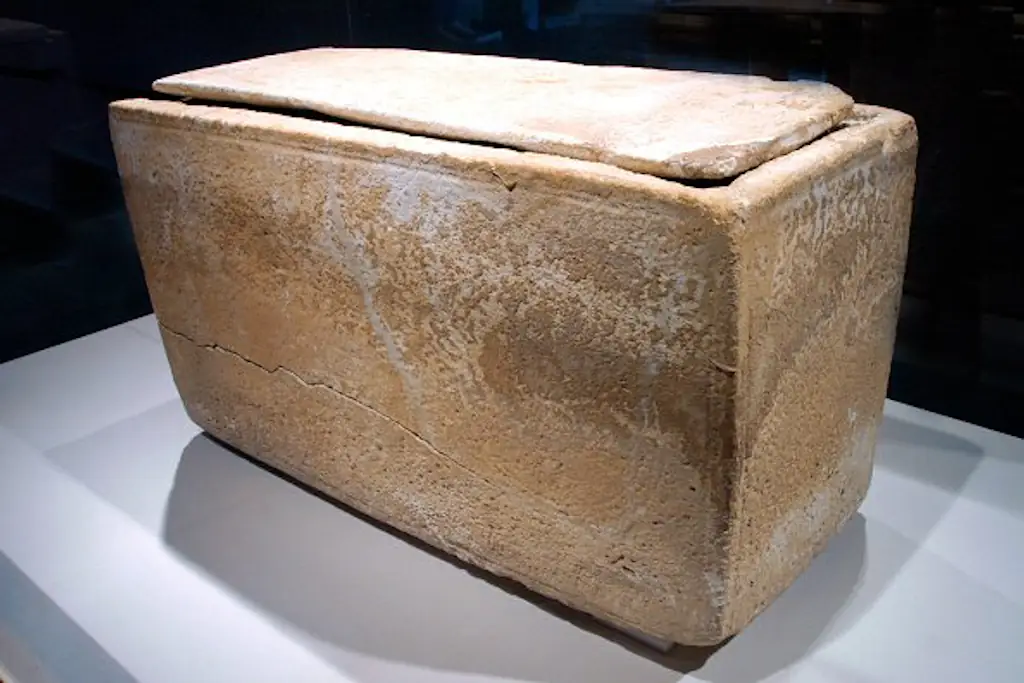
The ossuary attracted international attention when it went on public display in 2002, prompting close scrutiny from the IAA and eventually leading to the forgery allegations against Golan.
Prosecutors alleged that the collector had added the words ‘brother of Jesus’ to an older inscription reading ‘James, son of Joseph’, then applied a coating to make the new lettering appear ancient.
However, several experts challenged the accusations, including Ada Yardeni, a respected scholar of ancient handwriting who, according to Johnston, defended the inscription's authenticity in court.
A family photograph dating back to 1976 also featured in Golan's defence. It showed the ossuary with the disputed inscription, while a photographic expert testified that the paper and fading were consistent with the image's age and found no evidence it had been tampered with.
Despite Golan's eventual acquittal, the judge did not rule that the inscription was authentic, leaving the central question unresolved, but Johnston remains convinced that the available evidence provides grounds for believing the inscription could be genuine, although he stops short of claiming absolute certainty.
“So where do I land? Exactly where honest history always lands: not absolute certainty, but historical probability,” he claimed.