


World3 min(s) read
Haunting last message from diver among 5 who died in Maldives scuba diving tragedy revealed

The final words of one of the marine biologists killed in the Maldives diving tragedy reflected the passion that ultimately led to her death.
Monica Montefalcone was among five Italian divers who disappeared during a deep underwater expedition near Vaavu Atoll on Thursday.
Authorities believe the group became trapped inside a cave roughly 200 feet beneath the surface in what has been described as the worst diving disaster in Maldivian history.
The final words of one of the divers killed in the incident
Not long before the fatal dive, the 51-year-old researcher sent a message to a colleague about the importance of studying marine ecosystems.
“It is fundamental to observe the underwater environment — which remains far too unknown to the general public — whether with our own eyes or through the lens of a robot,” Montefalcone wrote on Wednesday.
Montefalcone, an award-winning scientist from Italy’s University of Genoa, had travelled to the Maldives to study how climate change is affecting tropical biodiversity.
Joining her on the expedition were her daughter Giorgia Sommacal, a university student, and research fellow Muriel Oddenino.
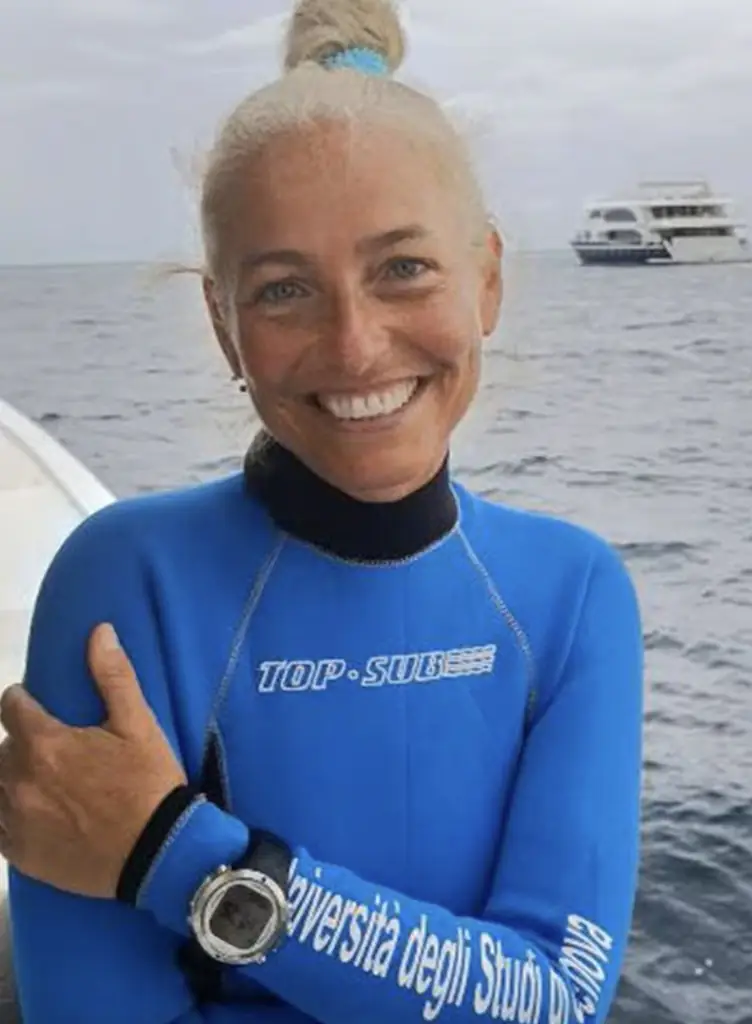
Speaking after the tragedy, Montefalcone’s husband Carlo Sommacal defended his wife’s experience, professionalism, and commitment, as questions continue to be asked over what went wrong.
“The only certainty I have is that my wife is among the best divers on the face of the earth,” he told La Repubblica. “She’s never been a reckless person.”
“She would have never jeopardized the life of our daughter or any other young people,” he added.
The other victims were Federico Gualtieri, a marine biology graduate whose thesis focused on coral diversity in the Maldives, and diving instructor Gianluca Benedetti, a former banker who relocated to the Maldives years ago to pursue diving full-time.
Benedetti's body was the first to be recovered after rescuers located him inside the cave on Thursday before worsening weather forced search teams to stop operations.
The other four bodies were recovered on Monday after specialist teams were called in to aid with the recovery.
Rescue crews' search continues for the missing group
Italian Ambassador Damiano Francovigh explained the challenges that had faced the rescue crews, describing the underwater cave as extremely difficult to navigate.
“It’s a particularly complex dive because the cave is divided into three separate, interconnected segments,” he said.
“The Maldivian divers were only able to enter the first two, then had to come up to allow time for decompression.”
The mystery surrounding the tragedy has deepened because all five divers were considered highly experienced.
On the morning of the expedition, the Maldives National Defence Force reportedly issued a yellow level two weather alert warning of “strong winds” and “rough seas” caused by worsening monsoon conditions. Divers were urged to exercise caution and vessels were advised to avoid unnecessary travel.
“If there really was a yellow alert in effect, they must have gone diving beforehand, and something must have happened down there,” Sommacal said.
He also revealed his wife regularly wore a GoPro camera during dives and believes recovering it may help explain the disaster.
The University of Genoa has since distanced itself from the dive, clarifying that while the researchers were in the Maldives on an official scientific mission, the cave expedition itself was personal.
“The scuba diving activity was in no way part of the activities envisaged by the scientific mission but was carried out in a personal capacity,” the university said in a statement.
The cave where the group disappeared reportedly stretches around 200 feet long and sits roughly 160 feet below the surface, well beyond the Maldives’ recreational diving limit of 100 feet.